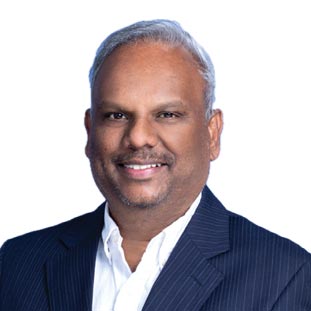
Lessons From the Wards: A Surgeon's Reflection on Training, Then and Now
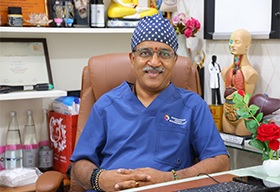
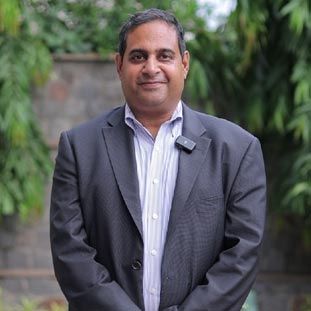
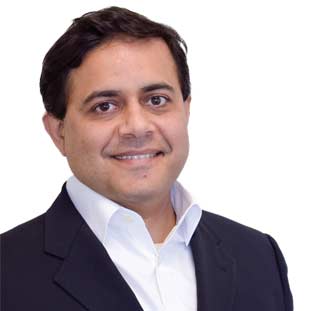
Dr Ananda Kumar is a renowned Surgical Gastroenterologist and an expert in Laparoscopic, Hepatobiliary, and Bariatric Surgery, with over three decades of experience. He has successfully performed complex gastrointestinal, liver, and pancreatic surgeries, including liver resections, Whipple procedures, and shunt operations for portal hypertension. Trained under leading surgical experts and at prestigious international centers such as IRCAD in France and Houston’s North West Endosurgical Centre, he founded Ananya Gastroenterology in Hyderabad to provide patient-centric, ethical, and affordable care.
In this article, Dr Ananda Kumar explores the evolution of surgical training, reflecting on how patient-centered learning, mentorship, and bedside experience shaped surgeons of the past, while highlighting the challenges and opportunities technology brings to modern surgical education.
The evolution of surgery is significant since yore now, progressing from ancient trial-and-error techniques to modern age robotics and technology backed procedures. While introduction of anesthesia and antiseptic methods in the 19th-century have reduced pain and risk, advances like antibiotics and cardiovascular surgery, and contemporary innovations such as minimally invasive techniques, robotic surgery, and preventive procedures in the 20th-century have contributed to improved outcomes, and expanded the scope of what surgeons can achieve.
Dr Anandakumar, Surgical Gastroenterologist, Laparoscopic & HPB Surgeon Ananya Hospital, began his surgical training in the 1990s, a very different era from the one young surgeons find themselves in today. Those were the days when the patient’s bedside was the center of individuals (medicine students) education. Long ward rounds, exhaustive case presentations, and face-to-face mentoring were the daily reality, then.
At the time, the greatest teachers were not machines or protocols, but patients themselves. Prospective surgeons learned to listen to stories of illness, fear, and resilience, earlier. The learning were deep, as they learned to observe- the color of the skin, the subtle change in breathing, the hesitation in a patient’s eyes. And they learned to reason testing their hypotheses at the bedside long before ordering investigations.
The scalpel may cure disease, but empathy heals the person.
Today, as experienced surgeons and professionals watch the next generation train, they get to see brilliance, energy, and access to extraordinary technology. Robotics, high-definition imaging, and artificial intelligence are redefining the boundaries of what surgery can achieve. Yet there’s also something worrying, the gradual erosion of clinical training. Increasingly, technology takes center stage while the patient, paradoxically, slips into the background.
Training in the 1990s: The Bedside as Classroom
Dr Anandakumar says, “One memory from my residency remains vivid. A professor once asked me to present a young man with abdominal pain. I rattled off a differential diagnosis straight from the textbook. He stopped me mid-sentence- ‘Don’t recite the book. Tell me what this patient is telling you’”.
He adds, “That single remark changed how I approached every patient thereafter. Diagnosis was not about reproducing lists, it was about listening, observing, and integrating”.
In the 1990s, surgeons were trained to rely on their senses first, and investigations later. A careful history and thorough examination were expected to lead them to the most likely diagnosis before a single test was ordered. This discipline forced them to sharpen their judgment. It also taught the surgeons- humility. When their clinical impression didn’t match the test, they used to go back to the bedside, rather proceeding to a second scan.
Also Read: The New Age of GI Surgery with Robotic Precision
The Changing Landscape Today
Contrast that with today. Young trainees often reach for a CT scan before touching the patient. Ward rounds are shorter, often administrative. Protocols are followed faithfully, but sometimes without critical reasoning. Simulation labs train technical maneuvers, but not the subtle art of decision-making.
The result? There’s a risk producing surgeons who are skilled with instruments but less comfortable when faced with ambiguity, complexity, or the human aspects of care.
Why Clinical Training Still Matters
Dr Anandakumar quotes, “From my perspective, clinical medicine is not a nostalgic luxury, it is the foundation on which surgery stands. Without it, even the most advanced technology is prone to misuse”.
Hence, points to be noted:
Judgment: Deciding when not to operate is often more important than performing the operation itself. That judgment comes from hours spent listening to and examining patients.
Compassion: Machines cannot teach empathy. It is only by sitting with patients, hearing their fears, and sharing their journeys that we learn to treat not just disease, but people.
Confidence: Surgeons who repeatedly examine, follow, and manage patients develop a confidence that guides them when tests conflict or when emergencies arise.
Patients as Teachers
Notably, patients are the best teachers and source of practical lessons to surgeons. Like an elderly woman with vague abdominal discomfort taught Dr. Anandakumar patience; repeated bedside examinations revealed a malignancy scans had initially missed. Additionally, a child awaiting surgery taught him the importance of explaining procedures simply, because if surgeons can explain it to a child, they can explain it to anyone. At last, a man recovering poorly after a routine operation reminded him that healing is not just technical repair, but emotional and social recovery too. These encounters reinforce that every patient is a textbook, but only if surgeons take the time to read them.
Mentorship: Shaping Surgeons Beyond the Scalpel
Surgeons like Dr Anandakumar have been fortunate to learn from mentors who embodied skill, science, and compassion. They did not just teach them how to suture or dissect; they showed them how to sit with families, how to admit uncertainty, and how to balance risk. Their example shaped not only the surgeons hands, but jheir judgment and their humanity.
Today, mentorship is more vital than ever. The role of senior surgeons is not just to train technical competence but to safeguard clinical wisdom. That means:
- Protecting bedside teaching from erosion.
- Encouraging trainees to reason through cases before turning to tests.
- Demonstrating respect and empathy in every patient interaction.
- Balancing enthusiasm for new tools with reverence for old truths. Mentors are not just teachers of technique; they are custodians of values.
Practical Steps for Holistic Training
How, then, can we ensure the next generation inherits not just skill, but also science and compassion? A few practical steps come to mind:
Reclaim the Ward Round: Ward rounds should not be hurried administrative rituals. They must remain interactive classrooms where reasoning, examination, and patient dialogue are prioritized.
Prioritize Longitudinal Care: Trainees should follow patients from diagnosis through recovery. Only then do they see the full arc of illness and healing.
Balance Simulation with Reality: Skills labs are useful, but they cannot replace bedside experience. Both must complement each other.
Encourage Reflective Practice: Trainees should be asked not only what they did, but what they learned from the patient. Reflection deepens both skill and empathy.
Model Compassion: Senior surgeons must show by example that kindness, respect, and humility are not optional, they are integral to surgical excellence.
Looking Ahead: A Personal Message
To the young surgeons reading this, the experienced surgeons like Dr. Anandakumar offer one perspective ~ ‘Technology is a gift, but it is not a substitute for wisdom. Learn to use it, but do not let it use you. Spend more time with patients than with screens. Listen carefully, examine thoroughly, and reflect deeply’.
Remember, a scalpel can cure disease, but only compassion heals the person. The true measure of a surgeon is not the number of procedures performed, but the ability to balance technical mastery with clinical judgment and human connection.
If upcoming surgeons can keep that balance, they will not be just able to operate, but will be healing patients. And in doing so, they will carry forward the proud legacy of surgery into a future where science and humanity walk hand-in-hand.