How CXOs Can Build a Culture That Turns Ideas into Value

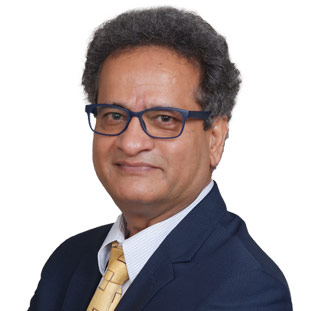
Dr Aravind Chinchure is a distinguished academician, corporate strategist, and innovation leader with over three decades of experience spanning R&D, intellectual property, startup investments, policy, and teaching. Holding a PhD in Physics, he has collaborated with Nobel laureates and global innovation leaders to drive transformative projects across multinational and Indian companies. As Chair Professor of Innovation and Entrepreneurship at Symbiosis International University, he has pioneered experiential MBA programs, mentored startups, developed high-impact IP strategies, and received multiple national and international awards for fostering innovation and business growth.
In a recent interaction with M R Yuvatha, Senior Correspondent at siliconindia, Aravind shared insights on how CXOs leverage servant leadership, AI, and foresighting to drive innovation, manage risks, and create measurable business value.
In today’s fast-evolving business environment, CXOs face the critical challenge of fostering a culture that not only generates ideas but also transforms them into measurable business value. Leadership experts like Aravind Chinchure, emphasize that creating an organizational structure that ensures psychological safety, while simultaneously encouraging calculated risks, is essential for driving innovation. When embraced thoughtfully, strategic experimentation becomes a key driver of tangible outcomes.
The Power of Servant Leadership for CXOs
Aravind Chinchure, with over three decades of experience working with CEOs and CXOs across diverse industries, underscores the transformative potential of servant leadership, also known as the unbossed leadership style. Leaders who adopt this approach prioritize serving their teams over exercising control, cultivating a sense of value, respect, and empowerment. This mindset enables employees to take on ambitious challenges, contribute meaningfully, and align deeply with the organization’s mission and vision.
A practical example of this can be seen in the way leaders approach KRAs and goal-setting. In one instance, a CEO asked a team to define targets not just based on the previous year’s performance but on achievements spanning the last five years. Although initially daunting, the psychological safety fostered by the leader empowered the team to embrace the challenge. As a result, the team achieved results equivalent to five years of performance in a single year, showcasing how trust, empowerment, and clarity drive exceptional outcomes.
When CXOs embrace servant leadership, they dismantle hierarchical barriers, encourage bold thinking, and foster intelligent experimentation. This approach nurtures innovation and ensures that ideas evolve into measurable value, benefiting both individual growth and organizational transformation. Ultimately, empowering leadership and psychological safety become the foundations of sustained business success.
Empowering leadership and psychological safety become the foundations of sustained business success.
AI for Transformational Leadership
In addition to fostering a culture of empowerment and innovation, CXOs are leveraging AI and analytics to drive business transformation. These tools uncover hidden patterns in cross-functional teams, surface untapped ideas early, and convert them into sustainable initiatives. Historically, projects followed a linear, cathedral model, with annual planning and top-down execution. AI enables a bazaar model, providing real-time insights across sales, HR, manufacturing, and production.
This allows leaders to adapt projects quickly, implement innovative initiatives, and accelerate value creation. By connecting teams and enabling data-driven decisions, AI becomes a critical enabler of modern business growth.
CXOs must strike a balance between driving innovation and managing organizational risk to ensure that creativity translates into sustainable business value. While AI provides data-driven insights and supports value prediction, innovation inherently involves uncertainty. Effective CXOs are able to distinguish between intelligent, calculated risks and those that could negatively impact the organization’s reputation or performance.
Transformational leaders, both globally and in India from Elon Musk to Satyanarayana demonstrate the ability to identify smart risks worth pursuing. These leaders rigorously test initiatives internally before market launch to safeguard brand integrity. For instance, in the automotive industry, even the well-prepared products may encounter operational issues post-launch. When risks are deliberate and strategic, customers often accept minor setbacks as part of the product’s evolution, preserving trust.
By embedding innovation into daily operations, CXOs can maintain organizational agility while ensuring risks are measured and justified. This approach enables leaders to foster continuous experimentation, protect financial and reputational interests, and drive long-term organizational transformation.
Also Read: Empowering Leadership Through Resilient & Strategic Leadership Coaching
CXO Strategies for Future-Ready Leadership
To convert uncertainty into long-term competitive advantage, CXOs must implement forward-looking practices that anticipate technological, cultural, and market shifts. In a world shaped by constant disruption geopolitical changes, evolving technologies, demographic shifts, and other global forces organizations that can sense early signals gain a strategic edge. This capability, known as foresighting, enables leaders to identify emerging opportunities and potential risks before they fully materialize.
Developing foresight requires embedding this skill across leadership teams, not limiting it to CXOs alone. Industry leaders leverage tools such as global megatrends analysis, scenario planning, and intellectual property analytics. Monitoring patent filings offers insights into emerging technologies, while tracking startup activity highlights innovations capable of disrupting established markets. Daily industry monitoring, enhanced by advanced alert systems, ensures timely awareness of developments affecting business strategy.
Scenario planning, as practiced by companies like Shell, allows organizations to explore multiple potential futures and prepare for each scenario. By combining foresighting with continuous monitoring of startups, patents, and market trends, organizations can respond rapidly to change, adapting strategies dynamically rather than relying solely on annual planning cycles. This proactive, agile approach enables CXOs to sense opportunities early, mitigate risks, and transform uncertainty into sustainable competitive advantage.
Looking Ahead!
To drive transformational ideas and continuous value creation, CXOs must build an ecosystem based on three pillars, philosophy, process, and people.
- Philosophy nurtures a culture of unbossed leadership, servant leadership, experimentation, psychological safety, and accessibility.
- Process ensures clear, visible systems for employees to channel ideas into measurable outcomes.
- People emphasizes continuous investment in talent and capabilities, enabling organizations to adapt dynamically, as seen with Accenture’s early AI readiness generating billions in revenue.
Structured programs, collaborative spaces, and external platforms enhance ideation and experimentation. When aligned, these elements convert ideas into tangible value, sustain growth, and secure competitive advantage.