Tech Leadership in Digital Transformation
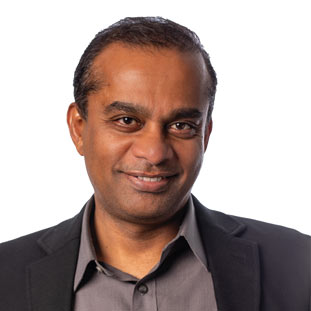
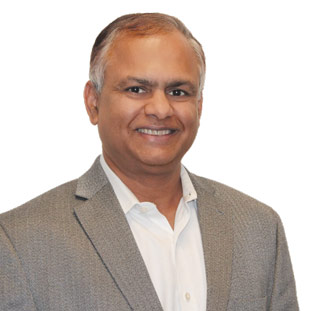
 Anu Khare is Oshkosh Corporation’s senior vice president and chief information officer, a position he has held since April 2018. Mr. Khare has responsibility for all digital technology efforts to support Oshkosh’s business growth and innovation efforts. In this role, he leads the company’s intelligent enterprise agenda which includes data science and artificial intelligence practice, digital manufacturing, cybersecurity and technology-shared services to drive technology-enabled business transformation.
Prior to joining Oshkosh, Mr. Khare served as the executive director of digital technology at United Technologies Corporation from 2015 to 2018. Mr. Khare also served in positions of increasing responsibility at DuPont and Koch Industries in the U.S. and Asia.
In 2022, he was recognized as Forbes CIO Next Top 50 Tech leader, Chicago CIO of the Year ORBIE winner, and under his leadership Oshkosh has won recipient of the CIO 100 award for five consecutive years for innovative use of IT and delivering exceptional business value. His people leadership has helped Oshkosh win Computerworld’s Best Places to Work in IT for three consecutive years.
Could you provide an overview of your role and responsibilities within the company?
I joined Oshkosh Corporation in 2018 as SVP and CIO, reporting to the CEO. My role in the CEO’s leadership team is to influence technology-driven business strategy. I oversee our IT or DT (Digital Technology) organization supporting 17,000 team members. DT plays a prominent role in the company’s digital transformation and business strategies. My organization serves 13 brands within three major business segments. It leads the company’s intelligent enterprise agenda which includes data science and artificial intelligence practice, digital manufacturing, cybersecurity, and shared services to drive technology-enabled business transformation.
What are some of the key challenges you face?
Oshkosh has been on an accelerated digital transformation journey to digitize its processes, modernize its technology stack and embrace new technologies such as analytics, intelligent automation, and digital manufacturing, all with a focus on improving productivity and smart decision-making. We had to do all of this amidst one of the most exciting times in the history of Oshkosh, a period of programmatic acquisitions requiring huge IT integration work. Though our efforts have resulted in a more modern tech stack and a positive impact on the top and bottom lines of the businesses, it did come with several challenges.
The first challenge was how to prioritize our digital efforts and create focus. We developed a prioritization framework that we call the VSP (Value, Strategic Fit, Passionate Business Sponsor). This framework enables a structured way for the team to prioritize the delivery of digital solutions to our business partners. For any digital project, we quantify the value it will bring to the business, ensure alignment with business strategy, and obtain the support of a passionate business sponsor. Applying this three-pronged lens to any project ensures resources are focused in the right areas. This has resulted in a 40% reduction in our average delivery time of digital solutions.
Our second challenge was to resource these digital projects, many of which required skill sets we traditionally didn’t have. This has prompted us to take action in a couple of different ways. First, we are upskilling and reskilling DT (Digital Technology) team members to align with emerging technology growth areas. This is not only allowing us to proactively prepare our people for the future of work, but it is also creating career development opportunities for the team. This approach has helped us fill resource gaps in our advanced practices such as intelligent automation and data engineering. Additionally, we are extending digitalthis learning to business leaders to raise digital awareness and ensure technology literacy throughout the organization.
Another challenge we faced was how to continuously drive innovation while ensuring resiliency and delivery of digital solutions. We came up with a competency framework that we call CARE, an acronym for Customer obsession, Agility, Results, and Entrepreneurship. Our DT leaders act as coaches to encourage these competencies, and we recognize team members who exemplify them. This competency framework has created a culture of experimentation and combined with reasonable investment and partnership with the vendor ecosystem, has delivered 12 digital products.
We are entering into the most exciting period of technology evolution since the advent of the Internet. I think the most impactful and broadest application of technology will be AI (artificial intelligence) everywhere, meaning that every aspect of the business will be infused with and augmented by various AI tools. For Oshkosh, there are four pillars of AI that will make up this infusion. My examples are related to what we experience within the industrial manufacturing space, but these technologies can be applied across all industries in many use cases.
• Predictive Insight: Analyzing patterns in data to provide predictive insight. For example, using historical supplier delivery data to predict part shortages or using customer buying trends to predict future purchases.
• Task Automation: Automating repetitive and mundane tasks to allow team members to focus on more business-impacting work. For example, deploying task automation bots to assist with invoice processing and data entry.
• Human Machine Engagement: Holding conversations, answering questions and performing tasks on command to streamline processes and offload work. For example, virtual assistants can perform customer service tasks and learn from customers and the business to help streamline and implement improved processes.
• Content Generation (Generative AI): Using language mastery to create content. For example, developers, creatives and content writers are seeing their roles positively impacted with time-saving code, image, video and text generation, allowing them to enhance their skills in other areas or deliver greater output within the same amount of time. Additionally, the introduction of out-of-the-box solutions like Microsoft Copilot will simplify meeting summarization, reporting, presentation creation and email responses, to name a few.
All these technological advances and adoption will create a new relationship between humans and AI, where AI becomes an augmentation tool, just like we use industrial tools in our manufacturing plants.
What advice would you give to young professionals who are interested in pursuing a similar career, and what qualities do you think are essential for success in this field?
We are in an era of digital renaissance, where digital technologies can be applied everywhere and create tremendous value, which is why I encourage people to join the IT and technology field. It is also rapidly evolving, requiring a willingness to learn and an embrace of ambiguity.
What is relevant today, may not be tomorrow. You should have an “unlearning and learning” mindset. Think of it like a software update. Our devices constantly need to be updated, so why won’t our own knowledge? I encourage my own team to take on this mindset and in turn, it fosters a learning culture where our team members are encouraged to take time out of their workday to take a training course, attend a leadership seminar, or start their master’s degree. This is how important we view continued education and training.
Additionally, it is important to be adaptable and embrace the sweetness of ambiguity. My career expanded across multiple continents and cities. It’s important to put your full effort into the job at hand and perform it well because you never know where that might take you. When I was young, I never would have expected to be the CIO of a Fortune 500 company. Every new opportunity allowed me to taste something new, and I’m grateful for where it’s brought me.
Another challenge we faced was how to continuously drive innovation while ensuring resiliency and delivery of digital solutions. We came up with a competency framework that we call CARE, an acronym for Customer obsession, Agility, Results, and Entrepreneurship. Our DT leaders act as coaches to encourage these competencies, and we recognize team members who exemplify them. This competency framework has created a culture of experimentation and combined with reasonable investment and partnership with the vendor ecosystem, has delivered 12 digital products.
What would you say are some of the futuristic trends that will have an impact in the next 18-24 months?All these technological advances and adoption will create a new relationship between humans and AI, where AI becomes an augmentation tool, just like we use industrial tools in our manufacturing plants.
We are entering into the most exciting period of technology evolution since the advent of the Internet. I think the most impactful and broadest application of technology will be AI (artificial intelligence) everywhere, meaning that every aspect of the business will be infused with and augmented by various AI tools. For Oshkosh, there are four pillars of AI that will make up this infusion. My examples are related to what we experience within the industrial manufacturing space, but these technologies can be applied across all industries in many use cases.
• Predictive Insight: Analyzing patterns in data to provide predictive insight. For example, using historical supplier delivery data to predict part shortages or using customer buying trends to predict future purchases.
• Task Automation: Automating repetitive and mundane tasks to allow team members to focus on more business-impacting work. For example, deploying task automation bots to assist with invoice processing and data entry.
• Human Machine Engagement: Holding conversations, answering questions and performing tasks on command to streamline processes and offload work. For example, virtual assistants can perform customer service tasks and learn from customers and the business to help streamline and implement improved processes.
• Content Generation (Generative AI): Using language mastery to create content. For example, developers, creatives and content writers are seeing their roles positively impacted with time-saving code, image, video and text generation, allowing them to enhance their skills in other areas or deliver greater output within the same amount of time. Additionally, the introduction of out-of-the-box solutions like Microsoft Copilot will simplify meeting summarization, reporting, presentation creation and email responses, to name a few.
All these technological advances and adoption will create a new relationship between humans and AI, where AI becomes an augmentation tool, just like we use industrial tools in our manufacturing plants.
What advice would you give to young professionals who are interested in pursuing a similar career, and what qualities do you think are essential for success in this field?
We are in an era of digital renaissance, where digital technologies can be applied everywhere and create tremendous value, which is why I encourage people to join the IT and technology field. It is also rapidly evolving, requiring a willingness to learn and an embrace of ambiguity.
What is relevant today, may not be tomorrow. You should have an “unlearning and learning” mindset. Think of it like a software update. Our devices constantly need to be updated, so why won’t our own knowledge? I encourage my own team to take on this mindset and in turn, it fosters a learning culture where our team members are encouraged to take time out of their workday to take a training course, attend a leadership seminar, or start their master’s degree. This is how important we view continued education and training.
Additionally, it is important to be adaptable and embrace the sweetness of ambiguity. My career expanded across multiple continents and cities. It’s important to put your full effort into the job at hand and perform it well because you never know where that might take you. When I was young, I never would have expected to be the CIO of a Fortune 500 company. Every new opportunity allowed me to taste something new, and I’m grateful for where it’s brought me.