Prioritizing Creativity To The Core Of Martech Strategy
 Leaders begin with the customer and work their way backwards. They work hard to gain and maintain customer trust. Leaders pay attention to competitors, but they are obsessed with customers. They consider the long term and do not sacrifice long-term value for short-term gains. They represent the entire firm, not just their own team. Leaders nurture leaders and take their job in mentoring others seriously.
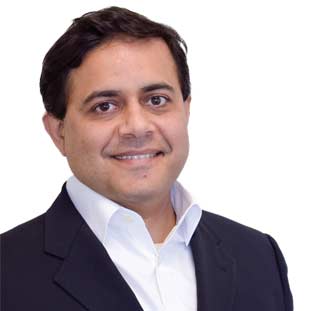
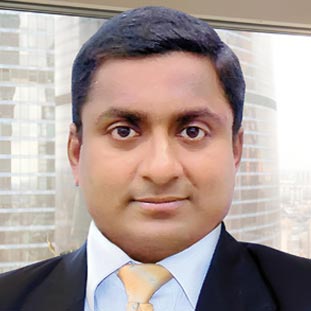
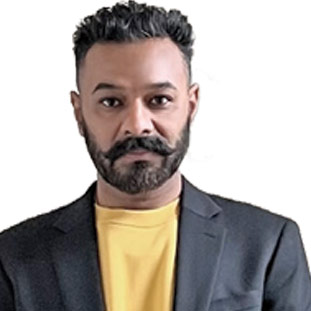
 Speaking of which, Nav Thethi has been instrumental in boosting the company's success by employing all of the aforementioned leadership traits. He has consistently raised the bar and pushed his team to provide high-quality products, services, and procedures.
In an exclusive interview with Siliconindia magazine, Nav Thethi walks us through his professional journey and market insights.
Walk us through your academic and professional journey. Also, tell us about the various roles you have played over the years.
I started my career during the dot-com bubble era in the year 2001 as a web developer. For a couple of years, I worked in several facets of web development, including hardcore developer, database designer, and server administration, among others. While working on several fronts, I saw that technical breakthroughs had no bounds and that being aware of changing dynamics was critical. Throughout my career, I have held numerous leadership positions in various international corporations and have gained the necessary knowledge to move forward. As I had completed my master's degree in Business Economics, I began to reflect on my economic strategy: where the demand is, how to reach that area to meet that demand, how to control the supply, and then grow.
How would you sum up your personality as a leader? Elaborate on the same.
Leadership is a challenging task. In leadership, there is no one shoe that fits all. Since they manage huge groups of people, teams, cross-teams, and other stakeholders, including end consumers, one must be very dynamic in their leadership qualities. Leadership is about influencing people and making the most of your team's given strengths and weaknesses. My leadership style is mostly coaching. I do gap analyses with teams to determine what they want to do and what they are allowed to do at the business. If there is a gap, it indicates that people are not sufficiently motivated. So, I attempt to discover the gap, fill it, and complement the team as much as possible.
What would be the role of a leader in cross-cultural management?
Cross-cultural management is becoming the norm, especially in this post-pandemic period where technology integration is vital. For example, each culture provides its own qualities, and each place has its own advantages. We have a significant offshore model in place, with the Indian economy heavily reliant on it. There are numerous business opportunities between India and the US. Going overseas for cross-cultural management does not only save money; it is also crucial to avoid bottlenecks. Employees who work remotely should not feel separated from the leadership. They must be completely aligned and accountable for the operations. And, as a leader, I want to ensure that my team has clear visibility and openness across departments so that the organization as a whole benefits.
Further, amalging every individual with the organizational goal and customer expectation has always been my focus. Further, it's beyond cross-cultural. It has more depth; the human level understanding, that emotional intelligence and empathic perspective within the team and between leaders and the team people.
What are the most important leadership skills that can help to increase employee productivity while protecting the company from workplace issues?
It's all about influencing others to do the right things even when nobody is watching them.
Great leaders don’t really dictate people what is right or what to do. This eventually benefits organizational operations automatically with increased productivity. Leaders should always be on the lookout for the finest potential strategies to bring positive outcomes and lead by example. Taking proper decisions and acting on them using innovative methods is paramount. Even little tasks are pointless if they are not connected with the major company goals. As a result, having a team with the same mindset assists the firm in driving its growth bandwagon.
What inspired you to be a leader and what drives you today?
I've never believed in the concept of a boss culture. And I believe that leadership does not require a title. If someone wishes to make the necessary changes, he or she must fully own his/her work. I strive diligently to get everyone to think of themselves as entrepreneurs. And what inspires me as a leader is that I have complete freedom to drive the essential changes that will improve the company's reputation in the industry. I also encourage my colleagues to follow the same. This notion is all about giving employees complete freedom to share their ideas and act on them. Every problem presents an opportunity to develop a solution. History has proven to us that most innovations happened through the most severe disruptions. As a result, when it comes to bringing about the necessary change for the development of the business as a whole, everyone is a leader in their own right.
Currently at Hitachi Vantara, I manage all aspects of customer digital experience on a worldwide scale. I define web strategy to deliver personalized experience. I'm in charge of a team of seasoned professionals from several disciplines. Leaders must be dynamic and adaptive because no single solution works for everyone on the team. I believe in re-strategy, which means that I constantly assess everything and modify depending on the circumstances. I also collaborate with the marketing teams as they create digital content and design campaigns. I've been instrumental in developing solutions for seamless customer engagement in order to make data-driven decisions.
Not limiting myself to aforementioned roles, I always try to bring the needed innovation to push the organization forward. I employ an outside-in technique, in which I monitor the market, first get to know our customers, and then consider what motivates them to engage in. With an open culture, we attempt to give our staff freedom and flexibility over their work so that they can be creative and open to try new ways to deliver value consistently. I encourage my team to be candid and honest about the obstacles they will face. As a result of comprehending difficulties, we can work as a team to solve them comprehensively, inexpensively, and quickly. As a leader, I inspire my team to think like the CEO and to take ownership of their work. Everyone would be more enthusiastic about their work as a result of this. Every leader must be an entrepreneur, just as each member of the team must be a CEO.
“Leadership is about influencing people and making the most of your team’s given strengths and weaknesses. My leadership style is mostly coaching, wherein, I do gap analyses with teams to determine what they want to do and what they are allowed to do at the business”
Mention some of the trends you think the present and upcoming leaders should remain aware of? How do you remain aligned with the ongoing trends of the segment?
The upcoming leaders should remain aware of VUCA (volatility, uncertainty, complexity, and ambiguity). In the past few years, the market dynamics are changing rapidly. Before you even know it, you have a product to compete with. And while you are preparing to compete with that, by the time, there is another product launched in the market and you have to now compete with two. Startups have been challenging big giant corporations with tough competition faster than ever. So organizations should really be prepared to stay abreast of the market but shouldn’t focus on the competition. Further, one needs to align business programs and individuals’ goals with customer and employee experience outcomes. Working on the employee experience is very critical as they would be the ones who will ensure a fruitful customer experience. Also, organizations must equip their employees with robust tools/technologies and train them well so they can serve the brand’s promised customer experience. Irrespective of industry vertical, customers are constant. As per a credible report, '86 percent of customers surveyed were willing to switch brands or companies because of a bad service experience'. Hence, offering a good customer experience across every front of operations would define the customer's perception about any given brand, wherein, customers are ready to leave the business deal or relationship due to one bad experience.
In your opinion, what would be the anticipated changes in the market and what are the opportunities that you foresee? What will be your advice for the budding professionals of this domain?
The total exports of software including services delivered by foreign affiliates of Indian companies increased by almost 16 percent in the financial year 2022. This stood at about 172 billion U.S. dollars. The United States and Canada were the top destinations for software exports with 55 percent share. India has proven its capability as a technical leader across the globe. With this, there are tremendous opportunities in India to grow in the MarTech space. MarTech industry is big and it'll continue to grow. There's a potential gap in this segment which can boost Indian software/ services exports economy to a larger scale if covered with 'Creativity' skill. Here, creativity does not mean a good decision, but it is rather the competency of an individual/ company to integrate the right technology stack and orchestrate it in the best possible way to bring the needed efficiency and productivity to obtain optimum business outcome.
What inspired you to be a leader and what drives you today?
I've never believed in the concept of a boss culture. And I believe that leadership does not require a title. If someone wishes to make the necessary changes, he or she must fully own his/her work. I strive diligently to get everyone to think of themselves as entrepreneurs. And what inspires me as a leader is that I have complete freedom to drive the essential changes that will improve the company's reputation in the industry. I also encourage my colleagues to follow the same. This notion is all about giving employees complete freedom to share their ideas and act on them. Every problem presents an opportunity to develop a solution. History has proven to us that most innovations happened through the most severe disruptions. As a result, when it comes to bringing about the necessary change for the development of the business as a whole, everyone is a leader in their own right.
Highlight the responsibilities you have to handle as a leader. Briefly summarize the strategies you have adopted.Start with employees when defining CX strategy. Employee eXperience is a fundamental pillar to deliver an excellent Customer eXperience
Currently at Hitachi Vantara, I manage all aspects of customer digital experience on a worldwide scale. I define web strategy to deliver personalized experience. I'm in charge of a team of seasoned professionals from several disciplines. Leaders must be dynamic and adaptive because no single solution works for everyone on the team. I believe in re-strategy, which means that I constantly assess everything and modify depending on the circumstances. I also collaborate with the marketing teams as they create digital content and design campaigns. I've been instrumental in developing solutions for seamless customer engagement in order to make data-driven decisions.
Not limiting myself to aforementioned roles, I always try to bring the needed innovation to push the organization forward. I employ an outside-in technique, in which I monitor the market, first get to know our customers, and then consider what motivates them to engage in. With an open culture, we attempt to give our staff freedom and flexibility over their work so that they can be creative and open to try new ways to deliver value consistently. I encourage my team to be candid and honest about the obstacles they will face. As a result of comprehending difficulties, we can work as a team to solve them comprehensively, inexpensively, and quickly. As a leader, I inspire my team to think like the CEO and to take ownership of their work. Everyone would be more enthusiastic about their work as a result of this. Every leader must be an entrepreneur, just as each member of the team must be a CEO.
“Leadership is about influencing people and making the most of your team’s given strengths and weaknesses. My leadership style is mostly coaching, wherein, I do gap analyses with teams to determine what they want to do and what they are allowed to do at the business”
Mention some of the trends you think the present and upcoming leaders should remain aware of? How do you remain aligned with the ongoing trends of the segment?
The upcoming leaders should remain aware of VUCA (volatility, uncertainty, complexity, and ambiguity). In the past few years, the market dynamics are changing rapidly. Before you even know it, you have a product to compete with. And while you are preparing to compete with that, by the time, there is another product launched in the market and you have to now compete with two. Startups have been challenging big giant corporations with tough competition faster than ever. So organizations should really be prepared to stay abreast of the market but shouldn’t focus on the competition. Further, one needs to align business programs and individuals’ goals with customer and employee experience outcomes. Working on the employee experience is very critical as they would be the ones who will ensure a fruitful customer experience. Also, organizations must equip their employees with robust tools/technologies and train them well so they can serve the brand’s promised customer experience. Irrespective of industry vertical, customers are constant. As per a credible report, '86 percent of customers surveyed were willing to switch brands or companies because of a bad service experience'. Hence, offering a good customer experience across every front of operations would define the customer's perception about any given brand, wherein, customers are ready to leave the business deal or relationship due to one bad experience.
In your opinion, what would be the anticipated changes in the market and what are the opportunities that you foresee? What will be your advice for the budding professionals of this domain?
The total exports of software including services delivered by foreign affiliates of Indian companies increased by almost 16 percent in the financial year 2022. This stood at about 172 billion U.S. dollars. The United States and Canada were the top destinations for software exports with 55 percent share. India has proven its capability as a technical leader across the globe. With this, there are tremendous opportunities in India to grow in the MarTech space. MarTech industry is big and it'll continue to grow. There's a potential gap in this segment which can boost Indian software/ services exports economy to a larger scale if covered with 'Creativity' skill. Here, creativity does not mean a good decision, but it is rather the competency of an individual/ company to integrate the right technology stack and orchestrate it in the best possible way to bring the needed efficiency and productivity to obtain optimum business outcome.