Evolution of the Indian Diaspora in the U.S.
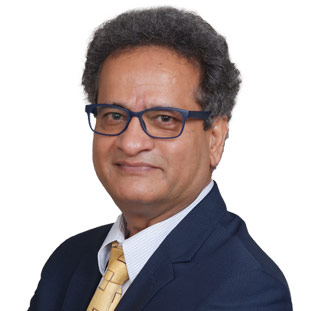
 Misha Ghosh is an Indian American intrapreneur, business executive, and inventor in the Financial Services and Payments industry (his experiences have been with Wells Fargo Bank, Bank of America, Mastercard, and ADP). Per idiyas.com, he is ranked #2 most prolific inventor in Charlotte, NC with eighty-five USPTO-issued utility patents. He received his B.S in Applied Mathematics and Statistics from San Francisco State University and a Master in Statistics from the University of California, Davis.
I came to the U.S in 1986 with my parents. My father was a diplomat for the Indian Government and until then I had traveled to wherever he and mom were posted: Moscow, Soviet Union; Bangkok, Thailand; New Delhi, India; Accra, Ghana.
In those days, it was very common to find Indian immigrants in the U.S, mostly working as engineers, doctors, or professors. They were mainly concentrated in five states: California, New York, Texas, Illinois, and Florida.
The story of the Indian diaspora is a story of discipline, hard work, determination, and resilience. Indian immigrants have persevered and achieved remarkable success.
Today, it is very encouraging to see the Indian Immigrant community dispersed to all 50 states and diverse professions such as politics, academia, arts, design, and sports. The Indian diaspora has evolved into a vibrant and growing community within the United States.
They have enriched American culture with their customs and traditions. Every large city in the U.S now has multiple Indian restaurants. The festival of Diwali and Holi (to a lesser extent) is now celebrated widely in the U.S.
Journey Ahead
As the profile of the Indian American community has grown, so has its economic, political, and social influence ambitions. But how should these 4 million strong Indian Americans today choose to exert this influence going forward?
Let’s not fix what is not broken yet.
Emphasis on education needs to be the cornerstone to continue to have successful careers in a variety of fields. The continued significant contribution to the US economy, society, and contribution to the US tax base needs to continue. It is a community that is making a positive impact on the country and its people. The entrepreneurial streak should continue and continue to build businesses that create jobs across America.
Need to collectively watch out for complacency especially as wealth gets transferred from parents to children. It is important to remember the previous generation’s success has been due to a strong work ethic. They were willing to work long hours and take on difficult jobs to make life better for themselves and their families.
Continuing to foster a strong sense of community that exists among Indian Americans across both culture and business, Indian immigrants have been able to rely on each other for support and assistance in times of need. This sense of community has helped Indian Americans thrive despite the challenges they have faced.
At a diplomatic party many years ago, I recall my father having a conversation with a fellow Japanese diplomat about the success trajectories of Japanese Americans vis-a-vis Indian Americans. He said “We are like the food we eat. We love sticky rice, so we collectively work together and become successful. You Indians are like basmati rice, your individual brilliance shines through in your success.” There is definitely some truth to that.
They have enriched American culture with their customs and traditions. Every large city in the U.S now has multiple Indian restaurants. The festival of Diwali and Holi (to a lesser extent) is now celebrated widely in the U.S.
Journey Ahead
As the profile of the Indian American community has grown, so has its economic, political, and social influence ambitions. But how should these 4 million strong Indian Americans today choose to exert this influence going forward?
Let’s not fix what is not broken yet.
Emphasis on education needs to be the cornerstone to continue to have successful careers in a variety of fields. The continued significant contribution to the US economy, society, and contribution to the US tax base needs to continue. It is a community that is making a positive impact on the country and its people. The entrepreneurial streak should continue and continue to build businesses that create jobs across America.
Need to collectively watch out for complacency especially as wealth gets transferred from parents to children. It is important to remember the previous generation’s success has been due to a strong work ethic. They were willing to work long hours and take on difficult jobs to make life better for themselves and their families.
Continuing to foster a strong sense of community that exists among Indian Americans across both culture and business, Indian immigrants have been able to rely on each other for support and assistance in times of need. This sense of community has helped Indian Americans thrive despite the challenges they have faced.
At a diplomatic party many years ago, I recall my father having a conversation with a fellow Japanese diplomat about the success trajectories of Japanese Americans vis-a-vis Indian Americans. He said “We are like the food we eat. We love sticky rice, so we collectively work together and become successful. You Indians are like basmati rice, your individual brilliance shines through in your success.” There is definitely some truth to that.