
 Magazine :
National Handloom Day 2024: What Stories Does Handloom Fabrics Tell?
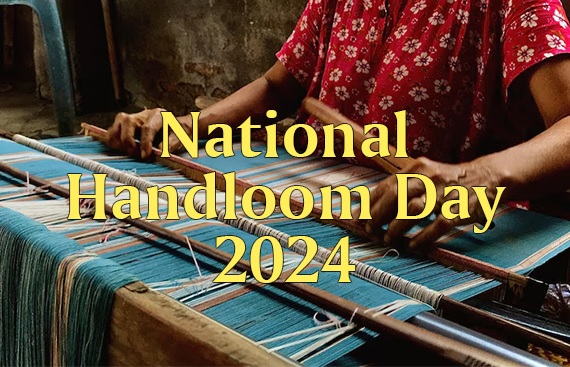
Next to agriculture, handloom sector is the greatest revenue earner for the country. Having a rich tradition of excellent crafts-manship since time immemorial, it reflects India's vibrant culture. It has been a home-based industry and has generated millions of jobs, both directly and indirectly. It has also flourished, basically because there is low capital investment, negligible consumption of power, and eco-friendly products that have been quite innovative. In the situation at hand, the challenges to the sector emanate from low productivity in the face of globalization with limited working capital and rapidly changing technology.
In order to remain relevant, the industry needs to build on intrinsic strengths while seeking a balance between its rich heritage and interventions of modern technology. It becomes a significant fact when taken against the backdrop of the fact that handloom technology has less or low environmental impact and low energy consumption, besides having the possibility of new entrants, all of which make a compelling case for preservation of the originality of the weavers' craftsmanship, along with the incorporation of new technologies for continued success.
National Handloom Day 2024
August 7th marks National Handloom Day, celebrated by India to pay homage to the weavers of the country for their invaluable contribution to both the economy and the cultural heritage of the country. This day, which falls at the very onset of festivities, ensures that what is essentially a historical vocation the handloom industry continues with greater empowerment of the women weavers connected with this craft. The 9th National Handloom Day with the participation of Prime Minister Shri Narendra Modi at Bharat Mandapam, Pragati Maidan, Delhi, was an absolute opportunity to celebrate and recognize the timeless legacy of handloom weaving in India. As cooperatives and activists come together across states, the message is clear that Handlooms empower and exemplify India, shining a light on and lifting up marginalized weaving communities while reviving heritage crafts.
National Handloom Day is celebrated to definite the role of the handloom industry in India's economy and society. It inspires the use of handloom products, which have remarkably high quality compared to machine-made products, made using age-old methods. Stressing this industry, the strong financial component is brought out on National Handloom Day providing a means of living for millions and generating huge revenue. It has also served to underline the great role of weavers and artisans in making the industry sustainable. The day has been celebrated to increase much-needed awareness about the preservation of age-old heritage of handloom weaving, which has been moved from generation to generation. This had promoted the concept of sustainable fashion since handloom textiles do not have much environmental impact. Thus, National Handloom Day draws attention toward the importance of this industry and also puts forth the aesthetics and fineness of handicrafts.
Gaurav Bhatnagar, Director, Sales, Amazon India, said, “National Handloom Day is a cherished opportunity to honor the incredible talent and resilience of the local artisans and handloom weavers of India, who have nurtured the country’s textile traditions and kept it alive for many generations. At Amazon, we are committed to empowering the artisan and weaver communities with e-commerce, to help them build and scale their business, while also promoting sustainable usage of their products”.
Some People May Not Be Familiar with the Concept of Handloom Weaving
A 'handloom' is a traditional loom used to weave cloth without relying on electricity. Hand weaving occurs in homes among weavers and consists of the interlacing of two sets of threads: the warp, running lengthwise, and the weft, running widthwise.
The history of handloom weaving in India is as old as civilization itself and relates back to times before the existence of any mills for textiles. It was practiced by the weaver community called Julahas, who made fabrics dyed from plants, flowers, and fruits. Machine-made textiles from England replaced handloom fabrics in clothes production during the Industrial Revolution. After the Independence period, handlooms made a sort of comeback when Mahatma Gandhi pitched for these against imported machine-made fabrics with the propaganda of their cheap cost.
Various Types of Handloom and Powerloom
- Art Silk: Artificial Synthetic fibre that imitates pure silk in its appearance and texture and gives the added advantages of durability at a cheap rate.
- Hybrid: Blended yarns produce unique textures and styles. Such fabrics, at the same time, come quite cheap.
- Brocade: This is a fabric with raised patterns. The raised patterns are created on the ground of the fabric by means of extra weft threads. Metallic or zari threads are often introduced into brocades to give them a decorative effect
- Cutwork: Extra weft thread is used to form patterns and is then cut away to achieve an open design without any zari.
- Ikat: Patterns are dyed or printed on threads before weaving, and regional styles develop techniques like Pochampally and Patola.
- Kadhua: A broken technique of brocade where the motifs are individually woven without floats, hence the design is sharp and bright in color.
- Kadiyal (Korvai): Technique where these borders are well differentiated from the main body of the fabric through the use of multiple weavers and shuttles.
- Katan Silk: These are Tussah silks made with Mulberry silk yarns of repute for their performance with a lustrous finish and are primarily used for sarees.
- Kora Silk: Organza Silk. Light, semi-diaphanous fabric using raw silk to give that sheer, delicate look.
- Patola & Pochampally: Pre-Weave dyeing techniques for threads, giving unique patterns with regional variations.
- Raw Silk: Coarse textured silk, non-processed with a matt or subdued glow.
- Summer Silk: Lightweight fabric combining Katan silk with twisted silk yarn, ideal for summer.
- Tussar Saree: Made from coarser Tussar silk in its natural copper hue that can be dyed.
- Tissue Fabric: The fabric has metallic zari threads, used in an amount that imparts a subtle to dramatic sheen effect.
Swati Maskeri, Faculty at Srishti Manipal Institute of Art, Design and Technology, says, "It is important to acknowledge the heritage of handwoven textiles in India as an enduring cultural and economic activity, especially on National Handloom Day. With over 15% of cloth production consumed domestically and more than 95% of the world's hand-woven textiles sourced from India, handloom weaving continues to be the second largest economic activity after agriculture, employing 35.23 lakh weavers and allied workers. As one of the oldest cultural technologies of our country, handlooms tell stories of materials and makers that remain relevant amidst current ecological and cultural crises".
Final Note
National Handloom Day 2024 becomes an eventful day for this invaluable tradition of handloom weaving to bind together India's rich past with the aspirations for the future. As the day approaches, there is renewed interest in going through stories and histories behind the heirloom weaves, along with acknowledging policy and online platforms helping the marginalized weavers. It calls upon citizens and consumers to play their due role for the preservation of this green craft through advocacy and community engagement. Such efforts raise consumer awareness, strengthen the handloom sector, and fill it with the spirit of inclusive development so that this much-cherished tradition remains vibrant and alive.
Read More News :
Stocks to Focus: Vedanta, Tata Power, Raymond, Gland Pharma, PFC, Cummins India
JSW MG Motor India Unveils EV Charging Initiative, Teams Up with Jio


.jpg "Top Companies of the Year")