Magazine :
2025's Game-Changing Executive Appointments
- 2025 appointments drive India’s growth with global vision and local expertise.
- RBI, UIDAI, and ISRO leaders focus on AI, digitalization, and advanced technology.
- Hyundai and EESL CEOs push EVs, energy efficiency, and Net Zero initiatives.
As December 2025 draws to a close, India’s executive corridors resonate with decisive leadership shifts that signal more than routine appointments they announce a recalibration of national ambitions. At a time when India continues its rise as the world’s fastest-growing major economy, with GDP projections standing at an impressive 7.2 percent for the fiscal year, leadership roles across government, finance, mobility, technology, and space have been filled with individuals poised to shape the nation’s next growth arc.
From Mumbai’s financial skyline to Delhi’s policymaking nucleus and from space laboratories to digital identity command centers this year’s leadership changes demonstrate the country’s evolving governance philosophy, one that blends indigenous capability with global vision, and policy strength with digital foresight. At the heart of 2025’s transformation lies a simple truth India is no longer preparing for the future, it is actively building it.
Sanjay Malhotra Takes Charge as Governor of the Reserve Bank of India

In a move that set the tone for financial leadership in the new era, Sanjay Malhotra was appointed the 26th Governor of the Reserve Bank of India in December 2024. A seasoned 1995-batch IAS officer from the Rajasthan cadre and former Revenue Secretary, Malhotra entered the RBI at a time when global economic turbulence required both fiscal discipline and technological innovation.
His tenure has been marked by stabilizing monetary policy amid inflationary pressures. Malhotra recalibrated repo rates to 6.25% and strengthened foreign reserves to $680 billion.
Under his leadership, the RBI expanded Central Bank Digital Currency (CBDC) initiatives and deployed AI-driven fraud detection systems, processing over 15 billion UPI transactions monthly. Critics note his bureaucratic background, but his tech-forward approach reinforces India’s financial sovereignty and aligns with the Vision 2025 digitization roadmap.
Tarun Garg Appointed MD & CEO of Hyundai Motor India Limited (HMIL)
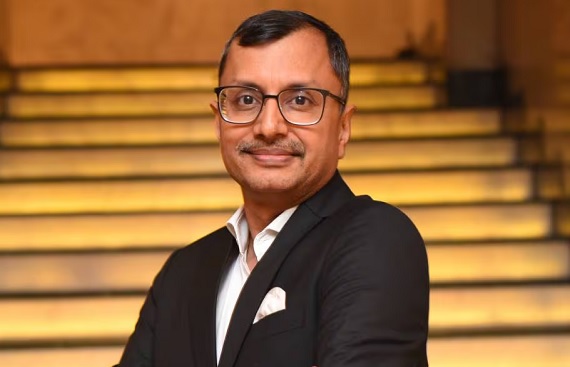
Breaking both national and corporate glass ceilings, Tarun Garg made history by becoming the first Indian Managing Director and CEO of Hyundai Motor India Limited. Effective January 2026, his appointment marks a strategic inflection point for one of India’s largest automobile manufacturers.
As the Whole-Time Director and the COO of Hyundai, Garg has been a part and parcel of the India playbook of the company. His leadership charter is also rooted squarely in the future and highly innovative and localized manufacturing. The agenda of Garg is in-synchronous with the national priorities as India moves at a faster pace towards sustainable transport solutions.
Hyundai’s expansion into electric vehicle production, deeper investments in domestic assembly, and emphasis on customer-centric innovation under Garg are expected to strengthen India’s standing as a global automotive hub. This transition is not merely corporate it represents India’s emergence as a manufacturing powerhouse in clean mobility.
Bhuvnesh Kumar Appointed CEO of UIDAI
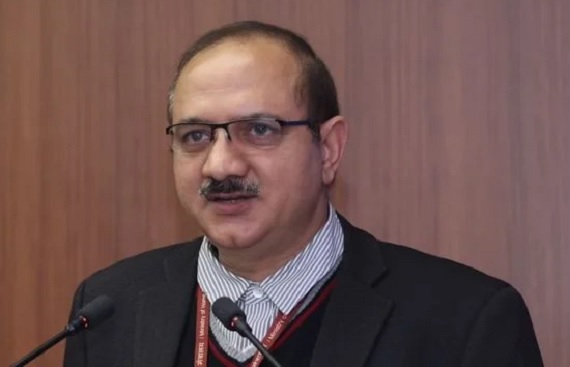
On 1 January 2025, Bhuvnesh Kumar assumed leadership as CEO of the Unique Identification Authority of India, inheriting one of the largest digital governance platforms in human history. A 1995-batch IAS officer from the Uttar Pradesh cadre and a gold medalist from NIT Kurukshetra, Kumar’s leadership brings continuity and technological refinement to Aadhaar’s operations.
Currently overseeing more than 1.41 billion enrollments and 127 billion authentication transactions, Kumar’s mandate extends beyond scale it focuses on trust. At his direction, UIDAI is increasing its investments on data protection, AI-based authentication systems and frictionless KYC systems that drive banking, healthcare, and governance processes throughout the country.
With India going digital in its economy, the leadership of Kumar makes the identity infrastructure both invisible and indispensable secure, seamless and citizen-centric.
Also Read: How Online Parenting Personas Are Causing Identity Whiplash in Children
V. Narayanan Appointed Chairman of ISRO

Assuming office on 14 January 2025 as ISRO Chairman and Secretary, V. Narayanan represents leadership grounded in scientific excellence. With nearly four decades at ISRO and a distinguished legacy in propulsion systems, Narayanan is widely recognized as one of the architects of India’s space propulsion success.
Narayanan had been the figure behind the Liquid Propulsion Systems Centre and made a resounding contribution in technologies that also drove such historic missions as Chandrayaan-3 and Aditya-L1. Currently, he is given a portfolio comprising of some of the most ambitious programs of ISRO Gaganyaan, Chandrayaan-4, and Next Generation Launch Vehicle project.
In his leadership, the space policy of India is not maintenance of its position anymore. As exploration, defense, climate research and commercial space taking are considered as main priorities, the tenure of Narayanan can re-establish the global space standing of India.
Akhilesh Kumar Dixit Appointed CEO of Energy Efficiency Services Limited (EESL)

When Akhilesh Kumar Dixit assumed charge as CEO of Energy Efficiency Services Limited on 16 June 2025, he stepped into a mission-critical role at the heart of India’s sustainability roadmap. With over three decades in the power sector and significant leadership stints at POWERGRID, Dixit brings operational depth to EESL’s energy transition mandate.
His vision is both technological and transformational driving smart meters, promoting LED adoption, advancing building energy efficiency, and positioning EESL as a comprehensive energy solutions enterprise. In alignment with India’s Net Zero 2070 ambitions, Dixit’s leadership reinforces that sustainability is not a peripheral goal but a central development strategy.
Conclusion!
The executive appointments of 2025 reflect a nation moving decisively from aspiration to action. These leaders are not mere administrators they are architects of India’s next growth era. From financial systems that think digitally to industries that move electrically, from identity powered by AI to rockets driven by ambition, India’s leadership landscape now mirrors its global aspirations.