
News

Indian Genius Makes World's First 100 Core chip

By SiliconIndia   |   Tuesday, 24 January 2012, 03:30 Hrs   |    13 Comments
Print Email
Anant


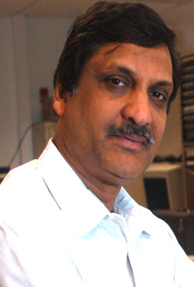
Bangalore: You might have seen chips with eight, sixteen and even 32 cores. But Anant Agarwal, an MIT genius is manufacturing the world’s first chip with 100 cores in his commercial venture Tilera.


Anant is currently the Director of Massachusetts Institute of Technology’s Computer Science and Artificial Intelligence Lab (CSAIL). Tilera, the many-core chip is a product of his focus on making efficient future servers with power saving and high performance chips.


The new chip is made by assembling multiple cores into a single one. Currently, the high end chips from manufacturers have a maximum of 16 cores whereas Tilera offers chips with 100 cores which are low in power consumption and high in performance and memory support. The traditional “connecting bus” is replaced by a “switch” in new processor. According to Anant, “every processor has a switch and they all talk to each other like in a peer to peer network.”


Tilera’s performance claims were validated by Facebook engineers in Memcached, a high-performance database memory system for web applications. They compared Tilera’s second generation 64-core processor to Intel’s Xeon and AMD’s Opteron. According to the engineers, a tuned version of Memcached on the 64-core Tilera yielded at least 67 percent higher throughputs than low-power x86 servers.


Currently Tilera manufactures chips with 16, 32 to 64 cores and it plans on shipping the 100 core chips later this year. Anant targets network and videoconference equipment makers with Tilera.


Tilera’s future plans code named “Stratton” focus on improving memory, interface, I/O and instruction set. It will produce chips with cores ranging from 4 to 200 by 2013. Anant also leads a new MIT project code-named Angstrom, aimed at building exascale supercomputers.


Write your comment now
 
Reader's comments(13)
1: Heard of this company a few years ago. Take it with a grain of salt. Will believe when in production. In Silicon Valley 'genius' is thrown around a lot.
Posted by:Chand - 28 Jan, 2012
2:
Right you are.Effort should come true when only in production
banti Replied to: Chand - 28 Jan, 2012
3: Dr. Bidhan Chandra,

In India a scientist and their innovation have to fight to survive by their Higher up Managers at all levels. Forget the Govt but also in the private sector. It is cultural like it or not. That has to change.
Posted by:Ashok Netto - 26 Jan, 2012
4: Is he really an Indian or the best way to describe him would be an "Indian American?"

Why is that a many "Indian Americans" in the U.S. have shown such creativity and innovativeness while working for American institutions? Why is it that we do not see the same creativity and innovativeness from Indians based in India, such as those from the famous IITs and IISC? What makes this difference?

Let us do some emotion-free fact finding and discuss here. Thank you.
Posted by:Dr. Bidhan Chandra - 24 Jan, 2012
5:
India doesn't spend much time and money in Research and Development as simple as that.
shuaib Replied to: Dr. Bidhan Chandra - 25 Jan, 2012
6:
India spends enough on r&d.Fact is they are not having that level of education and freedom.
banti Replied to: shuaib - 28 Jan, 2012
7:
They have enough freedom. Go to BARC, NPCIL, BHEL, SAIL, GAIL, ONGC and you will see what their employers are doing. How many of them are spending their time in R&D Lab's and library. BARC & ISRO are some of the exception, but too few scientists compared to employed numbers. Motiation comes with Pay & perks. This is a consumer world. Lets not forget that
Tapan Replied to: banti - 28 Jan, 2012
8:
The point you have raised is an absolutely fantastic observation. The fact is that they all live in an English environment, where information is not shrouded. And it is a liberal atmosphere. India cannot create such a situation. For example, if this same person is here in India, the people working under him wouldn't get the mental and physical liberation that he is getting over there. Here, everyone is frightened if another person, especially a subordinate is showing mental calibre. It is in the language.
Being in an English language environment, or even being ruled by the English is a wonderful situation, the like of which is not there in any Asian or African nation.
Ved from Victoria Institutions Replied to: Dr. Bidhan Chandra - 24 Jan, 2012
9:
Completely agree, to add to the above discussion, an individual in the US, is freed from all financial burdens when it comes to taking care of himself and his family. Childrens education are taken care of, parents medical is taken care off, no rank environment, individuals there compete with themselves where as it is vice-versa in India, quality of life and standard of living gives the much mental peace needed to be highly creative. It helps focus on things you want to do than being at mercy of things that you do not want to do, which should be taken care off by the Govt.

I experience this in my personal life day-in-day out. I am in an industry where all the headache of setting up a business is pure madness in India, but my experience in NZ was simple and neat. My creative ability was at an all time high in NZ, but in India, my creativity has been consumed by bullheaded bureaucrats and babus and eventually i could not even give 25% of my creativity here. Screw them, i feel now like i should have appointed someone to handle these leeches in positions that dont do talking without bribery.
Santosh Bidikar Replied to: Ved from Victoria Institutions - 28 Jan, 2012
10:
Dr. Chandra, you are asking an age old question (age as in last 30 years) for which the answers have been obvious and been discussed many times over. The question you should be asking is, why Indians have not been innovating given the liberisation of hardware and software in the recent years particularly since the beginning of the new millennium.

The obvious ones that come to my mind are,

1. Lack of a semiconductor fab, even an older technology node capable one, NOT necessarily the state of the art like 21nm. This is an essential piece to try out designs, characterize and calibrate chip designs.

2. Lack of backend, physical design and packaging expertise within the Indian semiconductor ecosystem. More than 90% have had expertise in chip designs but have never been to a lab, wouldn't know how to use any characterizing equipment. Just programming in VHDL does not make you an chip design expert -one needs to develop an understanding and appreciation of the end-to-end process in chip design.

3. As stated in 2 above, many-core processors are a challenge in physical design, packaging and interconnects, power management and high speed on-chip communication and management using a hardware-level hypervisor. These require analog-mixed signal expertise in addition to digital design. I am not convinced that we adequate professional expertise let alone academic exposure in this area.

These are some of my thoughts for now, I welcome comments.
Dr. MP Divakar Replied to: Dr. Bidhan Chandra - 24 Jan, 2012
11:
You are simply containing your observation to chip design, which itself bascially come from English nations. What Dr. Chandra has raised is a universal point, connected to every man who goes to the English nations. Including the causal worker and the taxi driver.
Ved from Victoria Institutions Replied to: Dr. MP Divakar - 24 Jan, 2012
12:
Because they all move to US as soon as they graduate and we do not have the similar research facilities and funding in India.
Jay Replied to: Dr. Bidhan Chandra - 24 Jan, 2012
13: Now Intel will have to work hard on their future chips.
Posted by:Patil - 24 Jan, 2012
Beautiful and dress selection, please go to Dresses
Sign Up for DailyDose and Read the Day's Highlights
Email:
SiliconIndia About Us   |   Contact Us   |   Help   |   Community rules   |   Advertise with us   |   Sitemap
News:       Technology   |   Enterprise   |   Tech Products   |   Startups   |   Finance   |   Business   |   Career   |   Magazine  |   Dailydose   |   News archive  
Network:      Network   |   Profile   |   Messages   |   Find   |   Blogs   |   Events   |   Q&A   |   CXO Insights  
Career:      Jobs   |   Companies   |   Mentorship   |   Videos   |   Career blogs  |   Training Institute  |   Freshers
Online courses:   Web developer   |   Java developer   |   CCNA training   |   SEO   |   SAS   |   SQL server 2005   |   J2EE
Education:   MBA   |   MCA   |   Engineering   |   Overseas Education   |   Internship
Life:           Jokes   |   Bookstore   |   Relocate  |   Marketplace
Cities:         Startup   |   Real estate   |   Finance  
Send your and help us continue to improve SiliconIndia
© 2012 SiliconIndia all rights reserved