
 Magazine :
Oxford University Press Launches Trilingual Sanskrit-Hindi-English Dictionary
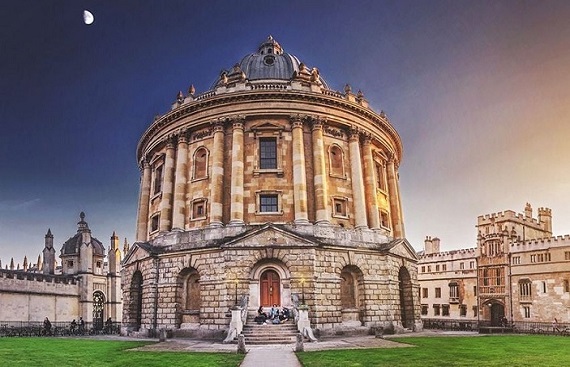
Oxford University Press (OUP) has launched a trilingual Sanskrit-Hindi-English dictionary that should open up the language to students across the globe. The initiative is in furtherance of the company's mission to share knowledge and learning with the ministry of education; besides, it is swelling its portfolio of bilingual dictionaries in India to 13 languages, of which nine will be classical.
The new dictionary is another addition to OUP's existing list now counting a list of dictionaries in Sanskrit, Bengali, Assamese, Kannada, Malayalam, Odia, Tamil, Telugu, Marathi, Gujarati, Punjabi, Urdu, and Hindi. "Oxford University Press is committed to language preservation and enrichment in the pursuit of linguistic pluralism, global knowledge, and dissemination in all its forms. This trilingual dictionary marks a high point for us in the exercise of language learning and of our heritage", Sumanta Datta, Managing Director of OUP India, said.
The Oxford Sanskrit-Hindi-English dictionary is one of the works with more than 25,000 finely selected words aimed at enabling the student master standard Sanskrit. The dictionary would make each student of Sanskrit conversant and fluent in the next decade in accordance with the guidelines of NEP 2020 and the National Curriculum Framework 2023.
It will be published by the Uttar Pradesh Sanskrit Sansthanam (UPSS) in association with it. The dictionary will thus form a crucial reference source for the student in Sanskrit.
OUP has also planned the following dictionaries. These are Compact English-English-Urdu Dictionary, Mini Hindi-English Dictionary and English- Hindi Dictionary. This year, OUP has released the English-English-Assamese Dictionary and the Mini English-Bengali Dictionary.
Sanskrit, now 'Classical' as of 2005, is believed to have a connection with most of the European languages, belonging to one ancestor language called Proto-Indo-European. So, that means it lets us into a sort of window through which we can view the migration patterns and create a record of the years of cultural exchange over a couple of millennia.
Read More News :
Durga Puja - A Festival of Togetherness!
Maruti Suzuki Launches Grand Vitara Dominion Edition for Festive Season