Magazine :
The New Strategic Agenda Driving EU-India Cooperation
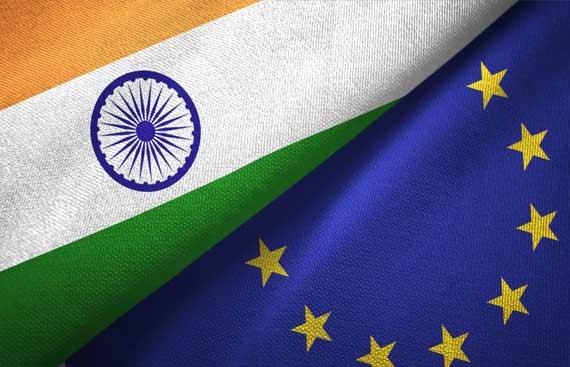
Fremont, CA: The renewed series of high-level dialogues between the European Union and India has revitalised their bilateral relationship, setting the stage for the anticipated signing of the EU–India Free Trade Agreement on Republic Day 2026. The EU is India’s third-largest trading partner, and both sides are working to expand trade and investment, establish resilient and secure supply chains, and deepen collaboration in emerging areas such as artificial intelligence and advanced technologies. This strengthening partnership is rooted in shared democratic values and a mutual commitment to prosperity.
A Turning Point in EU–India Bilateral Ties
The shift in understanding paved the way for a renewed push to revive and advance the many strands of bilateral cooperation, particularly in areas unencumbered by significant strategic differences. As part of this effort, the EU intensified its engagement with India, resulting in a shared strategic agenda to deepen collaboration in trade, technology, security, and sustainability.
The renewed energy in the partnership was symbolised by the first-ever visit of the entire European College of Commissioners to India — a clear demonstration of political will at the highest level. Negotiations during and after the visit culminated in the adoption of a “New Strategic EU–India Agenda” marking a significant milestone in bilateral ties. This framework aims to expand and coordinate cooperation more effectively, enhance economic and security outcomes for both partners, and strengthen joint efforts in addressing global challenges.
As the European Union reassesses its role within the global economic and political landscape, there is growing recognition that, amid heightened geopolitical uncertainty, its relationship with India will becritical to the EU’s long-term strategic interests. It is increasingly acknowledged that India’s future trajectory will significantly influence the EU’s ability to achieve its global economic, political and climate objectives. Across European capitals, there is a growing recognition that rebalancing the EU’s global economic partnerships is essential, making a coherent and forward-looking policy approach towards India both necessary and timely.
A Critical Push Toward Finalising the India–EU Free Trade Pact
During the 11th India–EU Foreign Policy and Security Consultations and the Sixth Strategic Partnership Review Meeting, India and the European Union reaffirmed their shared commitment to concluding the long-awaited Free Trade Agreement (FTA) negotiations by the end of December. Both sides also reiterated their intention to work collaboratively toward a free, open, inclusive, and prosperous Indo-Pacific region.
Reflecting the urgency attached to the ongoing negotiations, an informal round of discussions was held in Brussels. Although not officially designated as a formal negotiation round, it included intensive exchanges at the chief-negotiator level aimed at resolving outstanding issues, such as market access and non-tariff barriers. These developments signal that India and the EU have placed renewed emphasis on advancing their protracted FTA discussions, reaffirming their shared objective of concluding negotiations by December. With the current joint roadmap approaching completion, both sides have agreed to initiate work on a new Joint Comprehensive Strategic Agenda to guide cooperation beyond 2025. This updated framework is expected to be adopted at the India–EU Leaders’ Summit in New Delhi in January 2026.
Signalling a strong intent to conclude the negotiations, the EU’s delegation—led by Trade Commissioner Maros Sefčovič—is expected to arrive in New Delhi in the coming days. The decision to invite senior EU leadership reflects the renewed commitment on both sides to finalise this long-pending agreement. More than half of the FTA’s 23 chapters have been fully concluded, and a broad consensus has been reached on most of the remaining sections. However, several key issues still require resolution, including agriculture, wine and spirits, automobiles, insurance, and banking. Another critical point of contention is the EU’s Carbon Border Adjustment Mechanism (CBAM), scheduled to take effect in January 2026.
India and the EU, bound by shared interests, continue to collaborate on advancing peace, economic stability, and security across the Indo-Pacific and beyond. Following the eventual signing of the FTA, both partners will need to assume an even more decisive leadership role to preserve and expand the relationship in the decades ahead.
What remains clear is that the stakes are high. An ambitious trade agreement between the world’s largest economy and the soon-to-be third-largest could provide a robust economic foundation for a deeper strategic partnership—particularly in balancing China’s growing influence. In an era marked by uncertainty and global challenges, the EU-India partnership must serve as an engine of progress and promise.
.jpg "Renewing Smiles, Restoring Confidence")