Magazine :
The Autonomous Enterprise Architect: Shravan Padur's Blueprint for AI-Driven Platform Engineering and Automation-First M&A Integration
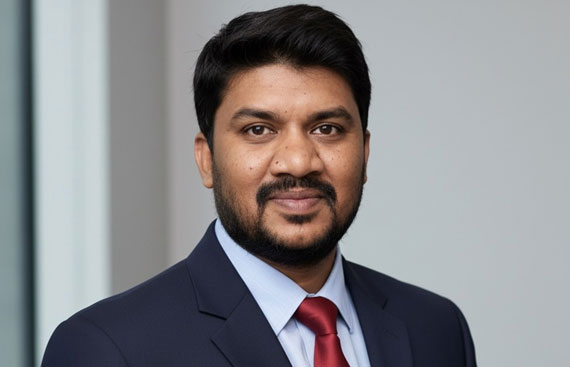
In a year marked by unprecedented consolidation across global industries, the true measure of enterprise resilience no longer rests on traditional modernization programs. It now depends on whether organizations can integrate, automate, and govern their sprawling systems at a pace fast enough to preserve competitive advantage. According to industry analysts, 2025 is the year where platform engineering, AI autonomy, and governance by design stopped being parallel priorities and began converging into a unified discipline.
Few technologists represent this convergence more convincingly than Shravan Kumar Reddy Padur, whose work in automation-first post-merger IT integration and AI-augmented platform engineering has earned increasing recognition far beyond his home organization. From bridging monolithic ERP environments with generative AI to compressing merger integration timelines from quarters to weeks, his frameworks are becoming case studies for enterprises navigating complexity at scale.
“The future will belong to organizations that integrate faster than they divide,” Shravan says, offering a succinct summary of the decade’s most overlooked digital truth.
A New Playbook for Post-Merger Integration
Shravan’s landmark 2025 paper Automation-First Post-Merger IT Integration: From ERP Migration Challenges to AI-Driven Governance and Multi-Cloud Orchestration offered something the industry had been missing for years: a structured, automation-led way to harmonize newly merged enterprises. His three-phase approach of stabilization, integration, and optimization replaced piecemeal migration strategies with a measurable, audit-friendly operating model rooted in policy-as-code, AIOps telemetry, and generative AI planning agents.
What made his blueprint stand out were not just the technical components but the scale of its outcomes. Migrations that historically consumed entire fiscal quarters were now compressible into a matter of weeks. Multi-cloud workloads could be orchestrated and rationalized without breaking compliance chains. ERP landscapes could be merged into coherent, governable structures without halting business operations.
Yet the most compelling validation does not come from executives who worked with him, but from external experts who reviewed his approach independently.
According to a senior research director at a major global analyst firm specializing in AIOps and enterprise IT governance, “Very few integration blueprints in the last decade have demonstrated a practical fusion of observability, automation, and AI reasoning at enterprise scale. Shravan’s automation-first PMI model stands out because it is realistic, testable, and replicable. It reduces timeline uncertainty by formalizing decisions that were once left to manual judgment.”
That evaluation aligns with academic perspectives as well.
Dr. Helena Moritz, Professor of Distributed Systems Engineering at the University of Cambridge, examined Shravan’s integration diagrams and methodology as part of her 2025 study on post-acquisition digital transformation. “What impressed me,” she noted, “was the systemic coherence. His architecture treats the merger not as an application migration problem, but as a distributed systems unification problem. The emphasis on policy propagation, identity reconciliation, and AI-mediated orchestration demonstrates an unusually mature grasp of autonomy in enterprise systems.”
Dr. Moritz’s review highlights a key differentiator. In Shravan’s framework, automation does not merely speed up tasks. It introduces a governance fabric that ensures compliance, performance, and business continuity without requiring constant human arbitration.
When ERP Became Predictive and Composable
Shravan’s February 2025 work on ERP modernization, The Future of Enterprise ERP Modernization with AI, argued that ERP had finally crossed a threshold. Once rigid systems of record, ERP platforms in 2025 now behave as systems of foresight. His analysis brought together generative copilots, composable architectures, and embedded machine learning to create a cohesive vision of next-generation enterprise operations.
In this model, ERP modules operate as Packaged Business Capabilities that continuously analyze data, interpret intent, and proactively guide decisions. Forecasting pipelines anticipate supply chain disruptions. HR systems evaluate workforce stability. Finance modules generate variance narratives and compliance explanations on demand.
A Fortune 500 CTO who reviewed Shravan’s ERP modernization framework described it as “the first practical map for turning ERP from a liability into a strategic intelligence engine. Many organizations talk about autonomous ERP, but Shravan’s work is the first I have seen that outlines how to operationalize it without destabilizing the core.”
The CTO emphasized that the value did not lie in AI alone but in the stitching together of governance, identity, lineage, and predictive logic. “It is one thing to bolt AI onto an ERP. It is another to redesign the ERP experience around intelligence. His method does the latter.”
The Maturity of AI-Augmented Platform Engineering
Shravan’s 2024 paper on AI-Augmented Platform Engineering already highlighted a shift in how enterprises approach developer productivity and operational trust. By 2025, platform engineering has matured into an executive priority, and his analysis has become especially prescient.
He predicted that platform engineering would serve as the organizational backbone for AI autonomy. Self-optimizing deployment pipelines, proactive configuration scanning, and conversational copilots now shape how developers interact with infrastructure. These capabilities are no longer optional. They are essential to reducing cognitive load and ensuring that compliance and governance scale as quickly as automation.
The industry analyst reinforces this point:
“Platform engineering without AI in 2025 is incomplete. Shravan’s articulation of autonomous platform behaviors aligns closely with what leading enterprises are doing. It captures where the market is already heading.”
This independent confirmation positions his contribution not as speculative but as aligned with evolving industry standards.
Agentic AI and the New Governance Reality
Shravan’s discussion of agentic AI in post-merger integration drew significant attention from academics and analysts alike. His prototypes demonstrated how AI agents can plan migration sequences, test rollback conditions, optimize workload placement, and verify compliance without human initiation. These agents operated within guardrails, ensuring that autonomy did not compromise oversight.
Dr. Moritz commented on this aspect.
“Most enterprises today can automate tasks. Very few can automate reasoning. Shravan’s work demonstrates an early but meaningful step toward responsible agentic automation. It treats AI as a collaborator rather than an unchecked executor.”
This nuance has become central to 2025’s governance debates, where the challenge is not AI capability but AI accountability.
Cross-Industry Impact
As mergers accelerate in energy, manufacturing, finance, and healthcare, Shravan’s frameworks are gaining traction across industries. Not because enterprises want automation, but because they need predictability.
The Fortune 500 CTO emphasized this point:
“In integration programs, predictability is everything. Shravan’s work reduces the duration guesswork and shifts IT from a risk center to a confidence center.”
Global analyst groups echo this sentiment, noting that his approach provides a structured pathway for enterprises that historically lacked a repeatable integration discipline.
A Vision Anchored in Responsible Autonomy
Shravan’s philosophy for 2025 and beyond rests on a simple line: “Autonomy without responsibility is chaos. Responsibility without autonomy is stagnation. The future belongs to the balance between the two.”
This balance is the heart of his work. His frameworks emphasize policy controls, human oversight, explainability, and audit trails, ensuring that automation amplifies rather than overrides organizational governance.
His legacy is not defined by the systems he automated but by the trust his systems enabled.
Conclusion
With independent experts validating both the novelty and the feasibility of his frameworks, Shravan Kumar Reddy Padur’s contributions in 2025 stand as some of the clearest examples of how autonomy, governance, and platform engineering can be unified in modern enterprise technology. What once took quarters now takes weeks. What once required manual coordination now operates within intelligent guardrails. And what once resembled chaos now follows a coherent architectural blueprint.
Shravan may describe himself simply as someone who builds systems that “quietly do their job,” but external analysts, academic leaders, and global technology executives see something more. They see an architect of confidence in an era that desperately needs it.
Read More News :
The Complete Guide to Opening a Salary Account Online in 2026
India's Homegrown Troop Messenger Strengthens Enterprise Chat with Smart AI Tools
.jpg "Direct Sales Companies")