

NPCIL Begins Fuel Loading at 700 MW Rajasthan Nuclear Plant
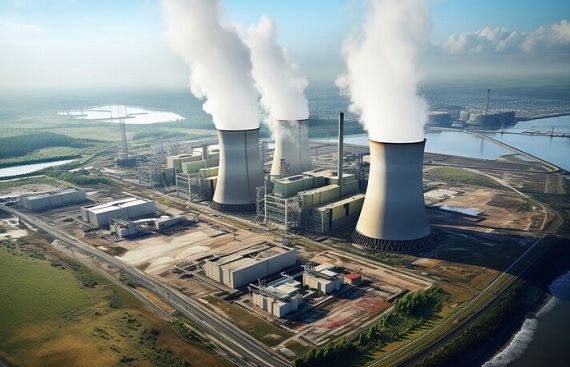
Nuclear Power Corporation of India Ltd (NPCIL) has announced the commencement of nuclear fuel loading at its 700 MW unit at the Rajasthan Atomic Power Project (RAPP). This significant milestone was achieved on Tuesday at the Rawatbhata facility in Rajasthan.
The Initial Fuel Loading process follows the receipt of approval from the Atomic Energy Regulatory Board (AERB) and the completion of all necessary preparations, NPCIL confirmed. The next steps will include the First Approach to Criticality, which marks the beginning of nuclear fission, and subsequent power generation.
NPCIL anticipates that Unit 7 will begin commercial power production later this year. Additionally, Unit 8, another 700 MW plant at RAPP, is projected to come online next year.
Unit 7 at RAPP is part of a series of 16 Pressurised Heavy Water Reactors (PHWR) with a capacity of 700 MW each being developed across the country. The first two units of this series, Units 3 and 4, began commercial operations at the Kakrapar Atomic Power Station (KAPS) in Gujarat during the 2023-24 period. Both units at Kakrapar are currently operating at a high capacity factor.
Earlier last month, Unit 3 at the Rajasthan Atomic Power Station (RAPS) was successfully reconnected to the grid following extensive renovation and modernization. This included the replacement of key components such as the coolant channel and feeder, which has extended the unit’s operational life by 30 years. RAPS 3, which initially began commercial production in June 2000, underwent these upgrades to enhance its safety and efficiency.
In March 2024, India entered the second phase of its three-stage nuclear power program with the 'core loading' of the first indigenous 500 MW Prototype Fast Breeder Reactor (PFBR) at Kalpakkam near Chennai. This reactor, developed by Bhartiya Nabhikiya Vidyut Nigam Ltd (BHAVINI), will make India only the second nation after Russia to operate a commercially functioning fast breeder reactor once it is fully commissioned.


