Magazine :
Ministry of IT Unveils Frameworks Imposing Safety and Trust Obligations on Platforms
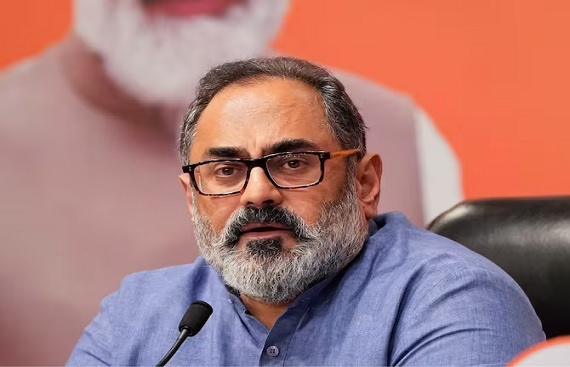
Union Minister Rajeev Chandrasekhar announced that the government is in the process of formulating regulatory frameworks, emphasizing the mandatory nature of safety and trust for digital platforms. He mentioned that this strategy will undergo further refinement in the future. Chandrasekhar highlighted the contemporary challenges of complexity, commercial dominance, toxicity, and the harms pervading the internet, attributing these issues to the unchecked advancement of innovation. The Minister of State for IT and Electronics shared these insights during the India Internet Governance Forum IIGF'23.
"So safety and trust as an obligation cast on platforms is a framework that our government has been developing since 2021 and we will continue to fine-tune this there is nothing that is going to be collegial, best-effort, self-regulatory framework that we have seen for so long. Instead, we are transitioning into an era where governments have an obligation to ensure the internet is safe and trusted for all those 1.2 billion Indians. The same thought process is creeping into other democracies as well", he said.
Chandrasekhar also touched upon the issue of deepfakes. "As the PM recently pointed out and put the spotlight on an issue like deepfakes, which is misinformation powered by AI, these are all challenges we will have to immediately square up to, and not let it get so far ahead that the regulation is playing catch-up," he said. The government is adopting a consultative approach to shaping technology-related policies, with a focus on the development of key frameworks like the Digital Personal Data Protection legislation, IT rules, and the proposed Digital India Act. These initiatives aim to regulate the internet, foster innovation, and safeguard consumers, all of which are being constructed through the active involvement of multiple stakeholders in the decision-making process.
India is on fast track of growth when it comes to the internet, he said, noting that 850 million online Indians today represent the largest connected block of people on the global internet. That number is set to rise to 1.2-1.3 billion Indians using the global internet, he said. "We can safely say that we have some views about the internet of what future of internet should be multi-stakeholderism will be the cornerstone to how future of internet will be shaped, policy-wise and regulation-wise", he said.
India today represents the most exciting "opportunity-rich" environment for technology in general and tech and innovation on the internet, in particular. "It is clear that the future of technology is no longer what we used to think about 4-5 years ago, which is a group of companies or collection of countries that in a sense had a monopoly towards the future of tech. Rather, in today and tomorrow's world, the future of tech will be led by a number of countries, like-minded democracies, communities and societies, with shared values", he said.
In recent years, the government has showcased an unprecedented dedication to a consultative approach in crafting technology-related policies. Whether it's the DPDP Bill, IT rules, or the envisioned Digital India Act, each of these foundational elements designed to govern the internet, regulate technology, protect consumers, and foster innovation is being developed with the active involvement and inputs of multiple stakeholders. This approach stands as a distinctive feature of this government, representing a significant departure from the past unilateral policy-making that often left individuals to grapple with confusion and chaos in the aftermath of such policies.
Read More News :
IRM has entered into a partnership with HDFC AMC
Discussing The Role of Six Sigma in Medical Device Development with Karthik