Magazine :
Is Legalizing Passive Euthanasia the Need of Hour in India?
BANGALORE: Of-late, Euthanasia has been a burning issue that sets off heated debates in India especially after Supreme Court issued notices to all States and Union Territories seeking their views on legalizing passive euthanasia.
In simple terms, Euthanasia is the practice of intentionally ending someone's life in order to relieve the concern patient of pain and suffering.
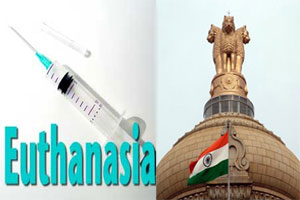 In India, Passive euthanasia involves the withdrawing of treatment or food that would allow the patient to live. Active euthanasia includes the administration of lethal compounds that are legal in many countries and jurisdictions like Belgium and the Netherlands, as well as the U.S. states of Washington and Oregon, are still illegal in India.
Aruna Shanbaug, who has been in a vegetative state for 37 years at King Edward Memorial Hospital, is one such victim seeking for euthanasia plea.
The Supreme Court recently issued notice to states and Union Territories on a plea for legalizing passive euthanasia by allowing a person in a vegetative condition to die by withdrawing life support even as the Centre strongly opposed the petition saying it is a form of suicide that cannot be allowed in the country.
The direction had came on a PIL filed by NGO Common Cause stating when a medical expert opines that the person afflicted with a terminal disease has reached a point of no return, then he should be given the right to refuse being put on life support system as otherwise it would only prolong his agony.
Also Read:
World's Most Polluted Places Revealed

.jpg "Renewing Smiles, Restoring Confidence")