Magazine :
India's Tunneling Surge: 69 Projects Underway with Rs 40,000 Crore Investment
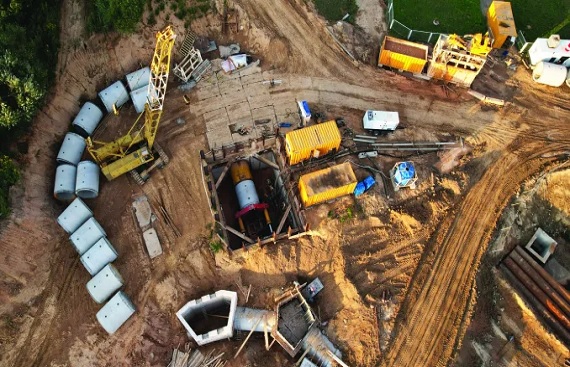
India is significantly enhancing its tunneling infrastructure, with 69 tunnels covering a total of 134 kilometers currently under construction, supported by an investment of Rs 40,000 crore, according to Union Minister for Road Transport and Highways, Nitin Gadkari, at the second edition of FICCI’s Tunnelling India conference. He also noted that 35 tunnels, spanning 49 kilometers, have already been completed, involving expenditures of Rs 15,000 crore.
Looking ahead, the government plans to construct an additional 74 tunnels stretching 273 kilometers, with a projected investment of Rs 100,000 crore. Gadkari emphasized the importance of upgrading technology and finding cost-effective solutions while maintaining high-quality standards in these projects. "We need to find out exactly which is the best technology that is cost-effective without compromising on quality", he said.
The minister highlighted the necessity of adopting terrain-specific approaches, particularly in the challenging Himalayan regions. He called for innovative solutions, such as precast technology and push-back techniques, to address recurring issues like landslides. Shri Gadkari also underscored the critical role of performance audits in ensuring project efficiency, stating, "Performance audit is more important than financial audit".
The minister discussed the potential for innovative cost-saving measures, such as reusing materials excavated during tunnel construction. "Can the material that comes out from there be reused in road construction? Can some cost be saved from it", he questioned, encouraging sustainable practices to reduce overall project expenses.
Bhavani Koneru, a member of FICCI’s Committee on Transport Infrastructure, highlighted the need for India to develop homegrown tunneling technologies tailored to the country’s distinct geological conditions and cost considerations. She emphasized the importance of effective resource management and proposed creative ways to repurpose excavated materials. Koneru also underscored the significance of localizing the supply chain, advocating for the development of domestic capabilities to produce components such as rubber gaskets, which are presently imported.
.jpg "Green Is The Way To Sustainable Shipping Solutions")
.jpg "Renewing Smiles, Restoring Confidence")