Magazine :
Indias G20 Presidency to Advance on Financial Solutions
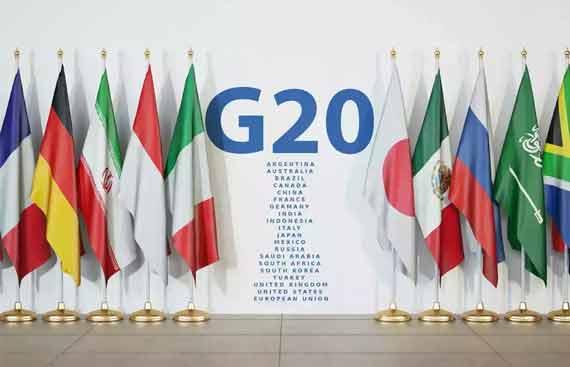
The geographical tensions continue to upend the energy, food, and commodity markets, along with the climate crisis, threatening even the best prepared G20 presidency needs more effort to address the totality of these challenges
India assumed the presidency of the G20 on 1st December. The global economy is expected to slow, and geopolitical tensions continue to disrupt the energy, food, and commodity markets. Furthermore, a climate crisis looms and threatens to throw a wrench into global trade and investments between countries. Even the best-prepared G20 presidency needs additional efforts to address the totality of these problems as uncertainty and international division will impede efforts in various areas.
In addition, modern international financial problems are a primary concern. They have been studied intensively since the Asian financial crisis, and there is a surprising degree of consensus among economists and policymakers. However, the Indian presidency has a well-defined agenda.
First, central-bank currency swap lines, and dollar exchange by the Federal Reserve, in particular, are highly effective in calming financial markets. The US Fed and other central banks offer these facilities to only a limited set of partners. Therefore, the G20 should promote the need for central banks to broaden their swap networks and make temporary arrangements permanent. The Fed can extend swaps to additional central banks without assuming balance sheet issues, as many potential recipients have other, sometimes illiquid assets to offer as collateral.
The International Monetary Fund’s Flexible Credit Line and Precautionary and Liquidity Line developed to support emerging markets without access to central-bank swaps should try to achieve their objectives. Only eight countries have received approval for these lines, and only a few have tapped them. Countries with strong policies do not require these, and others often fear that applying will send investors a negative signal.
Countries with strong policies should apply for contingent lines to weaken the adverse signalling effects. The IMF could unilaterally prequalify nations instead of requiring them to apply. Lines could disburse automatically when a global selloff event is recognised by IMF staff and certified by its Executive Board. In addition to these, there are many more agenda items on the Indian presidency dealing with the climate crisis turning into a financial disaster and the Common Framework for Debt Treatments agreed upon by the G20 to be fixed.
Currently, there is an immediate need for calming, and the heads of the World Bank and IMF have suggested that distressed debtor countries seeking relief under the Common Framework should receive statutory protection from asset seizures by national courts when suspending debt-service payments. More countries will apply to be relieved of a legal risk. However, such protection should be implemented by creditor-country governments through legislation or executive orders. There is very little disagreement among members of the G20 over the financial agenda elements. Implementing this would be true to the G20’s mission and renew its sense of purpose.

.jpg "Direct Sales Companies")