
 Magazine :
India Launches Report on Priority Corridors for Zero-Emission Trucking
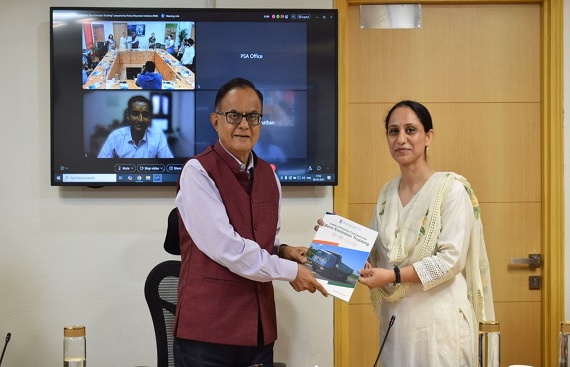
- Identifies key highways for zero-emission trucks (ZETs) to drive sustainable freight transport.
- Emphasizes investments in charging infrastructure and public-private partnerships.
- ZET adoption crucial for reducing transport emissions and enhancing energy security.
India has published a groundbreaking report spotlighting the nation's priority corridors for the transition to zero-emission trucking (ZET). Published by the Office of the Principal Scientific Adviser (PSA), the report designates 10 priority highway corridors with the highest potential for introducing ZETs, representing an important milestone towards the country's move towards a cleaner, more sustainable freight economy.
The report, prepared with the assistance of Centre of Excellence for Zero Emission Trucking (CoEZET) — IIT Madras, Rocky Mountain Institute, and pManifold, was released by Principal Scientific Adviser Prof. Ajay Kumar Sood in the national capital. The report is intended to speed up India's transition towards zero-emission freight transportation and make the industry more competitive and resilient.
The corridors that have been identified were chosen through a diligent three-stage process, which included quantitative and qualitative analysis of the preliminary list of 230 highways. Parameters like toll traffic statistics, supply and demand centre mapping, stakeholder meetings, and field studies were important in choosing the corridors. The parameters of high freight traffic, industrial production, grid readiness for infrastructure, and commercial feasibility were also taken into account.
The chosen corridors are regarded as optimal sites for the first deployment of zero-emission trucks. This approach is anticipated to spur investments in charging infrastructure, encourage public-private partnerships, and offer a regulatory environment to enable the growth of the sector.
The report highlights that close to 40% of India's transport and fuel consumption-related emissions are a result of long-distance trucks. The uptake of ZETs is therefore important in decarbonizing the transport sector, reducing air pollution, and enhancing energy security for India.
The results will also act as a policymaking instrument for government representatives and stakeholders across the sector, giving them an in-depth guideline for future-proofing the national zero-emission freight industry. The study is also supportive of the PM E-DRIVE initiative unveiled in 2024 with an investment of Rs 500 crore with the view of encouraging adoption of ZETs.
This strategic report lays the foundation for the creation of a national ZET infrastructure network, leading the way to a greener and more sustainable logistics ecosystem in India.
Read More News :
Vanguard Slashes Ola's Valuation to $1.25 Billion Amid IPO Uncertainty
FM Sitharaman Reviews Cybersecurity Preparedness of Banks Amid Rising Border Tensions


.jpg "Top Companies of the Year")