

Hyundai Motor CEO Emphasizes Need to Tackle Challenges Amid Trump Tariff Uncertainty
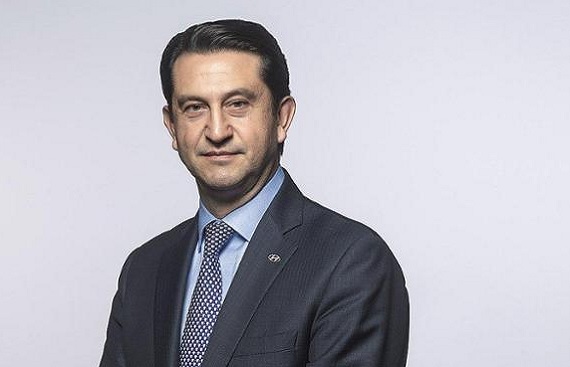
Jose Munoz, Hyundai Motor's Chief Executive Officer (CEO), stressed increasing trade tensions and protectionism as major challenges for the global auto industry in 2025, calling for strategic flexibility to sustain the company's growth momentum.
Speaking at Hyundai Motor's annual general shareholders' meeting in Seoul, Munoz underscored how heightened geopolitical risks, economic uncertainties and fluctuating foreign exchange rates are impacting automakers worldwide.
"The business environment in 2025 is expected to be even more challenging, with more geopolitical and trade uncertainties", Munoz said. "With growing volatility in foreign exchange rates and U.S. interest rates, we are confronting escalating trade tensions and protectionism".
The comments follow as international auto groups such as Hyundai Motor Group are preparing for impending reciprocal and sectoral tariffs on their U.S. exports under President Donald Trump.
In the face of fears of U.S. tariffs, Munoz reiterated Hyundai's focus on localized production as a hedge against changing trade policies.
He also pointed to the forthcoming official opening of Hyundai Motor Group Metaplant America (HMGMA) in Georgia later this month, highlighting its significance in reinforcing the company's presence in the American market.
"The investment in HMGMA was made in the first Trump administration", he added, reiterating that Hyundai's localization in the U.S. would be able to counteract future policy changes.
The Georgia factory will be increasing production of Hyundai's Ioniq 5 and Ioniq 9 electric cars (EVs) with hybrid car production also planned.
Asked by Yonhap News Agency if Trump will possibly visit the HMGMA completion ceremony in Georgia, Munoz refused to answer, replying, 'no comments today', as he walked away from the meeting to return to his office.
Korean media reported that Hyundai was trying to invite Trump to the ceremony, along with other important figures in the present Washington administration. The ceremony will also be attended by Georgia Gov. Brian Kemp.
Munoz also outlined Hyundai's region-based strategies to overcome regulation and market challenges.
In Europe, new EV models like the Casper Electric and Ioniq 9 will be launched by the company while meeting regional environmental regulations.
The CEO added that the company was setting up a complete knockdown unit assembly base in Saudi Arabia with local partners, which will be a hub for Hyundai in the Middle East market.
In China, Munoz recognized the difficulty in the world's biggest car market, where Hyundai and other foreign manufacturers have floundered against Chinese EV brands.
Hyundai will modify its Chinese production capacity and add new EV models optimized for regional customers, the CEO said.
Moreover, Munoz reiterated Hyundai's long-term dedication to electrification, pointing to the company's $90 billion investment strategy to create 21 new EV models by 2030. He also pointed to the company's ongoing expansion of its hybrid car lineup and its dedication to creating advanced battery technologies.
In the face of mounting competition, Munoz also highlighted Hyundai's alliances. He mentioned that the company was closely collaborating with allies like Amazon, General Motors and Waymo to further its technological advantage in important domains.


