

India's Steel Industry Braces for Impact as U.S. Tariffs Reshape Global Trade
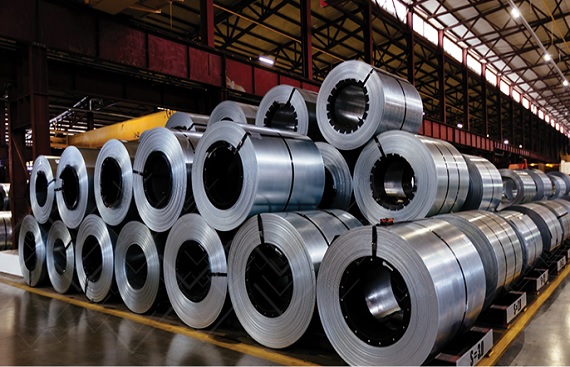
Shelves of tiny factories along the streets of a dusty Bengaluru suburb are where workers cast and weld Indian-made steel into everything from kitchen sinks to car components. U.S. President Trump's threat to slap high trade tariffs on steel imports has created a combination of concern and guarded optimism in India's steel sector, with unlikely allies in smaller manufacturing centers.
Most industry employees and professionals expect the tariffs to result in a flood of cheap steel into India. The 25% tariff will make it too costly for firms in major steel-producing countries such as China and South Korea to export to the U.S., forcing them to look for other markets. For entrepreneurs such as B. Praveen of Sun Techpro Engineering, which produces goods from steel sheets, this may be a unexpected silver lining. Praveen is of the opinion that cheaper steel will cause his company's 'wafer-thin' profit margins to increase, providing financial relief to companies running on tight budgets.
For thousands of firms like mine, this can be a blessing, he said. Small firms like Praveen's employ more than 200 million workers and are crucial to India's economic growth. While cheaper steel may be a boon for small producers in the short run, though, it causes huge concerns for India's big steelmakers and the environment as a whole.
Naveen Jindal, head of the Indian Steel Association, was deeply concerned about the implications. He cautioned that India, which is one of the few large markets with minimal trade restrictions, might become a dumping ground for steel. This unexpected surge in cheap steel might destabilize local production and deter investment in cleaner, more environmentally friendly steel production. Steel manufacturing in India currently emits high amounts of greenhouse gases, which make it a major contributor to global warming. In an already cost-sensitive industry, attempts at embracing greener technologies could be put on the backburner as firms opt for cost savings over environmental considerations.
India, the world's largest nation and one of the world's fastest-growing economies, is witnessing a sudden spike in demand for steel fuelled by high rates of urbanization and infrastructure expansion. Government projections estimate steel production will jump from 120 million tons to 300 million tons within five years. This expansion, while crucial for economic progress, carries a heavy environmental cost. According to the Global Energy Monitor, steelmaking accounts for up to 12% of India's total greenhouse gas emissions, a figure that could double as production scales up.
Henna Khadeeja, a GEM research analyst, pointed out that in contrast to China, Europe, or the U.S., Indian steel producers are largely dependent on coal-based blast furnaces, which are more polluting. While the Indian government has committed $1.72 billion to assist the sector in shifting to cleaner technologies, Khadeeja pointed out that all recent expansion plans remain focused on coal-based plants. She explained that the current strategy seems to be maximizing production capacity first and addressing decarbonization later, a risky approach given the growing global emphasis on sustainability.
The long-term consequences of persisting with coal-based steel production are also economic. Easwaran Narassimhan of the Sustainable Futures Collective indicated that increasing more high-emission facilities would damage India's export potential. From next year, Europe will introduce the Carbon Border Adjustment Mechanism, which charges taxes on carbon-intensive imports. Indian steel, produced using coal-blast furnaces, would bear huge penalties, becoming less competitive globally.
"China's steelmaking is less emissions-intensive, so it's going to be less affected by European carbon taxes", Narassimhan said. "Any short-term discomfort today will be worth it in the long term if it encourages the industry to cleaner practices".
India's targets are lofty. The nation needs to create 500 gigawatts of renewable energy by 2030 sufficient power for almost 300 million houses — and so far has built more than 100 gigawatts of solar over the past ten years. India is planning on net-zero by 2070. All these, though, will come too late, it seems, and will require significant change through essential sectors such as steel that remain among the world's highest polluters.
Indian steelmakers recognize the imperative to change but are cautious about the cost involved in shifting to cleaner production practices. "If you're not financially sustainable, you cannot be a business", said Prabodh Acharya, the Chief sustainability officer at JSW Group, one of India's largest steelmakers. He highlighted the need for striking a balance between growth and greenery while recognizing that steel continues to be crucial for national growth.
"Steel is crucial for society and economic growth. We must achieve the correct balance between growth, economy, and decarbonization", Acharya said.
While India's steel sector is weathering the shockwaves of American tariffs, the challenge will be managing short-term economic stress without sacrificing long-term sustainability targets. Whether the industry has a chance to make this time of disruption a chance for greener growth will depend on what is decided today, but the choices made today will have implications for India's economic and environmental landscape for generations.


