
 Magazine :
Handcrafted Stories from Craft Communities by 'social entrepreneurs' Rakkee Thimothy and Biju George
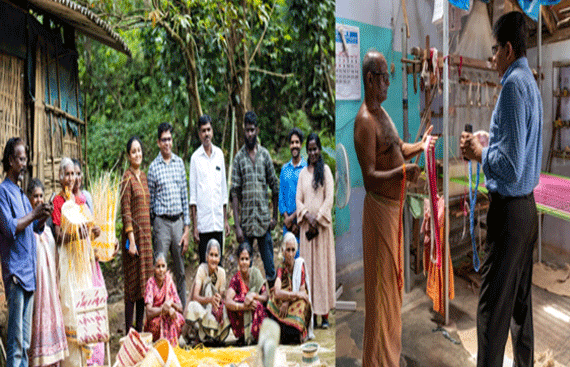
‘Ethnicity should enrich us; it should make us a unique people in our diversity and not to be used to divide us’ - Former Women President of Liberia Ellen Johnson Sirleaf articulated in her globally acclaimed vision. Every nation needs to discover their roots in order to spread their wings on a global ‘comity of nations’. Being one of the oldest civilisations, India is a land of cultures and traditions, those timeless traditions that are meant to be truly seen and celebrated.
Graamyam, an artistic venture by an IT professional turned entrepreneur named Biju George and his better half Rakkee Thimothy, an eminent labour economist, hopes to tell the stories of culture indigenous to our vast and vibrant country through handcrafted products. The social enterprise celebrates our culture, craft and stories in the best way. The venture looks to support artisan communities, finding them a market to keep generations of knowledge of their craft alive.
This is usually easier said than done because the market is flooded with machine made products, and the demand for authentic artisan goods has dwindled. Graamyam has, however, brought about a way to resolve this. It is indeed no easy task integrating neo modern designs with traditional handicrafts, which Graamyam aims to achieve. Graamyam believes in understanding the ethos of each community they work with, creating confidence and bringing in new product designs that appeal to contemporary living. This way, Graamyam could retain the knowledge and livelihoods of traditional artisan communities.
While the problem of innovation comes to its natural close, Graamyam faces another challenge too. The new Gen Z might look for political correctness in every scenario, but finding a market for these beautiful handicrafts is another aspect they are trying to work on, slowly but surely. Many people cannot distinguish between machine-made and handcrafted products and the story behind the beautiful creation. Creating awareness of the benefits of using eco-friendly and sustainable products is a mission the founders are keen to take on.
At the end of the day, the story Graamyam hopes to tell you is one of empowerment, uplifting marginalised communities through sustainable, eco-friendly fashion and crafts. Their handicraft product portfolio covers a vast range, from traditional cotton dupattas to sarees and table mats crafted on handlooms. In the category of natural fibre, home decor, baskets, and other items made from kora grass, bamboo, and coir preserve the authentic artistry of the communities. The spirit of Graamyam, is to protect the livelihood of traditional artisan communities by promoting eco-conscious and sustainable products.
The couple works with seven craft communities in Kerala, God’s own country. Rakkee, driven by her immense experience and insight as a labour economist, want to elevate the livelihood of women crafts persons in the region. She was moved by the employment conditions prevailing in traditional handicrafts and partnered with her husband, Biju, to be the changemakers.
The duo ventured into Graamyam (meaning in the regional language ‘that has the natural beauty of the villages) in 2020, an e-commerce platform that deals with handmade, eco-friendly, and sustainable products. Rakkee says they were drawn to the idea out of their love for authentic handcrafted products and a passion for building sustainable livelihoods for artisans. It is a sad ground reality that most traditional handicraft communities do not have commercially viable livelihoods. The pandemic has also caused havoc in regional economies. Rakkee points out that the new generation is reluctant to continue the traditional work as there is a lack of economic benefits and little pride associated with it.
Interventions by Graamyam have helped revive dying crafts like the Kannadipaya made by tribal communities. They provide them with needed resources, working capital and training facilities to upskill and update those working in this arena. This famed initiative has become a boon for the ethnic communities by helping them set up shops and to reach more customers.
Rakkee says – “our efforts in Adimali, Idukki in Kerala were very successful. Providing them right market linkages for their handcrafted products can bring out the best in traditional craftspersons.” The organisation currently works with seven craft communities across Kerala – Kuthampully (textile), Kalavoor (basketry), Chendamangalam (textile), Kilimangalam (natural fibres), Kannur (textile), Thazhava (natural fibre) and Aruvacode, Nilambur (terracotta). The products include handloom (cotton dupattas, stoles, sarees, and home furnishing) and terracotta creations (cook and serve ware). Graamyam is now diversifying into wood, bamboo and metal craft products, expected to be launched by the end of the year. When asked about the price range, Rakkee says the products are purposely kept within an affordable range. Prices start from Rs 500 and go up to Rs 4,000. “We are very keen to ensure product quality and chemicals are not added in the production process. As all our products are handmade, we have attractive discounts for bulk orders,” she says.
Biju George, who has work experience of more than two decades in Singapore, wants to highlight unique traditional products globally. Growing in a swift and steady manner, Graamyam plans to expand to other regions of South India and also advance the ethnic cause by negotiating agreements with globally renowned lifestyle chains in the USA.
Read More News :