$10 laptop flops, India orders 2.5 lakh OLPC laptops
By
siliconindia news bureau
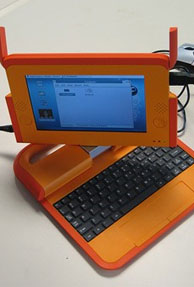
Bangalore: The Indian government has turned to the One Laptop Per Child (OLPC) Foundation to order 250,000 XO laptops, after the $10 laptop had turned a catastrophe, which was a direct challenge to the $100 laptop of the OLPC project. Satish Jha, President and CEO of OLPC India said, "The laptops are ordered for 1,500 schools and the deliveries will begin in June."

This will be the first order placed by India after the OLPC project failed to impress the then IT minister Arun Shourie in 2001. The OLPC project could not succeed in India, when it first entered the market by distributing 20 XO machines in a Maharastra village. The government shirked the project questioning its technology, the hidden costs and also cited it to be unhealthy if used for prolonged periods. The Ministry of Human Resource Development (MHRD) also testified a new project, Sakshat, to provide a $10 laptop. The anticipated notebook equipped with Wi-Fi and 2GB RAM, however, turned out to be little more than a computing machine. It is just a 10 x 5-inch wide slab that stores and apparently prints distributed learning materials that can later be retrieved using a laptop.
After being rejected by the central government, the MIT's Nicholas Negroponte's OLPC project has been trying its luck with various state governments and the private sector in the hope that large corporations would donate these laptops to schools. The XO laptops are rugged, use open source computing, and are so energy efficient that they can be powered manually by a child. They have a built-in wireless, a unique dual-mode display that is readable under direct sunlight. OLPC says the software is designed for children to encourage exploration and creativity.
The OLPC has also planned to do away with the current AMD chips in the XO laptop and include the VIA C7-M, where the system memory would be enhanced to 1GB and internal storage to 4GB. However, the foundation did not reveal which version of the laptop the government has opted for.

This will be the first order placed by India after the OLPC project failed to impress the then IT minister Arun Shourie in 2001. The OLPC project could not succeed in India, when it first entered the market by distributing 20 XO machines in a Maharastra village. The government shirked the project questioning its technology, the hidden costs and also cited it to be unhealthy if used for prolonged periods. The Ministry of Human Resource Development (MHRD) also testified a new project, Sakshat, to provide a $10 laptop. The anticipated notebook equipped with Wi-Fi and 2GB RAM, however, turned out to be little more than a computing machine. It is just a 10 x 5-inch wide slab that stores and apparently prints distributed learning materials that can later be retrieved using a laptop.
After being rejected by the central government, the MIT's Nicholas Negroponte's OLPC project has been trying its luck with various state governments and the private sector in the hope that large corporations would donate these laptops to schools. The XO laptops are rugged, use open source computing, and are so energy efficient that they can be powered manually by a child. They have a built-in wireless, a unique dual-mode display that is readable under direct sunlight. OLPC says the software is designed for children to encourage exploration and creativity.
The OLPC has also planned to do away with the current AMD chips in the XO laptop and include the VIA C7-M, where the system memory would be enhanced to 1GB and internal storage to 4GB. However, the foundation did not reveal which version of the laptop the government has opted for.
Reader's comments(11)
1: What is the use .How many will really use it
for the good purpose.
Posted by: ravi - 11 May, 2009
2: -- announcing an impossible article by govt
level and throwing out in failure by greate
indian educational institutions -- it really
is a black mark in indian technology side.
they could have tried some usefull product
atleast in $100 range with success...
Posted by: sudheesh - 09 May, 2009
3: Its good any way ..Govt should take interest
some to bring it for all students & also
ensure the after buying services should also
continue ....
Posted by: Ranjeet - 03 May, 2009
5: ok it is fine but few days after, it will any
problem who will repaired. company can giving
any gurantee. if company will gives any
assurence it's ok. otherways costomer facing
more broblems.
Posted by: sadhu - 30 Apr, 2009

6:hello sadhu jee vere r u , please be on earth
n take an innitiative and acept whic is being
done, in this world nothing is guranteed not
even u..
mahesh
mahesh
mahesh replied to: sadhu
post - 01 May, 2009
post - 01 May, 2009
8: I'm happy they decided right in time to buy
the best available laptops. At the same time
I don't like criticizing the $10 laptop
project. There is nothing wrong trying to
build a better one. It may be successfull or
not but they tried. Remember the NANO car.
Everyone almost trashed it but it beat
everyones expectaions.
Posted by: DailyReader - 30 Apr, 2009
9: This is a classic example of how creativity
and innovation gets strangled in our country
- even though other developed countries may
not have started work on this idea, am sure
that as soon as they get on it, this will
become a norm there and then, India will
borrow it from them as a 'best practice' or
'an obvious next step'!
Posted by: Paul - 30 Apr, 2009
10: Till now the government could not realize the
importance of the OLPC laptops. only after
their own endeavor crashed hard, they knew
wat went into building these laptops at such
a meager cost.
Posted by: piyush - 30 Apr, 2009

11:My 2 paise... You need to involve a huge
community of your stakeholders before you go
build the product. At least if it going to be
a path breaking project. As with any project,
user participation in the design phase of the
project is a critical input of the outcome...
This is what happens when a big idea is not
thought out completely. Go figure
Mss replied to: piyush
post - 01 May, 2009
post - 01 May, 2009
Disclaimer
Messages posted on this Web site under the `Comments' area are solely the opinions of those who have posted them and do not necessarily reflect the opinions of Infoconnect Web Technologies India Pvt Ltd or its site www.siliconindia.com. Gossip, mud slinging and malicious attacks on individuals and organizations are strictly prohibited. Infoconnect Web Technologies India Pvt Ltd can not be held responsible for errors or omissions in content, nor for the authenticity of the user/company name or email addresses associated with posted messages. Infoconnect Web Technologies India Pvt Ltd reserves the right to edit or remove messages containing inappropriate language or any other material that could be construed as libelous, potentially libelous,
or otherwise offensive or inappropriate.Infoconnect Web Technologies India Pvt Ltd do not endorse the products and services or any other offerings mentioned in these messages.
- Indian utility will buy 150,000 water meters
- IBM unveils new POWER7 systems
- CA extends support for Open Source
- Now pay credit card dues as a loan
- MBAs line up for jobs in healthcare
- Yes Bank to deploy Servion's IVR
- Sony to unveil in-box wireless technology
- GPS based application struggling to expand
- Hindustan Copper shares rise 10 percent
- AB Minacs buys tech solutions firm Radifinity
- Auto driver turns web entrepreneur
- Students make electric appliances operable via sms
- Change management: BSNL employees to PM
- An IITian lights 10,000 homes in rural Bihar
- Indians are over committed, reluctant to differ
- Indian entrepreneurs sign deals like housewives
- China 5th, India nowhere in top 15 UN patent filings
- Biggies back with bonuses, startups suffer
- Over 15,000 NRI resumes lying with Indian HR firms
- Obama's invitation to 'Bihar's Rickshaw Man'