
 Processing .....please wait..
  The article has been forwarded....
Why Indian MIGs are 'Flying Coffins'?
By siliconindia
|
Tuesday, 06 December 2011, 00:28 IST |
8 Comments


In early 1980s, IAF realized that it’s losing both of its aircraft as well as fighter pilots, it set up a committee under Air Marshal La Fontaine to study the problem. The committee submitted its report saying that these accidents are the results of the young pilots wanting to give high performance MiG-21 fighters. It was recommended to lay Advanced Jet Trainers (AJTs) to bridge the gap between the two stages of performance, which remained a dream till decade, and only recently the plan again passed to sanction Hawk AJTs, which was nothing but a cruel joke towards those who faced demise in the crashes thought out the years.
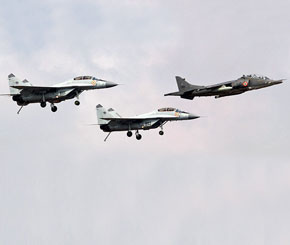 IAF’s Mission Statement states that, “The mission of the Flight Safety organization of the IAF is to ensure operational capability by conserving human and material resources through prevention of aircraft accidents.” Now the vital questions comes, whether they have lived up to this statement? What are the real reasons for so many crashes? Whether they are taking any kind of measures to prevent such situations? Is IAF a crying wolf? Or facing shortage of Jets? Or they are busy blaming the young, inexperienced but enthusiastic fighter pilots?
But then also it is said that most of the crashes have been attributed to pilot incompetence and a lack of training and poor manufactured local parts by the Russians. After so many hundreds of MiGs had crashed, the IAF blames the manufacturer of a faulty fuel pump? The reasons for the crashes,showed by the IAF in 2005 are as followed:
1. Human error – 40 percent
2. Technical defects – 41 percent
3. Servicing – 2 percent
4. Bird hits – 9 percents
5. Unresolved – 6 percent
6. Others – 2 percent
Human error is only natural. It should be appreciated that a professional makes mistakes. But it is only one part of the story and only can experience can take care of it. But what is the other side of the coin? Not improving the technicality isn’t a human error too? A fighter pilot has no chance like these top sportsman who are firmly on ground and are able to play the next innings or the next match. It is more unfortunate when the entire blame is pushed upon the courageous pilot who faces death rather than accepting own faults. It is very difficult particularly for the families of those who lost someone close to accept error or error of judgment on the part the individual. Even the First Indian Astronaut Rakesh Sharma blames the faulty Planning in defense public sector units for MiG crashes.