
 Processing .....please wait..
  The article has been forwarded....
Only for  5 e-waste workers risk lives
By siliconindia
|
Wednesday, 09 December 2009, 15:37 IST |
20 Comments


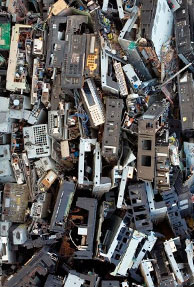
 5 per dismantled machine, these people are subjecting themselves to constant cuts and scrapes
In Mustafa Bad, a remote part of east Delhi, a narrow street is home to tiny workshops filled with hard workers. Inside, dozens of people, many of them children, spend tiring hours picking through the remains of old computers and mobile phones - hoping to find reusable parts to sell on for a tiny fee. According to the United Nations, 20-50 million tonnes of electronic waste - or e-waste - is produced every year. A large amount of it goes to recycling plants like this.
"This is our livelihood," says, Mohammad, one of the workers. "For this one computer piece that we've opened up and dismantled, that's five rupees. Yes, we only get five or ten rupees for each one." In a visit to one such plants Satish Sinha who works for an India-based NGO, Toxics Link, saw the plicht of these workers. "I personally have met people who have very visual impact on their body. Broken skin on the fingers, cut marks, abrasions, eyes are watering, complaining of headaches," said Sinha.
They work long hours. They work in small, cramped rooms, squatting on the floor. They're sitting in one position. Without these workers, however, much of the world's e-waste would go un-recycled.
"I think manufacturers must own up this responsibility to deal with the kind of products they bring into the market," said Sinha.
Take Back
Nokia is a manufacturer trying to do just that. Through their new scheme, Take Back, they have encouraged India's mobile users to return their old mobiles to the store so it can be recycled. Such schemes may be a step in the right direction, but according to a recent study by consulting firm Deloitte, it's merely a drop in the ocean: mobile phone waste is estimated to be growing by nine percent every year.
5 per dismantled machine, these people are subjecting themselves to constant cuts and scrapes
In Mustafa Bad, a remote part of east Delhi, a narrow street is home to tiny workshops filled with hard workers. Inside, dozens of people, many of them children, spend tiring hours picking through the remains of old computers and mobile phones - hoping to find reusable parts to sell on for a tiny fee. According to the United Nations, 20-50 million tonnes of electronic waste - or e-waste - is produced every year. A large amount of it goes to recycling plants like this.
"This is our livelihood," says, Mohammad, one of the workers. "For this one computer piece that we've opened up and dismantled, that's five rupees. Yes, we only get five or ten rupees for each one." In a visit to one such plants Satish Sinha who works for an India-based NGO, Toxics Link, saw the plicht of these workers. "I personally have met people who have very visual impact on their body. Broken skin on the fingers, cut marks, abrasions, eyes are watering, complaining of headaches," said Sinha.
They work long hours. They work in small, cramped rooms, squatting on the floor. They're sitting in one position. Without these workers, however, much of the world's e-waste would go un-recycled.
"I think manufacturers must own up this responsibility to deal with the kind of products they bring into the market," said Sinha.
Take Back
Nokia is a manufacturer trying to do just that. Through their new scheme, Take Back, they have encouraged India's mobile users to return their old mobiles to the store so it can be recycled. Such schemes may be a step in the right direction, but according to a recent study by consulting firm Deloitte, it's merely a drop in the ocean: mobile phone waste is estimated to be growing by nine percent every year.