
 Processing .....please wait..
  The article has been forwarded....
Delhi Hosts the Highest Number of Immigrants in India
By siliconindia
|
Wednesday, 07 December 2011, 02:38 IST


"There are a large number of service sector jobs on offer in Delhi, increasingly in the informal sector," says IIHS Director Aromar Revi. He mentioned that the highest per capita income and income growth brought Delhi as the hub of migrants compared to other Indian metro cities. Delhi concentrates much more on wealth, resources, infrastructure and quality of urban services than other metros. The national capital offers a relatively higher education and health system, he added. "In addition to providing a large number of night shelters for the working homeless, Delhi is more accepting of migrants than cities like Mumbai, which are increasingly intolerant of them."
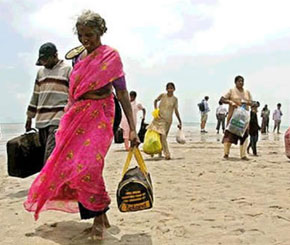 Social scientists are more thoughtful of the migration statistics of the caste. While states like Orissa, Bihar, and UP send their large number of people for labour jobs, the average of the upper caste migration is not negligible too. Talking to Times of India, Mohammad Tarique, Assistant Professor of the Tata Institute of Social Sciences said, “The same caste system that inhibits lower castes from rising up the economic ladder prevents the upper castes from performing menial jobs to earn a living. The anonymity of cities like Delhi allows a Brahmin to work as a rickshaw-puller, whereas the caste hierarchy would make it hard for him to do so in his hometown, even if his family is starving," while mentioning the ‘upper-caste’ migration affinity to Delhi. A prominent Architect and Former President of the Institute of Urban Designers India, KT Ravindran says, "While a large proportion of Delhi's migrants work in the non-formal sector, Delhi's master plan assumes that the city can weed out the non-formal sector altogether. This despite the fact that the city's economy is not prepared for such a shift."
The IIHS report says that migration is not the key factor for urban population but the natural growth contributes. Another fascinating fact about migration is that the female migration rate goes higher than the male. Women generally migrated due to marriage while men move out for employment.
Other than marriage and employment, business, education and family relocation causes the higher rate of migration. Forced migration is also taken place in a rate of two percentages. Natural disasters, dislocation and socio-economic reasons are counted as the main reason for forced migration.