
 Processing .....please wait..
  The article has been forwarded....
Unveiling iCET's Impact on Indo-US Relations at Quad Summit
By siliconindia
|
Thursday, 04 January 2024, 18:17 IST


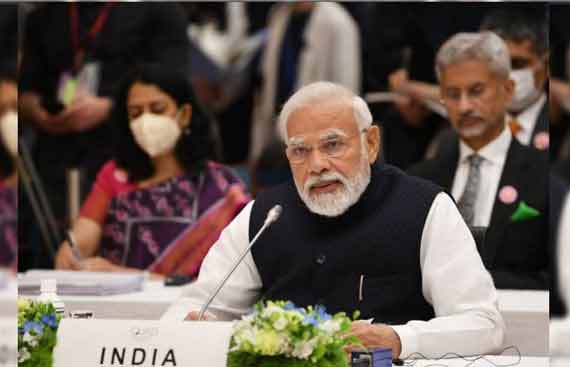
iCET aligns India's software expertise and population with the U.S.'s tech reputation, emphasizing technology's pivotal role in strengthening the nation's strategic partnership and fostering trust and shared values.
The prevailing aspect defining today's worldwide political landscape centers on the ongoing competition for global power where technology intersects with geopolitics. The control, expertise, and oversight of digital technologies are ushering in a new era reminiscent of historical power struggles, notably observed in the establishment of technological spheres of influence, particularly in the Indo-Pacific region.
During the Quad Summit in Tokyo, Prime Minister Narendra Modi and US President Joe Biden announced the establishment of strategic technology and defense industrial cooperation. The initiative on Critical and Emerging Technology (iCET) was officially launched under the leadership of the National Security Council Secretariat of India and the National Security Council of the US. iCET has quickly gained momentum, resulting in a significant enhancement and expansion of relations between India and the United States in a remarkably short period.
CETs, a subset of advanced technologies crucial for a nation's advancement, encompass advanced computing, financial technologies, quantum information technologies, semiconductors, and artificial intelligence. In the pursuit of enhancing national security and fostering economic development, India and the United States are collaboratively engaging in a technological partnership through initiatives like iCET. This alliance aims to establish the groundwork for a decade defined by technological advancements that benefit democracies worldwide.
The principles are delineated within iCET, detailing broad areas of collaboration that involve mutual development and production in crucial emerging technologies within defense, space, and advanced telecommunications. These technologies include 6G networks, artificial intelligence, semiconductors, and other essential engineering, science, and biotechnology fields. The creation of iCET is a key step in acknowledging India as a crucial Indo-Pacific ally. The organizational structure of iCET is designed to facilitate continuous communication by bringing together multiple agencies and stakeholders, fostering ongoing collaboration.
The iCET initiative positions the government as a facilitator, fostering collaboration among academics, private entities, MSMEs, technologists, and think tank analysts. Notable Indian initiatives like the National Quantum Mission, New Space Policy 2023, and the India-United States Defence Acceleration Ecosystem (INDUS X) enhance transparency for potential US investors in India. India's procurement plans include 31 MQ-9B Predator drones from the General Atomics Global Corporation, and GE Aerospace is set to transfer 80 percent of its technology to India to produce F414 fighter jet engines. Additionally, in the field of space, the US will impart training to India for the development of a commercial lunar space program. Furthermore, collaboration in human spaceflight involves exchanges, including advanced training for an astronaut from the Indian Space Research Organization (ISRO) and the Department of Space at the NASA Johnson Space Center.
In semiconductors, a task force was initiated under iCET to scrutinize the complementarity of semiconductor technologies. An MOU has been approved to create a collaborative mechanism aimed at strengthening resilience and diversification within the semiconductor supply chain. Furthermore, there have been talks about fostering cooperation in high-performance computing (HPC), involving collaboration between the U.S. government, Congress, and the Senate to address legislative obstacles hindering the export of HPC technology and source code to India. The iCET has pinpointed biotechnology, advanced materials, and rare earth processing technology as prospective areas for future collaboration.
Recognizing India's association with software, population, data, and scaling solutions, alongside the U.S.'s reputation for tech, inventions, and innovations, iCET aims to align both nations. Prime Minister Modi and President Biden have affirmed the pivotal role of technology in strengthening their strategic partnership. They praised the ongoing efforts of iCET in creating open, accessible, secure, and resilient technology ecosystems and value chains. The initiative aims to establish confidence and trust, reinforcing shared values and democratic institutions between the two nations.