
 Processing .....please wait..
  The article has been forwarded....
Former Senior American Trade Official Arun Kumar Declares 2023 as Pivotal for US-India Relations
By siliconindia
|
Thursday, 14 December 2023, 02:30 IST


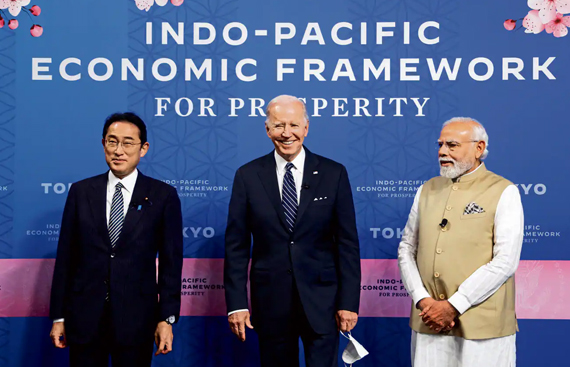
In 2023, US-India relations thrived, achieving historic significance with doubled trade, a pandemic-driven global capability center surge, and Quad's evolved economic focus.
FREMONT, CA: Arun Kumar, a former senior American trade official, asserted that the partnership between the United States and India has achieved unprecedented milestones within the domains of trade and technology. He observed that 2023 marked a productive period for the diplomatic ties between the two countries. The relationship has been overwhelmingly positive, supported by substantial growth in trade, which doubled over the preceding eight years, reaching $190 billion in 2022.
Following the pandemic, there was a discernible upswing in the operational activities of global capability centers in India, precipitated by the increased prevalence of remote work. Kumar noted an unparalleled convergence in the initiatives of both nations to bring manufacturing back to their shores. This alignment was evident in India's Make In India initiative and the Biden administration's emphasis on advanced manufacturing in the United States to address disruptions in worldwide supply chains.
In 2023, Prime Minister Modi's state visit to Washington marked a significant diplomatic engagement, accompanied by a sequence of events that contributed to the enhanced strength of bilateral relations. Considering geoeconomics, both nations enjoyed advantageous positions in comparison to the global scenario. The United States had successfully recovered to pre-Covid growth rates, and India's economic growth exceeded many estimates, making it one of the fastest-growing large economies.
In addition to bilateral efforts, Kumar emphasized increased alignment through multilateral initiatives. The Quad, initially established as a security-oriented alliance, has developed to incorporate economic aspects, involving initiatives related to infrastructure, connectivity, technology, and financing. The launch of the Indo-Pacific Economic Framework (IPEF) aimed to enhance supply chain resilience, promote clean energy and sustainability, and advance capacity building in various areas, contributing to cooperation, stability, prosperity, development, and peace in the region.
Kumar also highlighted the I2U2 framework involving India, Israel, the US, and the UAE, emphasizing joint investments and initiatives in water, energy, transportation, space, health, food security, and technology. Despite potential interruptions due to the Middle East situation, this framework demonstrated the collaborative economic efforts of the US and India. The Initiative on Critical and Emerging Technology (iCET), is cited as a major milestone, to foster an open, accessible, and secure technology ecosystem based on shared values and democratic institutions.
Arun Kumar offered a detailed analysis of the multifaceted and resilient relationship between the United States and India, emphasizing notable achievements in trade, technology, and diplomatic endeavors. His insights underscored the historical significance of the year for the bilateral ties.