Vikram Misri's U.S. Visit Reinforces India-U.S. Strategic Partnership
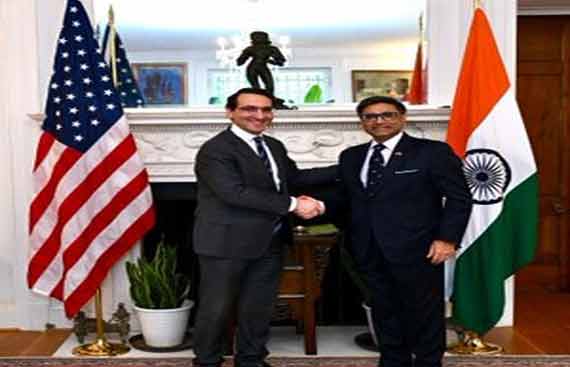
Foreign Secretary Misri’s visit reaffirmed India and the U.S.’s shared commitment to deepening strategic ties across defense, technology, trade, and security. It underscored their united approach to addressing growing global challenges together.
FREMONT, CA: Indian Foreign Secretary Vikram Misri concluded a strategically significant three-day visit to the United States, highlighting the escalating momentum in India-U.S. relations. Accompanied by Deputy National Security Advisor Pavan Kapoor, Misri’s visit from May 27 to 29 involved a series of high-level meetings across defense, trade, technology, regional security, and multilateral cooperation, further anchoring the strategic partnership between the two democracies.
Misri held talks with the U.S. Under Secretary of Defense Elbridge Colby and Deputy Secretary of Defense Steve Feinberg, where both sides reaffirmed their unwavering commitment to joint military exercises, defense co-production, and technology co-development. These engagements align with the vision outlined under the COMPACT (Catalyzing Opportunities for Military Partnership, Accelerated Commerce, and Technology) framework, launched earlier this year during Prime Minister Narendra Modi’s state visit, further strengthening the strategic partnership between the two nations.
Parallel discussions with the U.S. Under Secretary of Commerce Jeffrey Kessler focused on advancing trade and technology partnerships, which promise mutual benefits. Both sides reviewed progress on the India-U.S. Bilateral Trade Agreement and explored mechanisms to streamline export control regulations. An agreement is expected to accelerate the upcoming Strategic Trade Dialogue, focusing on critical and emerging technologies such as semiconductors, clean energy, and quantum innovation. During a working luncheon hosted by U.S. Deputy Secretary of State Christopher Landau, the delegation highlighted technology, trade, and talent as the core pillars of a future-ready India-U.S. alliance. The implementation of the TRUST (Transforming the Relationship Utilizing Strategic Technology) initiative, especially its AI and advanced chip collaboration, was also reviewed as a key milestone in bilateral tech ties.
In meetings with senior U.S. counterparts, Misri raised concerns over cross-border terrorism, particularly in light of the recent Pahalgam attacks. Discussions centered on India’s swift and proactive response through Operation Sindoor, reaffirming joint efforts to enhance intelligence sharing and bolster counterterrorism cooperation. The Indian delegation engaged with U.S. officials to align approaches ahead of the upcoming Financial Action Task Force (FATF) reviews. India emphasized the need for tighter scrutiny of terror financing channels, particularly in the context of Pakistan, and called for enhanced collaboration to strengthen global financial safeguards.
Beyond government-level meetings, Misri and Kapoor engaged with leading U.S. policy experts and representatives from prominent think tanks. These interactions not only provided a platform to discuss the evolving geopolitical landscape, Indo-Pacific strategy, and new opportunities for defense and technology alignment between the two countries but also underscored New Delhi’s intent to maintain an active, forward-looking partnership with Washington. The visit also demonstrated how India and the U.S. are aligning at the government level in shaping public policy and academic thought leadership around shared global challenges.