U.S. and India Strengthen Economic and Strategic Ties
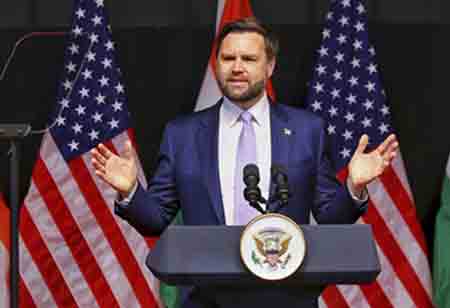
U.S. Vice President J.D. Vance announced a new framework for U.S.-India trade talks, focusing on jobs, supply chains, and worker prosperity. He also emphasised deepening defence, energy, and technology cooperation to strengthen bilateral partnerships.
FREMONT, CA: U.S. Vice President J.D. Vance has called for deeper strategic and economic cooperation between the US and India, emphasizing the critical importance of defense, energy, and technology partnerships. Speaking at the Rajasthan International Centre in Jaipur, Vance announced that both nations have finalized the terms of reference for their bilateral trade negotiations.
This newly agreed framework is designed to guide the development of a future trade agreement, focusing on shared priorities such as job creation, resilient supply chains, and inclusive economic growth. Vance described the announcement as a pivotal milestone in the evolving U.S.-India relationship, which has seen substantial progress in recent years. He underscored that the bilateral partnership would be instrumental in shaping the global order of the 21st century, enabling both nations to prosper through closer collaboration across key sectors.
Vance’s remarks followed a meeting with Indian Prime Minister Narendra Modi in New Delhi, where the two leaders discussed further opportunities to deepen the bilateral relationship. In his Jaipur address, the Vice President laid out the details of the new trade negotiation framework, reiterating its focus on job creation, robust supply chains, and shared prosperity.
A key point of Vance’s speech was the importance of fair access to Indian markets. He argued that deeper cooperation would unlock growth opportunities across various industries. A fair, mutually beneficial partnership, he said, is essential for navigating the challenges of an increasingly dynamic global economy. He also noted that the Trump administration’s broader trade agenda aims to reduce overreliance on any single region, especially China, by rebalancing global trade dynamics.
Energy cooperation was prominent during Vance’s visit. He welcomed India’s decision to amend its civil nuclear liability laws, which could pave the way for greater U.S. involvement in supporting India’s energy security goals. Vance highlighted the potential of American energy resources—particularly in the civil nuclear and liquefied natural gas sectors—to meet India’s growing energy demands. He added that ensuring energy security is vital to powering emerging technologies such as artificial intelligence and digital manufacturing, critical to India's long-term economic development.
Defense cooperation, another cornerstone of U.S.-India relations, was also a significant theme, pointing to the U.S.’s role as one of India’s leading military equipment suppliers and noting the potential for India to acquire advanced American systems, including fifth-generation fighter jets. These acquisitions would significantly enhance India’s defense capabilities and its ability to safeguard its airspace. He also emphasized the strategic alignment of the two nations in the Indo-Pacific, where both are committed to promoting a free, open, and rules-based international order. With India set to host the upcoming Quad Leaders’ Summit, Vance stated that U.S.-India cooperation is central to the vision of a secure and prosperous Indo-Pacific region.
On the technology front, Vance highlighted the recently launched U.S.-India Trust Initiative. Introduced by President Trump and Prime Minister Modi, the initiative is set to become a foundational pillar of future collaboration in areas such as data infrastructure, pharmaceuticals, undersea cables, and cybersecurity. The program aims to deepen ties in critical and emerging technologies, positioning both nations as leaders in the global digital economy.
Returning to trade, Vance reaffirmed the United States' commitment to developing a more balanced economic relationship with India. The new trade negotiation framework emphasizes fairness for workers, aiming to protect domestic jobs while expanding export opportunities. Vance rejected outdated narratives that cast India merely as a source of low-cost labor, affirming a new approach rooted in mutual respect and cooperation.