

Trump Vows Reciprocal Tariffs on India and China to Ensure Fair Trade
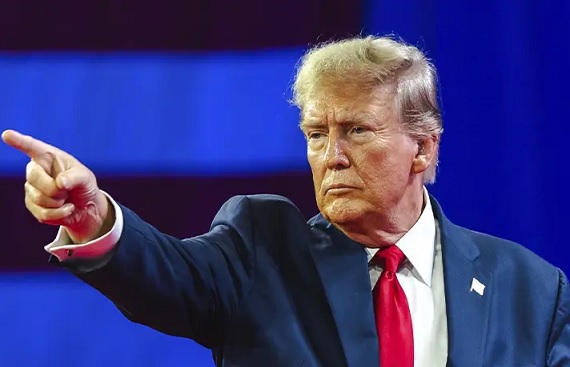
In a firm position on global trade, US President Donald Trump said that the United States will impose reciprocal tariffs on nations such as India and China, equal to the duties they charge on American products.
"We'll be imposing reciprocal tariffs they tax us, we tax them. Whatever a nation, like India or China, taxes, we desire to be equitable; thus, reciprocal", Trump stated during a news conference. He insisted that this had been contemplated prior to the COVID-19 outbreak derailing global trade strategies.
Trump's comments are just a week after his bilateral meeting with Indian Prime Minister Narendra Modi, during which he criticized the tariff regime of India. "They have the highest tariffs. It's a hard place to do business," Trump said, pointing to the difficulties companies from other countries face when they operate in the Indian market.
He cited Tesla CEO Elon Musk's recent meeting with Modi, implying that it must have been about business prospects in India. "India is a very difficult place to do business due to the tariffs. They have the highest tariffs. I guess Elon met with Modi because he wants to do business in India, but it's not easy", Trump said.
Quoting past instances, Trump referred to Harley-Davidson's woes in India as proof of high duties. "Harley couldn't sell their motorbikes in India because the tariff was so high. They had to put up plants in India just to avoid the tax", he stated.
The action to impose tit-for-tat tariffs highlights Trump's overall agenda to restore balance to international trade and safeguard US companies. Trump's administration has long complained that US industries have been hurt by unfair trade practices, and the latest move is a continuation of Trump's hawkish trade approach.
As the US prepares to impose these tariffs, the world trade environment may change, with important ramifications for nations that are so dependent on exports to America. The move also generates uncertainty over the future of US-India and US-China trade relationships, further complicating already complex diplomatic relations.


