The Transformative Influence of Indian-Americans in the US
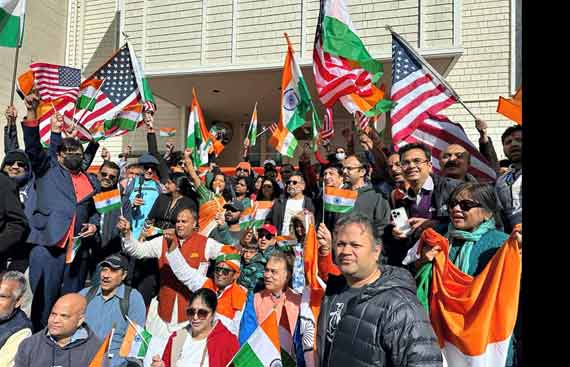
Five million Indian Americans have significantly influenced U.S. business, academia, culture and politics, contributing to economic growth, scientific advancements and cultural transformation.
Indian-Americans, now a community of five million, have become one of the most influential immigrant groups in the United States. Despite making up just 1.5 percent of the total population, they have made substantial contributions across a variety of sectors, including business, academia, culture and public service. Their impact extends beyond their population size, influencing the U.S. economy, scientific advancements and cultural landscapes.
In the business and innovation sectors, Indian-Americans have played a crucial role in driving U.S. economic growth. Currently, 16 CEOs of Fortune 500 companies are of Indian origin. These include prominent leaders such as Sundar Pichai of Google (NASDAQ: GOOGL) and Reshma Kewalramani of Vertex Pharmaceuticals. These Indian-American CEOs oversee businesses that employ over 2.7 million Americans and generate nearly one trillion dollars in revenue.
Their influence is not limited to large corporations. The startup ecosystem has also seen significant contributions from the community, with Indian-Americans co-founding 72 out of 648 U.S. unicorns. Notable examples include companies like Cambridge Mobile Telematics and Solugen, which employ more than 55,000 individuals and are valued at $195 billion. This entrepreneurial spirit extends to the hospitality sector, where Indian-Americans own approximately 60 percent of all hotels in the United States. Additionally, the community contributes around 5-6 percent of all income taxes, which amounts to $250 billion to $300 billion annually. Indian-American businesses also indirectly create millions of jobs across the country, with estimates suggesting that they are responsible for over 11 million American jobs.
In academia, Indian-Americans have become a driving force in research and education. Between 1975 and 2019, the share of patents held by Indian-origin innovators in the U.S. grew from two percent to ten. Their contributions to scientific research continue to grow, with Indian-origin scientists receiving 11 percent of all National Institutes of Health (NIH) grants in 2023 and contributing to 13 percent of scientific publications.
Figures such as Navin Varadarajan, a leader in immunotherapy and Subra Suresh, former director of the National Science Foundation, have made significant advancements in healthcare. In higher education, Indian-Americans account for approximately 2.6 percent of all full-time faculty members at U.S. colleges and universities. Leaders like Neeli Bendapudi, the first female president of Penn State University and Arun Majumdar, the first dean of Stanford’s Doerr School of Sustainability, are paving the way for future generations of scholars.
Culturally, Indian-Americans have reshaped American society in various ways. Indian cuisine has gained mainstream popularity, with renowned chefs like Vikas Khanna and Maneet Chauhan bringing the rich flavors of India to U.S. dining tables. Wellness practices, such as Ayurveda and holistic health, have been introduced by figures like Deepak Chopra, who have made these practices widely recognized in the U.S. Yoga, popularized by Swami Vivekananda, has become a staple in American wellness routines. Roughly 10 percent of the U.S. population practices these as of today.
Indian festivals, such as Diwali and Holi, have become widely celebrated in the U.S., with many Americans participating in these cultural events. Bollywood’s influence has also grown, with Indian actors like Priyanka Chopra Jonas successfully transitioning to Hollywood. In the fashion industry, traditional Indian elements, such as henna and lehengas, have become increasingly mainstream, with designers like Falguni and Shane Peacock showcasing their creations at New York Fashion Week.
The Indian diaspora has also made its mark in literature. Authors such as Jhumpa Lahiri and Abraham Verghese have brought to life the Indian-American experience, contributing to a broader understanding of the challenges and successes of the community. Philanthropic efforts by organizations like the American India Foundation and the Desai Foundation have raised significant funds for initiatives that improve lives both in the U.S. and India.
Indian-Americans have increasingly become a force in politics as well. By 2023, over 150 Indian-Americans held significant positions in the federal administration, a sharp rise from just 60 in 2013. This political representation includes high-profile figures such as Vice President Kamala Harris, who made history as the first woman, first African American and first South Asian American to hold the office. Her election marks a significant milestone for Indian-American representation in the U.S. government.
Indian-Americans have become an integral and influential part of the United States, making transformative contributions across diverse sectors such as business, science, culture and politics. Their continued success and growing representation in various fields are vital in shaping the nation's economic, cultural and political future. From driving innovation in technology and research to enriching American society through cultural exchange and leadership, the Indian-American community's impact is profound and continues to inspire future generations.