

Technological Transformation and Future Development of the Smart Logistics Industry
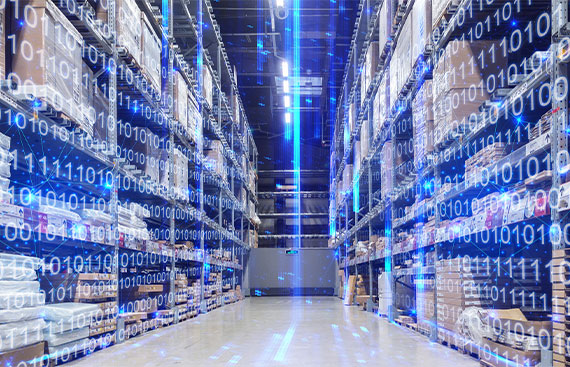
The smart logistics industry has undergone tremendous technological transformation in recent years. These advancements have not only improved operational efficiency for logistics companies but also driven the digital transformation of the entire supply chain. In a globalized world, smart logistics has become a key factor in enhancing competitiveness and service quality for businesses. This article will explore key technological advancements in the smart logistics industry, their impact, and future trends.
The Application of Automation in Logistics
Automation is one of the most significant transformations in the smart logistics industry. Traditionally, logistics operations relied heavily on manual labor, which was inefficient and prone to errors. Today, with the introduction of automated systems, the operations of logistics centers and warehouses have been significantly optimized.
Automated Warehouse Systems (AWS) are a prime example of this transformation. Through automated sorting, packing, and transportation, logistics companies can drastically reduce manual operations while improving handling capacity. For instance, AGV transfer carts and warehouse robots can move goods automatically within warehouses, reducing order processing times.
The application of intelligent container gantry cranes in automated container handling is also a prime example, particularly in ports or large warehouses. Intelligent container gantry cranes are highly efficient at moving heavy cargo, and they can be operated remotely or integrated with intelligent logistics systems, significantly enhancing operational efficiency and safety.
Automation also extends to the delivery phase. Drones and autonomous vehicles are nearing maturity and are expected to become important tools for solving the "last-mile" delivery challenge. In remote and hard-to-reach areas, automated delivery systems provide a more efficient and cost-effective logistics service.
Artificial Intelligence and Data Analysis: Optimizing Decision-Making
Artificial Intelligence (AI) and data analysis have enabled logistics companies to make more scientific and efficient decisions. By collecting and analyzing vast amounts of logistics data, AI can optimize the entire supply chain.
For example, logistics companies can use AI to analyze historical order data and current market demand, allowing for better demand forecasting. This helps businesses optimize inventory management, preventing overstocking or stock shortages. Moreover, AI can improve route planning, selecting the most efficient delivery routes based on real-time traffic conditions and transportation costs, thereby reducing logistics expenses and increasing delivery efficiency.
AI is also applied in intelligent warehouse management systems, where it can monitor warehouse operations in real-time, predict equipment failures, and schedule maintenance in advance to avoid downtime losses. The integration of AI with the Internet of Things (IoT) allows companies to achieve full visibility across their logistics operations, tracking the location, condition, and environment of goods in transit.
IoT: Enhancing Supply Chain Transparency
The Internet of Things (IoT) has brought full transparency to supply chains in the smart logistics industry. By installing sensors on transportation equipment and goods, companies can monitor data from all aspects of the logistics process in real-time, improving visibility and control over the supply chain.
For example, in cold chain logistics, IoT technology can monitor the temperature and humidity of refrigerated transport vehicles in real-time, ensuring that goods are maintained under appropriate conditions during transportation. Logistics managers can access this data remotely through monitoring platforms and take immediate action if abnormalities occur, preventing product spoilage.
Additionally, IoT can integrate with blockchain technology to offer end-to-end traceability in logistics. Every stage, from production to delivery, can be meticulously recorded, allowing customers to track every step of the process. This enhances supply chain transparency and builds customer trust.
Future Trends in Smart Logistics
As technology continues to evolve, the future of smart logistics will move toward greater efficiency, intelligence, and sustainability.
- Further Upgrades to Intelligent Warehousing
As automation and AI technologies continue to converge, future intelligent warehousing systems will be capable of self-learning and optimizing operational processes. Warehouse robots will become smarter, capable of independently planning routes, identifying, and sorting goods. Even complex tasks like loading and unloading may be completed by robots, reducing reliance on human labor and increasing efficiency.
- Widespread Adoption of Autonomous Delivery
With the maturation of drone and autonomous vehicle technologies, autonomous delivery will soon become a norm. Especially in urban logistics and last-mile delivery, autonomous systems will significantly reduce labor costs and improve delivery speeds. Drones can deliver small packages to consumers quickly, while self-driving trucks can handle large-scale transportation between cities.
- The Rise of Green Logistics
As environmental awareness grows, the logistics industry will place more emphasis on reducing carbon emissions. Electric logistics vehicles and solar-powered transportation devices will gradually replace traditional fuel-powered vehicles, lowering environmental impact. Moreover, logistics companies will focus on reducing packaging waste, promoting the use of recyclable and renewable materials.
- Collaborative and Connected Smart Supply Chains
In the future, smart supply chains will emphasize greater collaboration and resource sharing. Through big data and AI, stakeholders in the supply chain can share real-time data and resources to optimize overall supply chain efficiency. Collaboration will go beyond traditional partnerships, with technology enabling deeper, more connected relationships between companies.
Conclusion
The smart logistics industry is undergoing a wave of technological transformation, with automation, AI, and IoT driving efficiency and transparency. These innovations are optimizing supply chain management and enhancing industry operations. Looking ahead, the industry will see further innovations with the rise of autonomous technology, green logistics, and collaborative supply chains. These technological advancements will not only boost the competitiveness of businesses but also provide more convenient, efficient, and sustainable logistics services for society at large.


