

Talent Acquisition and Retention Pose Major Challenges for Life Sciences GCCs
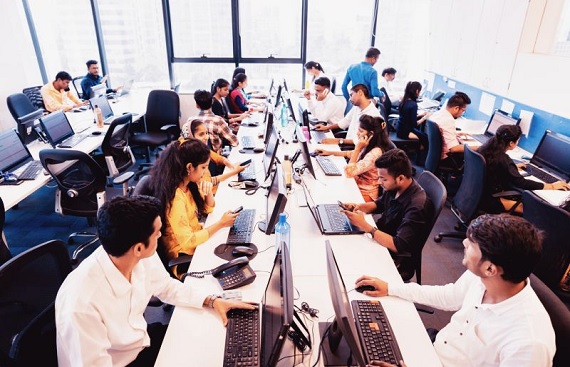
Talent retention and acquisition are top challenges for Global Capability Centres (GCCs) that are involved in research and development (R&D) of the life sciences and healthcare (LSHC) industry, industry experts say.
Interviewing Business Standard, Joydeep Ghosh, Life Sciences & Healthcare Industry Leader & Partner at Deloitte India, pointed towards the ongoing war for talent within the sector. "The challenge number one is to get the right high-skill talent in. Retaining and maintaining talent continuity is vital, as it takes years for drug discovery programs to come to fruition, while following global standards of quality and regulation, multiple rounds of clinical trials, and so on", he added.
GCCs in the LSHC industry have grown extensively in India, with Bengaluru, Hyderabad, and Chennai being the prominent centers, and Delhi and Mumbai having relatively fewer centers. Bengaluru dominates the industry, thanks primarily to Karnataka and Telangana's favorable investment policies and industry-specific support. These states have been actively promoting international players to invest and innovate.
As per Ghosh, approximately 15% of the 300,000 professionals working in GCCs are part of the LSHC sector, adding unquantifiable worth to India's pharmaceutical and biotech sectors. He highlighted certain future R&D initiatives, such as the intensifying competition for Eli Lilly's obesity medication, Mounjaro. Since the drug is approaching its patent cliff, Indian firms are intensifying research initiatives to create cheaper generic versions, further cementing India's dominance in the pharmaceutical world.
The industry is also seeing breakthrough work in the areas of cell and gene therapy, antibody-drug conjugates (ADCs), and organ-on-a-chip technology. Many start-ups, supported by government initiatives and IIT partnerships, are making progress on these fronts, with some innovations already being commercialized.
Speaking about Deloitte's emphasis, Ghosh highlighted the use of artificial intelligence (AI) in scientific discovery and innovation. "With a deep network of knowledge within Deloitte member firms, ongoing innovation at the technology forefront is our daily calling. AI, agentic AI, and associated technologies play a crucial role in managing the rigour and complexity of scientific discovery, adding real, tangible value to R&D activities", he said.
Ghosh also pointed to gains in telemedicine and remote monitoring of patients, pointing out that Indian companies are creating devices which can scan an eye, spot biomarkers non-invasively, and develop prescriptions for multiple ailments.
In the future, drug discovery will change dramatically in the next five years with the help of AI, chemical modeling, and organ-on-a-chip technology. These technologies will enhance toxicity studies, minimize dependence on animal testing, and enhance drug delivery to remote areas through telemedicine and robotic surgery.
With increasing investments, state-of-the-art research, and technology, India's life sciences GCCs will increasingly become a part of global healthcare innovation.


