

Supreme Court Grants Interim Relief on Waqf Amendment Act, 2025
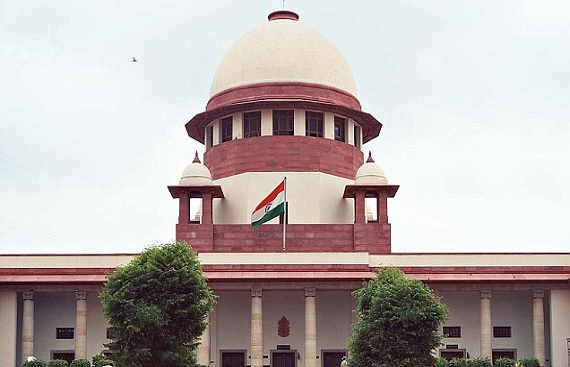
In a significant development in the ongoing legal challenge to the Waqf (Amendment) Act, 2025, the Supreme Court on Wednesday provided interim relief to petitioners opposing the new legislation. The Centre, represented by Solicitor General Tushar Mehta, gave an assurance to the apex court that it would not proceed with the denotification of any waqf properties recognized either by deed or by user until the next hearing scheduled for early May. The bench, led by Chief Justice of India Sanjiv Khanna, also halted any appointments to the Central Waqf Council or state Waqf Boards under the amended law until further orders are passed.
The assurance from the government and the interim directions from the court come in response to widespread concerns that several centuries-old waqf properties, including mosques, dargahs, and graveyards, could be affected by the sweeping changes introduced in the amended Act. Waqf properties identified under the 'waqf by user' doctrine, which refers to religious properties used by the Muslim community over a long period and recognized as such, were feared to be at risk under the new provisions.
Chief Justice Khanna emphasized during the hearing that properties registered under the Waqf Act, 1995, should not be disturbed, reinforcing the idea that the status quo must be maintained. He further questioned whether the inclusion of non-Muslim members in Waqf Boards, as permitted under the amended Act, was consistent with the constitutional rights guaranteed under Articles 25 and 26, which protect freedom of religion and the management of religious institutions.
Following the court’s direction, the Centre has been granted one week to submit a formal reply to the various petitions filed against the amendment. Petitioners opposing the Act have also been granted five days to file their rejoinders once the Centre’s response is on record. The court has selected five lead petitions to represent the broader challenge to the law and has separated them from other related cases filed by Hindu petitioners who have previously contested provisions of the original Waqf Acts of 1995 and 2013.
Reacting to the interim relief, All India Muslim Personal Law Board (AIMPLB) spokesperson Syed Qasim Rasool Ilyas called it a 'very big relief', especially with regard to the preservation of waqf by user properties. He explained that the community had feared losing several properties under the pretext of the new law, but the Supreme Court’s observations and orders provided assurance. Ilyas pointed out that while both aspects of the interim order—the stay on appointments and the non-denotification of properties are important, the preservation of properties was the more crucial decision.
Advocate Barun Sinha, appearing on behalf of one of the petitioners, echoed this interpretation, confirming that the Supreme Court had restrained the government from proceeding with any new appointments to the Central Waqf Council or state Waqf Boards under the new legislation. He also reiterated that the court had explicitly stated that waqf properties registered and gazetted under the 1995 law would remain undisturbed until the next hearing.
AIMIM president and Lok Sabha MP Asaduddin Owaisi welcomed the court’s intervention but maintained that his party would continue to oppose the Waqf Amendment Act, labeling it 'unconstitutional'. He reiterated that the law infringes on religious rights and expressed hope that the court would eventually strike it down entirely.
Congress MP Pramod Tiwari also lauded the Supreme Court’s concerns, stating that the court had highlighted the same issues the opposition had raised in Parliament. He pointed to the disproportionate representation of non-Muslim members on Waqf Boards and raised a rhetorical question about whether Muslims would ever be allowed to serve on temple advisory boards. Tiwari emphasized that the Act violates constitutional guarantees, particularly the rights protected under Articles 25 and 26.
On the other side of the debate, some religious leaders criticized the petitions challenging the law. Muslim cleric Chaudhary Ifraheem Husain claimed that the opposition was misleading the court and undermining its authority. According to him, the Waqf Amendment Act had followed all legal and democratic procedures being passed by Parliament and approved by the President and should not be challenged in the judiciary unless it is proven to be fundamentally unconstitutional.
During the hearing, the Supreme Court raised several fundamental questions about the structure and implications of the new law. The court asked whether the designation of waqf by user properties could be nullified through legislation, especially when some of those properties had historical and religious importance dating back to the 12th and 13th centuries. It also asked whether non-Muslims could constitutionally be allowed to be part of Waqf administrative bodies, and whether religious freedoms were being compromised by changes that redefined what could legally constitute waqf property particularly the exclusion of any property claimed as government land.
These judicial observations reignited political controversy across the country. West Bengal Chief Minister Mamata Banerjee criticized the central government, suggesting a double standard in the BJP’s approach to Muslims domestically versus abroad. “You are against Muslims, but in Saudi Arabia, you meet Muslims. If you go to Dubai, UAE, whose hospitality do you take there? You say one thing in your country and another outside”, Banerjee said.
Meanwhile, BJP MP Jagdambika Pal defended the Act, stating that the Waqf Board is a statutory and administrative body and not a religious one. He argued that if the Waqf Boards are viewed as legal institutions, then there is no constitutional bar to including non-Muslim members in their composition. He also noted that similar administrative arrangements have been upheld by courts in the past.
The ongoing hearing has drawn nationwide attention, and the Supreme Court Bar Association has urged the top court to consider live-streaming the proceedings in view of their constitutional importance and public impact. The court is expected to issue further interim directions after the Centre files its reply and the petitioners file their rejoinders. Until then, the implementation of the most contested provisions of the Waqf (Amendment) Act, 2025, remains on hold, providing a temporary reprieve to those concerned about the future of India’s waqf heritage.


