

Sunita Williams Set to Return to Earth After Nine-Month Stay on ISS
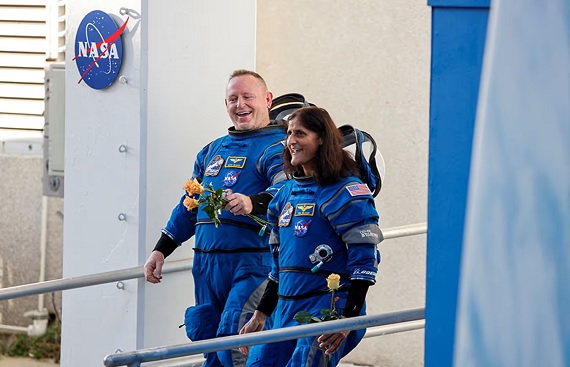
NASA has announced that American astronauts Butch Wilmore and Sunita Williams, who have been stranded on the International Space Station (ISS) for more than nine months, will be coming back to Earth on Tuesday night. They will be accompanied by NASA astronaut Nick Hague and Russian cosmonaut Aleksandr Gorbunov on a SpaceX Crew Dragon capsule, which arrived at the ISS early Sunday.
The return of the astronauts, previously planned on Wednesday, has been brought forward because of expected poor weather at a later time during the week. NASA indicated that the Crew Dragon is now destined for an ocean splashdown off the Florida coast around 5:57 p.m. EDT on Tuesday (21:57 GMT and 3:30 a.m. IST on March 19). The agency will transmit live coverage of the return, starting with preparations for the closing of the hatch on Monday night.
Wilmore and Williams have been aboard the ISS since June 2023 as part of a Boeing Starliner spacecraft test mission. Their return was postponed, though, when the Starliner developed problems with its propulsion system, making it unsuitable for the trip home. The surprise mission extension caused widespread interest and alarm since the two astronauts only packed for a short-duration flight at first. NASA was forced to ship more clothes and personal hygiene items to allow for their extended stay.
In spite of the extended mission, their stay on the ISS does not shatter the U.S. spaceflight record of 371 days held by astronaut Frank Rubio in 2023. Russian cosmonaut Valeri Polyakov still holds the world record at 437 days spent on the Mir space station.
NASA stressed that rescheduling the return creates a smoother transition for ISS crew members and still provides a safe and efficient return for the astronauts. The splashdown next week will culminate a trying but historic flight for Wilmore and Williams, who will at last be returning to their families after an unplanned lengthy period in space.


