Sunil Bharti Mittal's Journey to Telecom Dominance
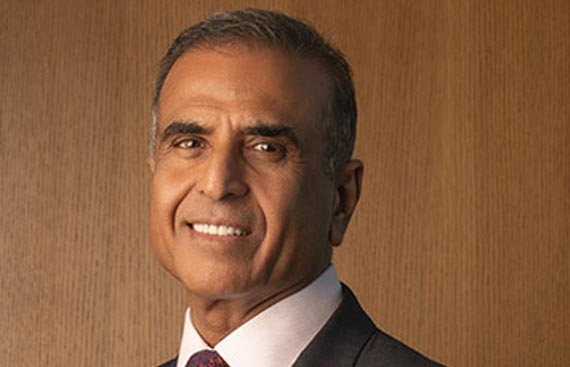
Sunil Bharti Mittal's stake in British Telecom positions him as a key player in the company's future. His involvement highlights the growing influence of Indian business leaders in shaping the global telecommunications landscape.
As India's economy has expanded in recent decades, a cohort of billionaires has emerged, exerting significant influence over key industries. Among them is Sunil Bharti Mittal, whose rise in the business world may appear almost preordained—his company, Bharti Enterprises, derives its name from "Bharat," the Hindi term for India.
Mittal founded Bharti Enterprises in 1976 as a small manufacturing business, but he built his fortune in the telecommunications sector, capitalising on India's surging demand for data. Bharti Airtel, the group's flagship company, served approximately 400 million customers in India last year, 150 million in Africa, and 60 million in Bangladesh and Sri Lanka.
Bharti Enterprises is poised to become the largest shareholder in BT Group following an agreement to acquire the stake held by Patrick Drahi, the Moroccan-born billionaire and founder of the debt-laden Altice empire. While Bharti has stated that a complete takeover is not under consideration, acquiring a 24.5 per cent stake will afford Mittal considerable influence over one of the United Kingdom’s most prominent corporations.
Mittal reportedly spends a significant portion of his time in the UK and has notable financial interests there, particularly in the hospitality sector. Bharti Enterprises owns Scotland’s renowned Gleneagles hotel and The Hoxton, a chain of "budget-luxe" hotels, acquisitions spearheaded by Mittal’s son-in-law, Sharan Pasricha.
Born in 1957 in Punjab, India, Mittal is the son of Sat Pal Mittal, a politician and a key fundraiser for the Congress party, which dominated Indian politics for much of the 20th century until Narendra Modi came to power in 2014. Despite his father’s political legacy, Mittal pursued a different path, graduating from Panjab University before launching his first business at 19, manufacturing bicycle components. His entrepreneurial journey spanned various industries, including wool blankets, stainless steel surgical equipment, and generators, before he identified the potential of the telecom sector during a visit to Taiwan in 1985. According to a profile by Harvard Business School, where he later studied, this realisation prompted his shift into telecommunications.
Mittal expanded his business by forging strategic partnerships with international firms, ultimately developing a mobile network covering 96 per cent of India’s population. In 2010, Bharti Airtel extended its reach into Africa through a $10 billion (£7.8 billion) acquisition.
Prime Minister Modi’s support has been widely acknowledged as a crucial factor in the rise of India’s two wealthiest individuals, Mukesh Ambani—the owner of the rival Reliance Jio mobile network and extensive commodities holdings—and Gautam Adani, whose primary business interests lie in coal. While Mittal’s relationship with Modi is perceived as less direct, he has publicly acknowledged the Prime Minister’s influence.
Bharti Enterprises has voluntarily submitted the BT Group transaction for review under the UK’s National Security and Investment Act. However, the UK government has historically welcomed collaboration with the Indian conglomerate. Under former Prime Minister Boris Johnson, the government controversially partnered with Bharti Enterprises in a joint venture to acquire OneWeb, a bankrupt low-earth orbit satellite company. At the time, then-Business Secretary Alok Sharma described Bharti as a "large and trusted investor."
Mittal has characterised his investments in "last-mile connectivity" as an effort to bridge the global digital divide—an ambition with both humanitarian and financial implications, as the increasing demand for connectivity continues to yield substantial returns for industry leaders.