

Petroleum Minister Puri Showcases India's Bioenergy Milestones at Expo 2024
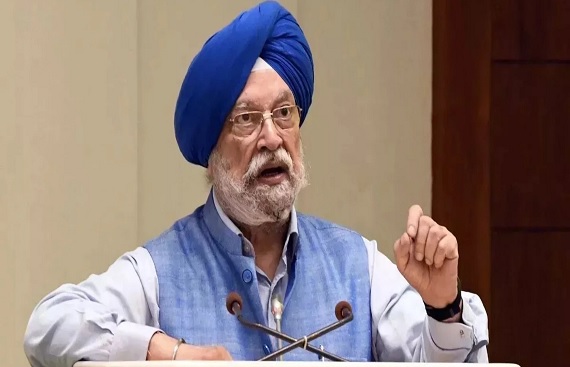
At the opening session of the India Bio-Energy & Tech Expo 2024 (IBETE), Hardeep Singh Puri, the Minister for Petroleum & Natural Gas, provided an in-depth overview of India's advancements in the bioenergy sector and its pivotal role in the nation’s energy transition. Minister Puri highlighted that bioenergy is emerging as a vital alternative to fossil fuels, delivering significant environmental benefits and economic opportunities, especially in rural regions.
In his address, Minister Puri elaborated on the Indian government’s strategic efforts to advance the bioenergy sector, highlighting its significance in reducing import dependence, saving foreign exchange, and promoting a circular economy. The government’s strategy encompasses several vital areas, including ethanol and biodiesel blending, Compressed Biogas (CBG), Sustainable Aviation Fuels, biomass utilization (such as pellets and briquettes), Biohydrogen, and waste-to-energy solutions.
Puri highlighted the success of India's ethanol blending program, which has increased from 1.53% in 2014 to 15% in 2024. The government aims to reach 20% blending by 2025. This initiative has saved  99,014 crore in foreign exchange, cut CO2 emissions by 519 lakh metric tons, and replaced 173 lakh metric tons of crude oil. It has also significantly impacted the economy, with Oil Marketing Companies paying 1,45,930 crore to distillers and 87,558 crore to farmers.
99,014 crore in foreign exchange, cut CO2 emissions by 519 lakh metric tons, and replaced 173 lakh metric tons of crude oil. It has also significantly impacted the economy, with Oil Marketing Companies paying 1,45,930 crore to distillers and 87,558 crore to farmers.
Minister Hardeep Singh Puri also highlighted the widespread availability of E20 fuel, which is now offered at over 15,600 retail outlets across India. He commended the Pradhan Mantri JI-VAN Yojana for its essential role in providing financial support to advanced biofuel projects, which is crucial for developing a sustainable ethanol production ecosystem.
Minister Puri called on Nitin Gadkari, the Minister of Road Transport & Highways, to urge automobile manufacturers to develop vehicles compatible with E100 fuel. He addressed misconceptions about ethanol blending, explaining that adding ethanol to petrol not only boosts engine performance by raising the octane number but also enhances efficiency. Contrary to some concerns, ethanol helps prevent pre-ignition knock and improves overall engine operation.
Drawing on global examples, Puri highlighted Brazil's successful use of high ethanol blends, reaching up to 60-70% in vehicles, to illustrate the feasibility of high ethanol content. He assured that India is dedicated to increasing E20 production and supporting the transition with measures to enable the use of transition fuels in older vehicles. Minister Hardeep Singh Puri also praised the automobile industry for its proactive stance, noting that manufacturers are not only producing new E20-compliant vehicles but are also developing retrofit kits for older models. These kits, which can be installed during routine servicing, are a significant step in accommodating older vehicles and advancing biofuel adoption.
In conclusion, Puri underscored the vital role of biofuels in reducing fossil fuel dependence and emissions, paving the way for a cleaner and more sustainable future. He also discussed the Global Biofuels Alliance (GBA), established during India’s G20 presidency, which serves as a collaborative platform for sharing knowledge, advancing technology, and developing policies to harness the $500 billion opportunity in biofuels and accelerate global adoption through technology transfer.
The India Bio-Energy & Tech Expo 2024 is being organized by the Indian Federation of Green Energy (IFGE) and MMACTIV Sci-Tech Communications Ltd. The event aims to promote growth in India’s bioenergy sector, showcasing key government policies such as the National Policy on Biofuels 2018 and the SATAT Scheme for Compressed Bio Gas (CBG). It will also address government initiatives including specific blending targets for ethanol, CBG, and SAF; the Repurpose Used Cooking Oil (RUCO) initiative; Galvanizing Organic Bio-Agro Resources Dhan (GOBARdhan); and the Samarth Mission.


