

MoU Signed at RE-INVEST for Vertical Solar Farms to Boost Agri and Clean Energy
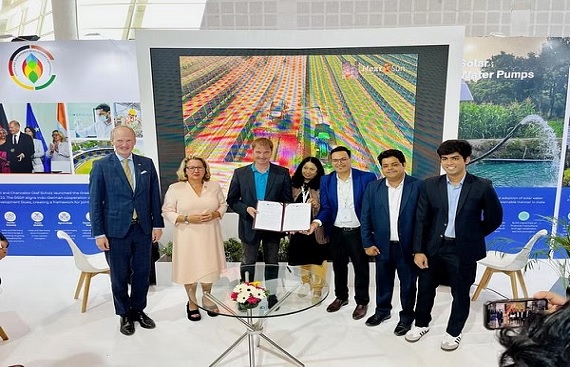
During the recently concluded RE-INVEST 2024, a Memorandum of Understanding (MoU) was signed between Yashika Energy Systems, Next2Sun Germany, and Wattkraft India, marking a significant step towards a groundbreaking transformation in renewable energy. The 4th edition of the RE-INVEST Global Renewable Energy Meet and Expo was hosted by Gujarat and organized by the Ministry of New and Renewable Energy (MNRE) this week.
This partnership brings forward an innovative vertical solar technology that not only generates clean energy but also transforms the agricultural sector by allowing farming to continue on the same land. This dual-use approach is poised to reshape India’s agrarian economy, contributing significantly to both energy independence and climate action.
"This partnership aims to address the growing concerns over land usage in conventional solar installations, which often displace valuable agricultural land. By implementing Next2Sun's innovative vertical bifacial Agri-PV systems, we will enable dual land use--allowing farmers to continue agricultural activities while also generating renewable energy", said Yash Kishorkumar Gupta of Yashika Energy Systems.
"With the support of governments and agricultural associations in both India and Germany, our goal is to launch pilot projects across India, with plans to scale this sustainable technology for nationwide adoption", said Gupta.
This initiative arrives at a pivotal moment, as India looks for innovative solutions to meet its rising energy demands without undermining its agricultural capabilities. The deployment of Next2Sun's vertical bifacial solar technology addresses a major issue with conventional solar farms, which typically occupy large tracts of land that could otherwise support agricultural activities.
This unique approach allows solar panels to be installed in a vertical orientation, generating energy from both sides while maintaining the ability for farmers to cultivate crops below. The pilot projects, which will range from 100 kWp to 500 kWp, are designed to showcase the effectiveness of vertical bifacial solar technology across different regions in India.
The MoU signing was witnessed by several key dignitaries, including Sascha Krause-Tunker, CFO of Next2Sun AG, alongside Svenja Schulze, the German Federal Minister for Economic Cooperation and Development, and Pralhad Joshi, India's Minister of New and Renewable Energy.
"With the support of both governments and the agricultural community, we are confident that these projects will set a new benchmark for sustainable development in India. We believe this will inspire others to adopt similar solutions and transform how we think about land use and energy production", added Sascha Krause-Tunker, emphasizing the far-reaching impact of the partnership.
At COP26 in 2021, India made an ambitious 'Panchamrit' pledge consisting of five key commitments. These include achieving 500 GW of non-fossil fuel electricity capacity, generating 50% of the nation's energy from renewable sources, and cutting emissions by 1 billion tonnes by 2030. Additionally, India aims to reduce its emissions intensity of GDP by 45% and reach net-zero emissions by 2070. As fossil fuels currently supply a significant portion of India's energy needs, renewable energy is seen as a critical pathway to reducing reliance on traditional power sources.


