

Maharashtra Plans Eco-Friendly Industrial Hubs
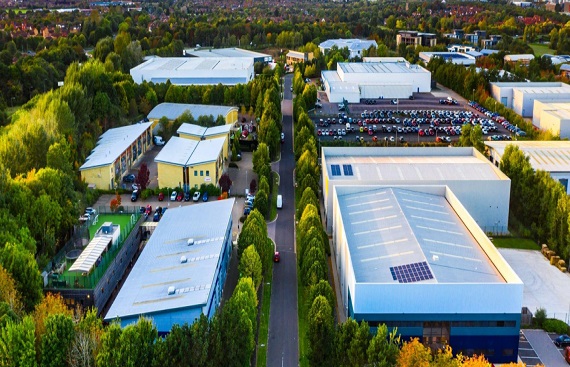
- Maharashtra inks Rs 5127 crore FDI-backed deal to develop 10+ climate-smart industrial and logistics parks across key hubs like Panvel, Bhiwandi, Chakan, Sinnar, and Nagpur.
- 794 acres to host 18.5 million sq. ft. of green infrastructure, with net-zero goals, EV charging, solar integration, and inclusive, digitally connected workspaces.
- Project to create over 27,000 jobs and support MSMEs, aligning with Make in India, Digital India, and Net Zero 2070 targets while setting a national model for sustainable industrial development
Maharashtra has signed a Rs 5127 crore investment agreement with international infrastructure developers for the development of more than ten future-ready industrial and logistics parks in strategic locations of the state.
The decision marks a paradigm shift in how India's commercial hub is thinking about its economic and environmental impact. Signed under the umbrella of the state industries department, the memorandum of understanding (MoU) is one of the biggest foreign direct investment (FDI)-supported projects in Maharashtra's industry and logistics spaces. These ventures will cover an enormous 794-acre landholding and are expected to change the face of warehousing, manufacturing, and logistic infrastructure in the urban and semi-urban hotspots of Panvel, Bhiwandi, Chakan, Sinnar, and Nagpur.
The new infrastructure, according to top officials witnessing the signing event, will be comprised of around 18.5 million square feet of developed area, engineered specifically for facilitating climate-aware industrial activity. These facilities are to incorporate digital infrastructure, renewable energy systems, and green building certifications as a basic requirement, in compliance with the newly implemented Maharashtra Logistics Policy 2024. State government officials referred to the project as a groundbreaking move towards turning Maharashtra into a national pioneer of industrial and logistics sustainability. The industrial parks, which are being planned, will be green hubs that are aimed at facilitating net-zero operations, maximising the use of water and energy, and minimizing carbon emissions along the supply chain ecosystem", a top official of the industries department stated.
The state association with the two global private sector partners the prime investor and developer of logistics infrastructure is meant to respond to the increasing need for effective, digitalised, and environmentally friendly logistics solutions in western India. The project also has the potential to create more than 27,000 direct and indirect jobs, mainly in the manufacturing of clean-tech and logistics services. Urban planning specialists and industrial commentators were upbeat about the deal, citing its timely strategicity and alignment with wider national interests like Make in India, Digital India, and India's ambition to reach net-zero emissions by 2070.
"This type of infrastructure, based on sustainability paradigms and driven by international investment, is central to India's low-carbon transition.". Maharashtra has aptly taken a leadership position here", said an infrastructure policy analyst based in Mumbai.
The ten industrial and logistics parks are to be constructed with a design philosophy that facilitates future-proofing digitally connected supply chains, intelligent warehousing, and allowances for electric vehicle (EV) charging bays and solar panel installations. The parks will also be gender-inclusive, providing safe, equal workplaces with specially designated amenities for female and non-binary staff, as per the state's urban equity objectives. The sites were chosen based on multimodal accessibility, adjacency to industrial concentrations, and current road, railroad, and port infrastructure. Areas such as Bhiwandi and Panvel are already logistics hubs because of their geographical location near Mumbai and the Jawaharlal Nehru Port, while Chakan and Sinnar are being fast industrialized with the support of auto and agro-processing facilities. Nagpur, in the heart of India's logistics hub, will be a central node for warehousing and value-added services for central India.
The state government's logistics policy has compelled new parks to adopt sustainable construction practices, circular economy models, and local employment as a priority. The policy also enforces collaboration with vocational training schools to skill upgrade workers in green employment opportunities like solar maintenance, smart management of logistics, and sustainable packaging. Officials linked to the deal described the project as a major milestone in translating policy promises into on-the-ground change. "It is more than infrastructure this is a long-term capacity-building endeavor. We are not simply building foundations in concrete we are constructing a low-emissions, resilient economy that places people, planet, and productivity on the same pedestal," a senior planning official stated.
International developers on the project have a history of having developed large-scale, technology-facilitated logistics parks in Asia and Europe. They are set to inject international best practices in land use optimisation, renewable integration, waste management, and workplace digitisation. State officials from the investment promotion agency further noted that the project is designed to be scalable, i.e., additional parks can be added in the future if land and demand are available. Significantly, the green industrial parks are being viewed as more than mere warehouses. The blueprint for development covers incubators for start-ups, co-warehousing for small businesses, and plug-and-play units for light manufacturing all of which will be made available to micro, small, and medium enterprises (MSMEs) in incentivised lease arrangements.
Experts laid stress on the fact that this project has the potential to create a model for other Indian states, particularly in terms of how environmentally friendly FDI can be directed towards fundamental infrastructure. "We tend to talk about green transitions in the future tense". Maharashtra is showing how green infrastructure can be implemented now, with economic, environmental, and employment advantages coming together at the same time", said a Delhi-based transport and logistics policy consultant. Though the complete timeline for the full implementation process has not been announced, officials said that preliminary groundwork, land acquisition, and regulatory approvals are already in progress in some locations. The state has vowed single-window clearances and financial incentives for environmentally friendly project implementation, in keeping with its Ease of Doing Business reforms.
As Maharashtra strives to retain its pole position as India's premier destination for investment, such projects not only raise the state's industrial horizons but also reinforce its focus on creating inclusive, low-carbon cities and jobs centers. The next-generation logistics parks are likely to set benchmarks for urban-industrial integration in India in the years to come


