

ISRO to Develop Heaviest LVM3 Rocket Through PPP Model
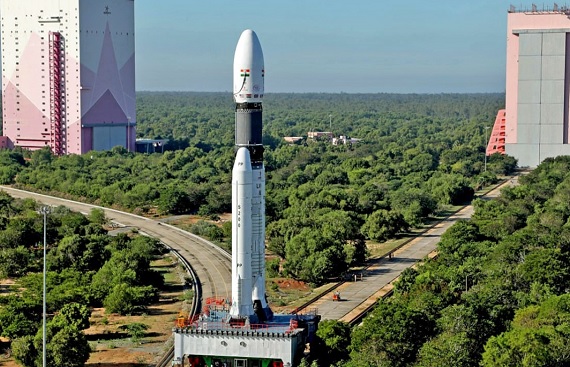
Following the successful launches of its two rockets, the Polar Satellite Launch Vehicle (PSLV) and Small Satellite Launch Vehicle (SSLV), the Indian space agency is now exploring the development of its most robust rocket, the LVM3, through a public-private-partnership (PPP) model. The LVM3, the Indian Space Research Organisation's (ISRO) heaviest rocket, boasts a maximum payload capacity of four tons to Geo Transfer Orbit (GTO) and eight tons to Low Earth Orbit (LEO).
Collaborative efforts between the Indian space agency and NewSpace India Ltd (NSIL), the commercial arm of the Department of Space, are underway to develop the LVM3 through the PPP mode. A recent stakeholder meeting, organized by NSIL and ISRO, saw participation from representatives of more than 30 companies. In 2022, NSIL enlisted the Hindustan Aeronautics Ltd-Larsen and Toubro Ltd consortium to manufacture five PSLV rockets.
Last year, the Indian National Space Promotion and Authorisation Centre (IN-SPACe) issued an Expression of Interest (EoI) for making ISRO’s small rocket SSLV. And now, ISRO has started preparations for making LVM3 under PPP mode. NSIL has engaged the services of IIFCL Projects Limited (IPL) to explore the potential PPP partnership options for LVM3 production through the Indian industry.
NSIL emphasizes the necessity of a PPP collaboration with the Indian industry to produce additional LVM3 rockets, addressing the global demand for launch services and ensuring competitiveness in the market. In order to be relevant and maintain a competitive edge, NSIL and ISRO encourage Indian industries to actively participate as risk-sharing and investment partners in the program.
The assessment of the global launch service market over the past decade clearly highlights a substantial demand for launching communication satellites into Geostationary Transfer Orbit (GTO) and deploying satellites for mega constellations in Low Earth Orbit (LEO). NSIL a


