ISRO Sets Fast-Paced Launch Plan with Gaganyaan and Commercial Missions
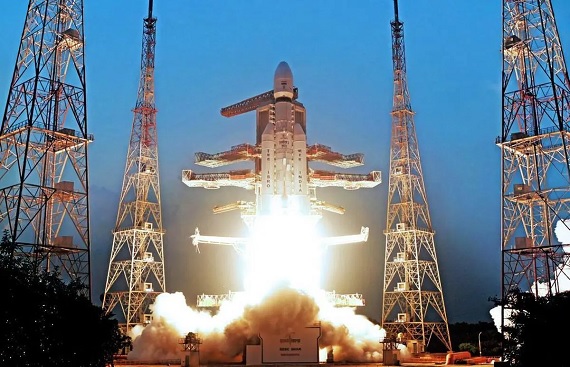
- ISRO plans seven launches by March next year, spanning commercial, scientific, and technology demonstration missions.
- First uncrewed Gaganyaan mission to fly with robot Vyommitra, testing launch, orbital operations, and safe re-entry systems.
- New missions focus on jobs, industry growth, and advanced space technologies, with higher private sector and commercial participation.
The Indian Space Research Organisation (ISRO) has announced a busy launch schedule, with seven missions planned by March next year. The lineup includes major commercial launches, new satellite technologies, and key milestones for India’s human spaceflight program.
The first mission is expected as early as next week. India’s heaviest rocket, the LVM3, will launch the BlueBird-6 communication satellite for US-based AST SpaceMobile. The mission will take place under a commercial agreement through ISRO’s commercial arm, New Space India Limited (NSIL), the government said in Parliament.
Early next year, the human-rated LVM3 will carry the first uncrewed Gaganyaan mission. The crew module will fly with a humanoid robot, Vyommitra, onboard. This flight will test the full mission sequence, including launch performance, orbital operations, re-entry, and crew module recovery. ISRO plans another uncrewed Gaganyaan mission later next year, ahead of sending Indian astronauts to low Earth orbit in 2027.
ISRO will also launch India’s first industry-built Polar Satellite Launch Vehicle (PSLV). The rocket will place the Oceansat satellite into orbit, along with the Indo-Mauritius Joint Satellite and Dhruva Space’s LEAP-2 satellite. To boost commercial capacity, NSIL has awarded a contract to a HAL–L&T consortium to manufacture five PSLVs under a technology transfer program.
Also Read: ISRO Launches GSAT-7R to Boost Navy's Communication in Indian Ocean
Other missions include an ISRO-built PSLV carrying an Earth observation satellite for a strategic user and 18 smaller satellites. The GSLV-Mk II will launch the EOS-5 satellite, replacing an earlier failed mission.
ISRO will also test advanced electric propulsion and quantum key distribution technologies through the TDS-01 satellite. These systems will reduce satellite weight, cut fuel needs, and support future navigation and communication missions. A dedicated Small Satellite Launch Vehicle (SSLV) mission is also planned before March 2026.