Infra, manufacturing push to support economy scale $7 tn peak
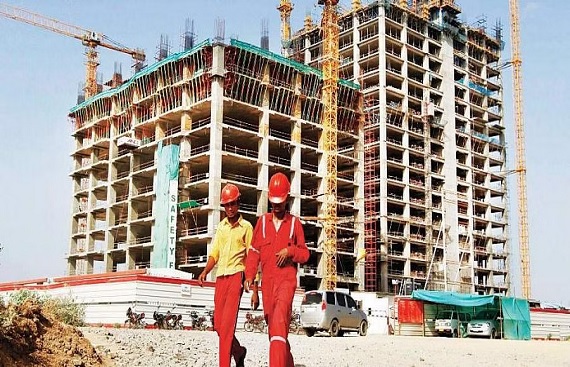
India’s route to becoming a $7 trillion economy by 2030 is based on two key areas of growth: manufacturing and infrastructure creation, the two fundamental pillars of economic growth in a fast-evolving nation like India, poised to soon become the quickest-growing economy in the world, according to a panel of key industry stakeholders from the infrastructure and manufacturing industries at the Zetwerk Smart Manufacturing Summit.
This growth will be driven by consistent government policy, large-scale capital investment, efforts to drive digitization and automation in manufacturing to drive productivity, as well as capturing opportunities presented by our commitment to become a net-zero emissions economy by 2070, the panelists said.
Vishal Chaudhary, the co-founder of Zetwerk, a business-to-business digital manufacturing marketplace, explained how his company helps customers discover the right supplier for their product, orchestrate the supply chain, and increase reliability and transparency in the manufacturing process. “It helps the customer avoid a lot of hassle and the supplier access the kind of demand which historically he was not able to access," said Chaudhary. He added that this model has helped some of their longest-wintered suppliers increase the utilization of their manufacturing capacity from about 15-20% to up to 45-50%.
There is a transformation taking place in the energy sector, which forms the core of manufacturing and development activities across the world, Anil Chaudhry, CEO and MD, Schneider Electric India, said. He said the significance of energy efficiency and the kind of energy used in smart manufacturing, especially in the light of recent news from the European Union regarding a carbon tax.
Deepesh Nanda, CEO, GE Gas Power South Asia, said India’s shift towards greener sources of energy has been picking up pace, as evidenced by their growth in installed base from 6-7GW to 150GW. He said India’s manufacturing ecosystem for green energy will be boosted by the shift towards hydrogen, which he sees as a “very healthy, prudent and directional way for us to reach that mark of $5 trillion."
Vaibhav Dange, an advisor for the National Highways Authority of India emphasized the multiplier effect of infrastructure, which has had a significant impact on manufacturing and competitiveness in India.
However, developing infrastructure requires skilled manpower, huge capex investment, and long-term funding, said Sandeep Singh, managing director, Tata Hitachi, a construction equipment company. “Funding for long-term timely execution of express highways is also a challenge," Singh said.