

India-US Diplomatic Cooperation Expands to the Semiconductor Sector
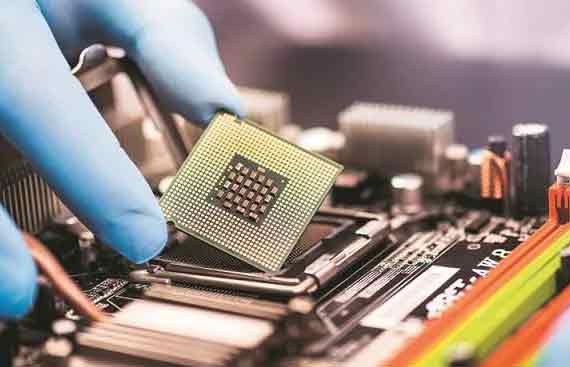
Partnering with an innovation frontier like the United States in the semiconductor sector opens up seamless opportunities for India in its productivity and efficiency
The United States is extending its partnership with synergy-established nations like India and Taiwan on building semiconductors, with Washington’s established assistance in enhancing the sector’s growth. Per its incentive scheme, India anticipates bringing in about 25 billion USD of total investment, aiming to boost the local manufacturing of semiconductors. Hence, the nation will likely emerge as a major player in the global supply chain in the upcoming years.
With the Indian administration aiming to outshine as a leader in cutting-edge technology, semiconductors critically excel as a foundational building block, and thus, its government is likely to spend 10 billion USD in the industry. Meanwhile, an established frontier role of the US in the domain is highly encircling the perks of the India-US partnership.
This relationship between India and the US is observed as a groundbreaking factor for Indian industry. Meanwhile, the Indian Electronics and Semiconductor Association (IESA) vice-president, Mr, Sunil G. Acharya, when addressing a gathering, stated that the American semiconductor majors like Intel, Texas Instruments, and several other organizations hold a firm ground in India, as its units of these majors are typically involved in semiconductor designing and validation, with regards to other support services. In addition, varied established players have offered design services to global companies all across industry segments in recent years.
Wherein Indian academics have encircled pivotal factors in this regard. For instance, Dr Abhinav Kumar Sharma, a professor of operations and data science at NMIMS University, concludes that the prediction of the scope and future of the India-US semiconductor partnership encompasses more unknown factors. As an amateur in the sector, the Indian government is developing Production-Linked Incentives (PLI) schemes to achieve efficacy in the semiconductor manufacturing sector.
As American semiconductor enterprises opt for seamless opportunities in expanding their manufacturing in the United States, an exponential soar in design, R&D (Research and Development), and support services footprint in India comes under a delicate consideration, thereby instigating an overall innovation in the domain. With global giants planning to eliminate their dependency on the conflicting nations, India thrives as the most beneficiary of the policy, as its domestic conglomerates are promising multimillion-dollar investments in the semiconductor sector. Moreover, the world-class academic institutions in India have stimulated their focus on research in the domain’s advancements, where SHAKTI by IIT Madras, an open-source processor, stands as a frontier.
As a result, the Indian semiconductor industry is anticipated to grow to 64 billion USD by 2026, with an established compound annual growth rate (CAGR) of 19 percent. Chips manufactured end-to-end in India are yet to bloom, where American companies are all set to lead the future with increased efficiency rest assured. Furthermore, political leaders in India are highly appreciating the act of the MOU signing between industry representatives of the US and India, as it addresses varied geopolitical issues.
India is likely to thrive as a global player in the semiconductor industry by striking an effective balance between accepting U.S. partnerships in both financial and material-wise opportunities. The semiconductor manufacturing incentives typically rolled out by the Indian government proffers American companies to expand their capacities all around India while risking their supply chains. American enterprises are leveraging the skilled workforce in India to build capacity and invest in catalyzing R&D in the semiconductor and related industries.
The Indian government has instituted varied policies in assisting businesses for American companies at increased ease of comfort. Hence, emerging as an equal player in the sector, India is highly anticipated to outshine the semiconductor sector per established similar interests with the United States. Further, as a nascent in the semiconductor domain, partnering with an industry frontier like the United States facilitates a more bright future ahead for India.


