India's Pragmatic Approach to Trump's Foreign Policy
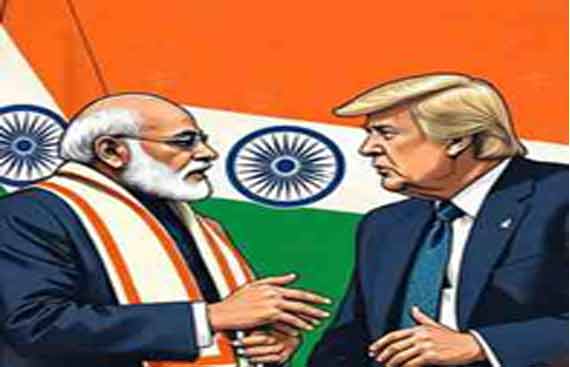
India, led by External Affairs Minister S. Jaishankar, navigates global shifts confidently. It advocates multipolarity, pragmatic diplomacy, and governance reforms while asserting its non-Western identity amid evolving U.S. foreign policy and transformative global dynamics.
External Affairs Minister S. Jaishankar examines the significant shifts in global politics, India's expanding influence, and the potential implications of Trump’s return to power. Having recently concluded a series of high-profile engagements—including Trump’s inauguration, the Munich Security Conference, and strategic discussions in Delhi—he remains unfazed by the prevailing uncertainty in the West. Instead, he views it as a confirmation of India’s long-held perspective: the traditional global order is transforming, and India is asserting a more prominent role on the world stage.
Trump’s Foreign Policy
India remains unfazed by former U.S. President Donald Trump's approach to global politics. External Affairs Minister S. Jaishankar acknowledges the shifting sentiment in the United States, stating that Americans have grown weary of international engagements, perceiving diminishing benefits and rising costs.
For years, India has championed the concept of a multipolar world—a perspective that has now gained traction in U.S. foreign policy discourse. As Jaishankar observes, this once-Indian viewpoint has become an American talking point.
While many nations grapple with Trump's unpredictability, India adopts a pragmatic stance. Jaishankar also asserts that foreign policy is not conducted through wishful thinking; one must engage with the realities as they unfold.
India's Vision for a New Global Order
Jaishankar advocates for evolving global governance frameworks to better reflect contemporary geopolitical realities rather than persisting with structures rooted in post-World War II dynamics. India continues pressuring for reforms in international institutions, including the United Nations Security Council. However, diplomatic tensions—such as those with Canada following allegations concerning a Sikh separatist’s assassination in 2023, which India has firmly denied—have complicated New Delhi’s engagement on the global stage.
India’s Growing Confidence
Jaishankar challenges the notion that India is distancing itself from the West. Instead, he emphasizes that the country is asserting its identity on its terms. He states that the old Indian elite tried to imitate the West as a sign of modernity. Today, India is more confident about being non-Western but not necessarily anti-Western.
Jaishankar acknowledges trade frictions between India and the United States during the Trump administration but remains optimistic about a resolution. Regarding concerns over Trump’s unpredictable approach to international relations, Jaishankar remains unperturbed. India maintains a flexible diplomatic posture, unlike the United States' traditional treaty-based alliances. He describes the Quad—comprising India, the United States, Japan, and Australia—as "more like a club," offering strategic collaboration without rigid commitments.