

Indian-American Sunita Williams Leads Historic Journey in Commercial Space Exploration
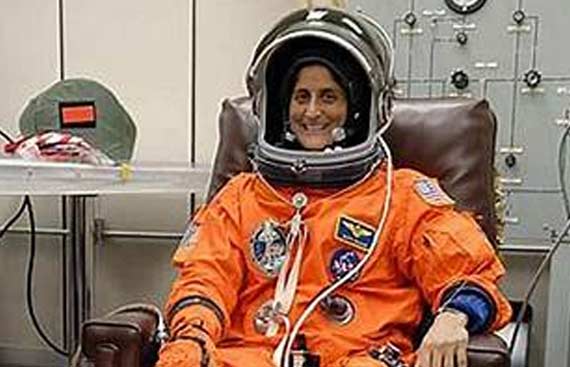
Boeing's inaugural Starliner crewed mission signifies a milestone in space exploration, emphasizing collaboration and the enduring human quest for innovation and discovery.
In a historic milestone for space exploration, Indian-American astronaut Sunita Williams and her colleague Barry Wilmore made headlines by embarking on the maiden crewed mission of Boeing’s Starliner spacecraft. This marks a substantial step for Boeing in the commercial space industry, aspiring to match SpaceX in transporting astronauts to the ISS.
Their journey aboard the Boeing CST-100 Starliner is a testament to the advancements in commercial spaceflight. The launch, which took place from Cape Canaveral Space Force Station, signifies Boeing’s aim to provide NASA with alternative transportation to the ISS. This mission, known as the Crew Flight Test (CFT), is crucial for Boeing as it aims to demonstrate the safety and reliability of its spacecraft.
Sunita Williams, A Trailblazing Astronaut
A veteran astronaut brings a wealth of experience to the mission. Born in Euclid, Ohio, to Indian and Slovenian parents, she has had an illustrious career with NASA. Williams has spent over 321 days in space, including extensive time aboard the ISS. She has completed seven spacewalks, totaling more than 50 hours. Her participation in the Starliner’s maiden crewed flight underscores her role as a trailblazer in space exploration, inspiring countless individuals, particularly in the Indian-American community.
Barry Wilmore, A Seasoned Spacefarer
Joining Williams on this historic mission is Barry "Butch" Wilmore, a decorated astronaut and retired Navy captain. He has previously flown on the Space Shuttle and has spent considerable time aboard the ISS. His extensive experience in piloting complex spacecraft makes him an invaluable asset for this mission. Wilmore’s role in this flight is to assist in critically assessing the Starliner’s systems and performance, ensuring the spacecraft’s readiness for future missions.
The Significance of the Mission
The success of Boeing’s Starliner mission is pivotal for several reasons. It represents a critical step in NASA’s Commercial Crew Program, which seeks to foster partnerships with private companies to transport astronauts to the ISS. This program is designed to reduce dependence on Russian Soyuz spacecraft and to stimulate the growth of a robust commercial space industry in the United States.
The mission’s success will bolster Boeing’s position in the competitive space market. Boeing has faced several challenges and delays with the Starliner program, including a failed uncrewed test flight in 2019 due to software issues. The Crew Flight Test allows Boeing to demonstrate that these issues have been resolved and that the Starliner is ready for operational missions.
During the Crew Flight Test, evaluations will assess the Starliner's functionalities, encompassing life support systems, docking procedures, and overall space performance. Additionally, astronauts will deliver supplies and conduct maintenance upon docking with the ISS.
The success of this mission has broader implications for the future of space exploration. It signifies the increasing role of commercial entities in space travel, paving the way for more frequent and cost-effective missions. This shift enhances scientific research and international cooperation capacity and opens up possibilities for future lunar and Mars missions.
Furthermore, the mission highlights the importance of diversity and representation in space exploration. Williams’ participation showcases the contributions of women and minorities in the field, inspiring future generations to pursue careers in science, technology, engineering, and mathematics (STEM).
The maiden crewed mission of Boeing’s Starliner marks a pivotal moment in space exploration. This mission advances the company’s efforts within NASA’s Commercial Crew Program and underscores the evolving landscape of space travel, driven by both public and private sector collaboration. They symbolize the spirit of human exploration and the ongoing quest to push the boundaries of what is possible in space. Their journey inspires, highlighting the potential for continued innovation and discovery in the final frontier.


