Indian Origins Crafting General Purpose Brains for Robots
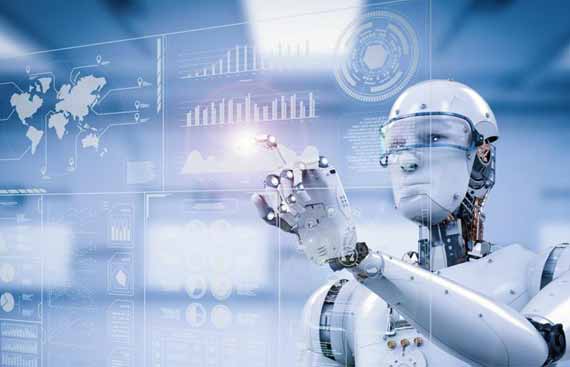
Skild aims to transform robotics by creating a general-purpose brain for robots, enhancing their ability to learn through experience and perform real-world tasks.
The fictional universe has successfully disseminated the idea that machines can feel emotions and build relationships through Steven Spielberg’s Artificial Intelligence, a 2001 movie about a highly advanced robotic child named David who yearns to be loved by his human mother. However, the idea looked unrealistic as machines aren’t sophisticated in practice in real life.
With the establishment of Skild AI in 2023, this once-impossible concept is starting to seem more and more realistic. The company aims to create a general-purpose brain for robots that can perform better than the existing individual hand-designed systems.
According to Deepak Pathak, one of the founders of Skild AI, the transition from lab to live robotics demonstrations, which shows a preparedness for real-world applications, inspired the concept for the company. Robotics needs a model that can comprehend and coordinate physical activities, unlike language models trained on word patterns and understanding abstract ideas. To do that, robotics models must learn specific behaviors, such as gripping things, exerting force or bouncing back from unsuccessful physical encounters. Robotics foundational models directly connect things to actions, simulating human learning through experience and hands-on interaction with the environment.
To make robotics simpler and not more complex, Skild AI aims to develop a single intelligence that can be tailored to different robots by concentrating on software rather than hardware. No matter the robot's shape, this paradigm would allow it to carry out commonplace activities like traversing obstacles, climbing hills and recognizing and picking up objects. Similar to how language models progressed from specialized applications to extensive, general-purpose models, the fundamental problem in robotics is software-based. Its model is trained on a database that is 1,000 times larger and includes text, photos and videos.
The company collaborates with several hardware partners and has succeeded with diverse form factors, such as humanoids carrying out jobs in kitchens, robots climbing mountains, and robotic arms managing manipulation tasks. Real-world scenarios are used in the testing process to confirm the accuracy and functionality of the model. Their approach is based on the fact that action and vision are the fundamental components of intelligence in the human brain. Skild AI is constructing its model to be rooted in reality through action and vision.
Recently, this AI startup raised $300 million at a valuation of $1.5 billion in a funding round led by numerous business influentials.
With a team of robots and highly skilled AI specialists, Skild AI is set to transform the robotics sector. Establishing itself as a leader in innovation, it is developing ground-breaking solutions that have the potential to influence robotics globally.