

India Strengthens Global Agricultural Ties Through Bilateral Talks at G20 Ministerial Meeting
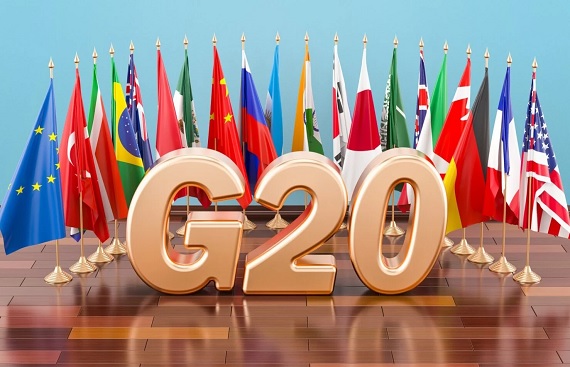
On September 12 and 13, 2024, India, led by the Minister of State for Agriculture and Farmers’ Welfare, Shri Ram Nath Thakur, held a series of bilateral meetings on the sidelines of the G20 Agriculture Ministerial Meeting in Cuiabá, Brazil. Accompanied by Ambassador of India to Brazil, Shri Suresh Reddy, and Joint Secretary Shri Franklin L. Khobung, the delegation engaged with key global partners, including the USA, Brazil, Japan, Germany, the UK, Spain, and the UAE, to strengthen agricultural cooperation.
The discussions began on September 12 with a meeting between Shri Thakur and Japan's Minister of Agriculture, Forestry, and Fisheries, Shri Sakamoto. Both ministers reaffirmed their commitment to expanding cooperation in technology adoption, food processing, cold storage, sustainability, and agricultural productivity in India. Shri Thakur raised the issue of market access for Indian pomegranates and grapes in Japan, while Minister Sakamoto requested India’s support in allowing Japanese cedar into the Indian market. Both sides expressed optimism about resolving these trade barriers to enhance bilateral agricultural collaboration.
On September 13, Shri Thakur met with Brazil’s Minister of Agriculture and Livestock, Shri Host Carlos Fávaro. The two ministers reflected on the strong ties between India and Brazil, with Shri Thakur congratulating Brazil for successfully hosting the Agriculture Working Group (AWG) meetings under its G20 Presidency. Discussions centered on cooperation in science and technology, with both sides hopeful that a Memorandum of Understanding (MoU) between the Indian Council of Agricultural Research (ICAR) and the Brazilian Agricultural Research Corporation (EMBRAPA) would be finalized ahead of the G20 Leaders’ Summit in November. Brazil also showed keen interest in collaborating with India on ethanol production technology as part of the countries’ shared commitment to tackling climate change. India expressed a desire for increased market access to Brazil for agricultural products such as sorghum, rapeseed, cotton, wheat, barley, and onion bulbs, while Brazil sought access to India for citrus products. Both ministers were optimistic about resolving these issues to boost trade.
On the same day, Shri Thakur also held talks with Ms. Xochitl Torres Small, the Deputy Secretary of Agriculture for the United States. Both sides agreed to advance the USDA and Ministry of Agriculture & Farmers' Welfare (MA&FW) Dialogue initiative. They discussed cooperation in climate-smart agriculture, agricultural productivity growth, innovation, forecasting, and crop risk management. The US delegation praised India's concept note on these topics and agreed to share their expertise on crop insurance through exchange visits. Shri Thakur emphasized the need to address market access issues for Indian fruits and vegetables, while the US sought expedited access for alfalfa hay fodder to India. Both parties agreed to work together on resolving these trade issues through mutually agreed strategies.
In a meeting with Germany’s Parliamentary State Secretary, Ms. Ophelia Nick, Shri Thakur discussed the application of artificial intelligence in farming, agroecology, and organic farming. Both sides agreed on the importance of supporting small farmers, and Ms. Nick extended an invitation to Shri Thakur to participate in the Global Forum for Food and Agriculture in Berlin.
In discussions with Shri Daniel Zeichner, the UK’s Minister for Food Security and Rural Affairs, the Indian delegation focused on the role of Krishi Vigyan Kendras (KVKs) and the Agricultural Technology Management Agency (ATMA) in bringing scientific knowledge to farmers. Shri Zeichner expressed interest in learning from India’s agricultural extension models and proposed a joint workshop between the Indian Council of Agricultural Research (ICAR) and the UK’s Agritech Centre to exchange knowledge. Both sides agreed to establish an institutional mechanism to further strengthen their agricultural partnership.
During a meeting with Spain’s Minister of Agriculture, Fisheries, and Food, H.E. Luis Planas, Shri Thakur received appreciation for India’s approval of veterinary certificates for dairy products. Spain expressed a desire for future collaboration on similar protocols, especially for meat products, and sought confirmation of cold storage in transit for oranges. Both ministers discussed potential areas of cooperation, including technology adoption, new genomic techniques, water-use efficiency, climate-resilient agriculture, and scientific research for seeds and plants. Shri Planas invited Shri Thakur to visit Madrid to further these discussions.
The Indian delegation also met with H.E. Dr. Amna Al Dahak, the UAE’s Minister of Environment and Climate, on September 12. Both sides agreed to enhance trade in agriculture and discussed market access issues, committing to resolving these through technical teams. The UAE expressed interest in collaborating with India on research and technology, particularly in vertical farming and high-yield technologies. Both countries also discussed the importance of sustainable agriculture and resilient food systems in securing long-term food security.
The series of bilateral meetings held by India during the G20 Agriculture Ministerial Meeting underscored the country’s commitment to strengthening global partnerships in the agriculture sector. From advancing climate-smart agricultural practices to resolving market access challenges, these discussions emphasized the role of technology, innovation, and private sector investment in boosting India’s agricultural productivity and trade. The outcomes of these meetings are expected to play a key role in enhancing India’s global market presence and fostering sustainable agricultural growth.


