

India and UK Reopen Trade Talks to Strengthen Bilateral Economic Ties
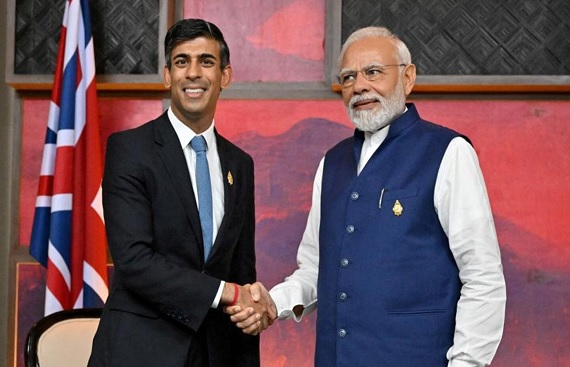
India and the United Kingdom have agreed to resume their much-delayed free trade negotiations, almost a year after negotiations were put on hold before general elections in both nations. The resumption of talks was agreed upon during a meeting between the UK Business and Trade Secretary Jonathan Reynolds and India's Commerce and Industry Minister Piyush Goyal in New Delhi.
The two-day negotiations were meant to progress the talks and make sure that any possible agreement is 'balanced, ambitious, and mutually beneficial', according to Goyal on X, the social media app. The two ministers were hopeful about the prospects of the trade deal, emphasizing that the negotiations would be geared towards creating a strong, equitable framework for trade between the two countries.
Ever since the negotiations commenced in 2022, India and the UK have had over a dozen rounds of discussions, but a conclusive agreement has not been reached yet. Some of the most significant areas of disagreement involve India's high tariffs on Scotch whisky, as well as issues around easing of visa and fee regulations for Indian students and workers applying to work or study in the UK.
The renewed discussions are an important step, being timed right after the rise to power of the Labour Party in the UK. Reynolds pointed out that having an agreement with India is a 'top priority' for the newly elected government. He stressed that 'growth will be the guiding principle' to their trade talks and showed eagerness to grab the possibilities present in India's fast-growing market.
India's contribution to the world economy is also expected to gain strength, as the nation is expected to be the third-largest economy in the world in the near future. Due to this, the current trade negotiations have become more significant. The Indian government, headed by Prime Minister Narendra Modi, has made it a target of increasing exports by $1 trillion by FY30 and has designated the UK as a priority trading partner in its overall economic agenda.
For Delhi, the stakes have been raised by the US choice to apply tit-for-tat tariffs to imports from nations such as India. The UK, being a major global trader, remains high on the list of priorities for the Modi government, further increasing the strategic significance of these talks.
On an economic level, the UK and India have a trade worth £41bn ($52bn) currently. A fruitful trade deal between the two countries will create new markets and opportunities for key sectors like advanced manufacturing, clean energy, and professional services. The UK also foresees the potential to grow exports in industries like automobiles, Scotch whisky, and financial services, all of which will have a more robust presence in the Indian market.
India, however, is looking for greater flexibility for its students and professionals, especially with respect to mobility to the UK. India wants faster processing of visas and better access to work and study options. The other important area for India is the national insurance contributions paid by Indian professionals working in the UK on business visas temporarily and being excluded from social benefits.
At the joint press conference, Goyal mentioned the question of immigration and said that India never had immigration issues at any of its free trade agreement talks. Reynolds also made it clear that the question of business mobility was separated from immigration and said that the two sides were engaged in trade talks, not immigration policy.
During his visit, Reynolds will visit the BT office in Gurugram, a city in the vicinity of Delhi, that is recognized as a technology and business services hub. UK Investment Minister Poppy Gustafsson is also visiting India, attending events in Mumbai and Bengaluru, the country's two major business hubs.
India's strategy towards free trade has dramatically changed in recent times. After years of hesitation, India has agreed or is negotiating with various countries. In 2023, India finalized a $100bn free trade agreement with the European Free Trade Association, a major breakthrough after 16 years of negotiations. India is also planning to restart negotiations with the European Union this year.
With the resumption of talks between India and the UK, both countries are signaling their commitment to strengthening their economic ties and addressing the challenges that have delayed the finalization of the trade deal. However, despite the positive momentum, no specific timeline has been set for the completion of the negotiations.


