

India and the US Shaping the Global Order
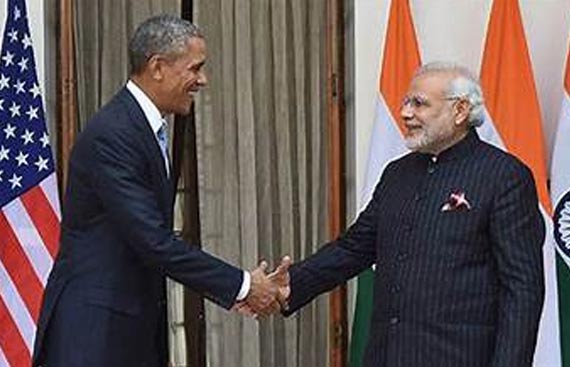
India and the United States' strong alliance positively influences global affairs, addressing challenges collaboratively and fostering peace, stability, and prosperity worldwide.
President Joe Biden symbolized the growing strategic alliance and enhanced interpersonal connections by ceremonially welcoming Prime Minister Narendra Modi. This gesture highlighted their strengthened bilateral relationship. Modi expressed gratitude to Biden for the warm welcome and for opening the White House to people of Indian origin. He believed the friendship between India and the US would be crucial in establishing a new global order characterized by goodness, peace, and stability.
Prominent US-India Collaborations
From bolstering India's technological landscape through investments to strengthening defense ties and exploring the cosmos together, the following developments underscore the deepening bond between the two nations.
Deals Bouquet
Micron has announced a $825 million investment in a new chip assembly and test facility in Gujarat, which is part of a larger total investment of $2.75 billion. Additionally, Applied Materials will allocate $400 million over the next four years to establish a new engineering center in India. Furthermore, Lam Research is set to launch a training program to develop up to 60,000 engineers nationwide.
Defence collaboration
GE Aerospace and Hindustan Aeronautics Limited (HAL) are set to collaborate on producing F414 engines for the Tejas light-combat aircraft. Additionally, India is anticipated to finalize an agreement with General Atomics to procure MQ-9B SeaGuardian drones. A new defense pact is expected to facilitate major repairs of American Navy ships at Indian shipyards.
Space Explorations
India has joined the Artemis Accords, a framework governing joint missions and civilian space exploration, signed by over two dozen nations, excluding Russia and China. NASA and ISRO are set to launch a joint mission to the International Space Station (ISS) next year.
Immigration
The United States is preparing to implement in-country renewable H-1B visas, a move designed to assist Indian workers in maintaining their employment without leaving the country. This initiative aims to streamline the process and provide greater job security for these skilled professionals.
The traditional elements associated with a state visit include the playing of the national anthems of both countries, a 21-gun salute, the presence of the US military in uniform, and a performance by a military band. Standing below the dais was First Lady Jill Biden. Vice President Kamala Harris, Secretary of State Antony J. Blinken, and Secretary of Defense Lloyd Austin were in attendance from the US. Also present were National Security Adviser Jake Sullivan and US Ambassador to India Eric Garcetti. India's delegation included External Affairs Minister S. Jaishankar, National Security Adviser Ajit Doval, and Foreign Secretary Vinay Mohan Kwatra. Taranjit Singh Sandhu represented India as its Ambassador to the US, and Vani Rao was the Additional Secretary for the Americas.
Decisions will have long-lasting effects on international affairs at this crucial moment in global history. India's participation in the Quad, alongside Japan and Australia, suggests its importance for future generations, shaping global outcomes positively. Collaborative efforts between India and the United States address diverse challenges like poverty, healthcare and climate change. Technology plays a pivotal role, with initiatives like iCET highlighting its significance in strengthening bilateral relations. Ensuring technological advancements align with shared values, accessibility, trustworthiness, and security lays the foundation for a strong partnership in the future.
The close friendship between India and the United States holds the potential to shape the global order significantly. These two nations address pressing global challenges through collaboration and strategic partnerships and promote peace, stability, and prosperity worldwide.


