

India and the US Renew their Offer to Co-Develop an AMCA Fighter Jet Engine
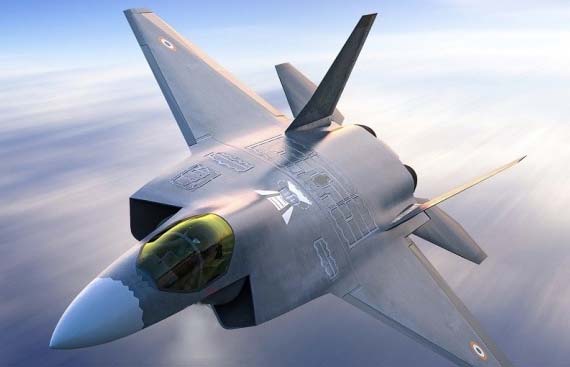
American turnaround overrides “export control” concerns which aborted an earlier bid for collaboration on jet engine technology through DTTI in 2019
FREMONT, CA: A proposal from the US to work with India on the creation of jet engine technology that might be utilized to power India's futuristic Advanced Medium Combat Aircraft has been revived.
An offer for the joint development of a 110 kn thrust engine with Indian agencies has been made by General Electric (GE), one of the world's top jet engine manufacturers. Leading military sources have revealed to BW Businessworld that GE is being considered for collaboration on the AMCA engine together with Safran of France and Rolls Royce of the UK. There are potential alliances among the three competitors. The program is likely to involve a private Indian organization in addition to the principal agency, the Defence Research and Development Organisation (DRDO).
It's noteworthy that the US is once again interested in the fighter engine project. Due to American unwillingness to share core or hot engine knowledge, a previous proposal for collaboration on jet engine technology under the India-US Defence Trade and Technology Initiative (DTTI) was suspended in October 2019. Following that, a collaborative working group on jet engine technology established under the DTTI framework was dissolved. Ellen Lord, who was the co-chair of the India-US DTTI at the time and also the US Under Secretary of Defense for Acquisition and Sustainment, announced the cessation of collaboration on jet engines in New Delhi. Safran and Rolls Royce both simultaneously indicated interest in the engine co-development venture. Their respective governments vigorously encourage these bids.
Industry observers interpret the US's flip as a move to maintain its advantage in supplying the indigenous fighter aircraft program in India, a position it does not want to relinquish to European engine manufacturers. The GE-F404 engine, which has an 85 kn thrust, powers the Light Combat Aircraft (LCA) Tejas. The 98 kn thrust GE-F414 engine is a key component of India's Aeronautical Development Agency (ADA) designs for the LCA Tejas Mk-2, AMCA Fifth Generation Fighter Aircraft, and the Twin Engine Deck-Based Fighter (TEDBF). There will be many hundreds of these aircraft built. The ADA does not envision transitioning from a GE-F414 to an indigenous engine with a greater 110 kn thrust until the AMCA program reaches the Mk-2 level of maturity. India is looking for international cooperation to develop that engine. The production schedules for the AMCA Mk-2 start around 2035. A similar indigenous engine will be used for subsequent batches of the 26-ton TEDBF as with the AMCA. The development of an Enhanced Performance Engine, or EPE, variation of the GE-F414 for the US Navy occurs at the same time as the relaunch of GE's effort to jointly develop the AMCA engine. The fan and compressor of the Enhanced Performance Engine have been completely overhauled. It provides up to a 20% increase in thrust, bringing it to 26,400 pounds (120 kN), giving it a nearly 11:1 thrust to weight ratio, according to the statement. This complies with or slightly surpasses the AMCA Mk-2 criterion. As a result, GE will have the technologies needed to build the 110 kn engine that India needs.
As well, sources indicate the EPE will be the same size as the GE-F414 model. Therefore, no alterations to the airframe are necessary for the original versions of the AMCA, TEDBF, or even the Tejas Mk-2 to be fitted or retrofitted. India does not require a hand-me-down answer; instead, it wants to learn how and why through this program to one day design, develop, and manufacture jet engines independently.


