

India and France Strengthen Maritime Partnership in Southwest Indian Ocean
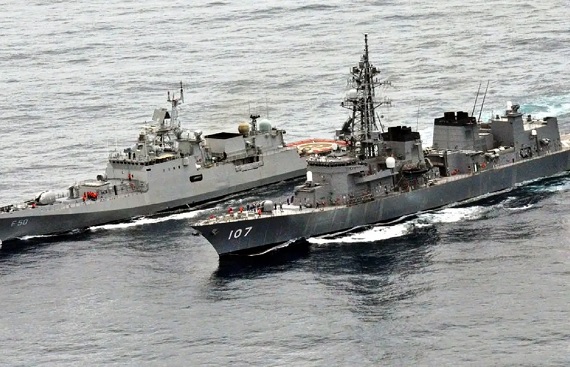
India and France have committed to enhancing collaboration in the Southwest Indian Ocean, leveraging joint surveillance missions conducted from the French island territory of La Reunion in 2020 and 2022. The extension of these engagements in India's maritime vicinity was warmly received by both nations. The India-France Joint Statement, released after French President Emmanuel Macron's visit for Republic Day celebrations, notes the potential positive impact of securing strategic sea lanes of communication.
Prime Minister Modi and French President Macron reiterated their commitment to further deepen the long-standing partnership between the two countries, based on their common vision for the Indo-Pacific region. The leaders emphasized the region's significance for their respective sovereign and strategic interests. They also acknowledged the crucial role of their partnership in the region for the advancement of a free, open, inclusive, secure and peaceful Indo-Pacific and beyond. Referring to the Comprehensive Roadmap for the Indo-Pacific, which was finalized in July 2023, they expressed satisfaction at the expanding nature of their engagement in the region.
According to the joint statement, the defense and security alliance has been pivotal to the India-France collaboration in the Indo-Pacific, encompassing a broad spectrum of bilateral, multinational, regional, and institutional endeavors, particularly in the Indian Ocean Region. Prime Minister Modi and President Macron have pledged to rejuvenate trilateral cooperation with Australia, enhance ties with the UAE, and consider new partnerships in the region, as stated in the release.
Noting the importance of joint and multilateral initiatives, for supporting sustainable economic development, human welfare, environmental sustainability, resilient infrastructure, innovation and connectivity in the region, the two leaders asked their governments to identify concrete projects. Furthermore, the two leaders called for the early launching of the Indo-Pacific Triangular Development Cooperation Fund to facilitate the scaling up of green technologies being developed in the region, as per the joint statement. They agreed to explore opportunities for coordinating economic projects and programmes in the Pacific. Both leaders acknowledged projects being carried out by the French Development Agency in India.
The leaders reflected on the inauguration of the India-Middle East-Europe Corridor (IMEC) during the G20 Summit in Delhi in September 2023. President Macron commended Prime Minister Modi for his leadership in spearheading this momentous initiative. Both leaders concurred on the project's considerable strategic significance, acknowledging its potential to substantially bolster the efficiency and resilience of trade and energy flows among India, the Middle East, and Europe.
Prime Minister Modi welcomed the appointment of President Macron's Special Envoy for the project. The two leaders further recalled their discussions in their July Summit in Paris on various other connectivity projects from Southeast Asia to the Middle East and Africa and agreed to explore specific projects. PM Modi and Macron reiterated their call for reformed and effective multilateralism to sustain an equitable and peaceful international order, address pressing global challenges and prepare the world for emerging developments, including in the technological and economic domains. The two leaders stressed, in particular, the urgent need for the reform of the United Nations Security Council and called for the early commencement of text-based negotiations at the Intergovernmental Negotiations (IGN) in the UN.
France reaffirmed unwavering support for India's permanent seat on the UN Security Council. Both leaders committed to intensifying discussions on veto usage regulation in instances of mass atrocities. They recognized that the G20 Summit in Delhi and the Paris Global Financing Summit underscored the imperative for reforming Multilateral Development Banks, aiming to enhance their capacity and effectiveness in addressing developmental and climate challenges in developing and least developed nations.


